


Highlights: Efforts to Minimize Disaster Damage by Area
While it is difficult to completely prevent damage from natural disasters, it is possible to mitigate damage and minimize the impact on social and economic activities through prior preparation. Pacific Consultants provides comprehensive support in a wide range of fields, including flood management and rivers, roads and bridges, ports and harbors and coastlines, urban and regional planning, and disaster prevention DX, from understanding and predicting disaster risks to planning disaster prevention and mitigation measures and strengthening infrastructure. By combining both hard and soft measures, we are promoting the creation of disaster-resilient regions and societies, and working to build a foundation that leads to minimizing damage and early recovery and reconstruction.





Use of SAR Satellites in Disaster Prevention
Synthetic Aperture Radar (SAR) satellites can observe wide areas at high frequency regardless of day or night or weather conditions, making them invaluable for rapid situation assessment during disasters and infrastructure monitoring during normal times. In addition to analyzing SAR satellite imagery, Pacific Consultants combines diverse spatial information from optical satellites, aircraft, drones, and ground surveys to efficiently and accurately assess deformations in roads, rivers, ports and harbors, railways, slopes, and other infrastructure. Immediately after a disaster, they support damage assessment, emergency response, and recovery planning. During normal times, they contribute to advanced preventive maintenance and disaster prevention planning through monitoring age-related changes and risk assessment. By integrating spatial information technology and consulting, they promote digital transformation in disaster prevention and mitigation measures, while supporting the realization of a safe, secure, and resilient social infrastructure.


Climate Change Adaptation Measures in Ports and Harbors
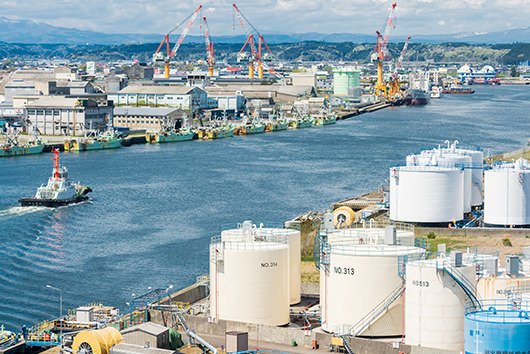
Rising sea levels and increasing typhoon severity due to climate change have made it urgent for ports and harbors to address flooding risks. However, because ports and harbors are used and managed by diverse entities such as government agencies, ports and harbors authorities, and private companies, measures taken by a single entity alone cannot be sufficiently effective. Pacific Consultants views the entire ports and harbors as a single system, conducting analyses and simulations of flooding risks due to climate change, damage assessments, and cost-benefit evaluations, while also supporting consensus building among stakeholders and promoting the development of "collaborative protection plans." Leveraging comprehensive risk assessments that include civil engineering structures, ports and harbors facilities, and electrical equipment, and our extensive experience in ports and harbors planning and design, we propose highly effective climate change adaptation measures to maintain logistics functions and industrial activities. We support the creation of sustainable and resilient ports and harbors through PPP.
Protecting Corporate Facilities and Factories from Landslides
Due to the increasing frequency and intensity of heavy rains associated with climate change, landslides pose a significant risk to corporate facilities, factories, employee safety, and business continuity. Pacific Consultants leverages its long-standing expertise in disaster prevention and erosion control to provide comprehensive support, from understanding landslide risks around facilities to disaster prevention planning and evacuation/action decisions. Furthermore, its landslide information service "Doshaburu®," which utilizes highly accurate rainfall data, topography, and information on landslide-prone areas, visualizes the urgency of disasters in real time. This enables facility managers to establish early alert systems, conduct facility inspections, and make swift decisions based on the situation, such as allowing employees to leave work early or stay home. Through highly effective disaster prevention and mitigation measures that do not rely solely on hard infrastructure, we support ensuring employee safety, mitigating facility damage, and improving corporate business continuity.

Key Points for Formulating and Reviewing Disaster Waste Disposal Plan
Large-scale disasters generate massive amounts of disaster waste, and delays in its processing hinder recovery, reconstruction, and the rebuilding of living environments. Pacific Consultants has assisted the Ministry of the Environment and local governments in formulating and reviewing numerous disaster waste management plans, and as D.Waste-Net, has also been involved in actual disaster relief efforts, incorporating the knowledge gained on-site into its plans. We comprehensively consider factors such as estimating the amount of waste generated according to the type of disaster and regional characteristics, securing and operating temporary storage sites, dealing with household waste and human waste, and wide-area cooperation. Furthermore, we are working to enhance our plans through digital technologies such as tabletop exercises, field training, and simulations using the 3D city model "PLATEAU." By bringing together a wide range of expertise in disaster prevention, civil engineering and architecture, roads, ports and harbors, and the environment, we support highly effective disaster waste management and rapid recovery and reconstruction from peacetime to the post-disaster period.

river basin disaster resilience and sustainability by all (river basin management) efforts
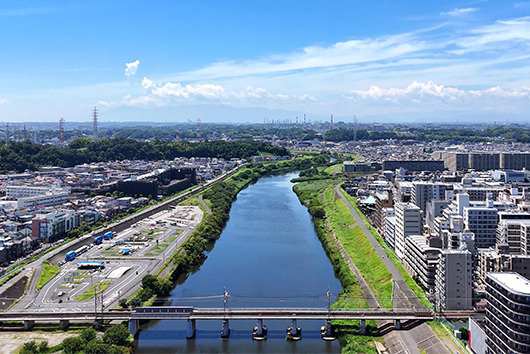
Due to the increasing frequency and severity of torrential rains and the growing complexity of flood damage associated with climate change, the importance of "river basin disaster resilience and sustainability by all (river basin management)," which aims to prevent and mitigate damage throughout the entire river basin, from the catchment area to the flood plain, is growing. Pacific Consultants combines its flood simulation technology, cultivated in the river and disaster prevention fields, with a wide range of expertise in urban planning, transportation, community development, and economic evaluation. We visualize flood risks in detail and clarify the prioritization of countermeasures and the return on investment for individual locations such as residential areas, factories, and redevelopment areas. Furthermore, by considering flood control measures and community development as an integrated whole and quantitatively evaluating the effects on the economy, industry, and environment, we support government policy-making and the participation of private companies. We act as a hub connecting diverse stakeholders such as the national government, local governments, companies, and residents, promoting river basin disaster resilience and sustainability by all (river basin management) that balances disaster prevention and mitigation with the sustainable development of the region.