

Skip to content
Go to site menu

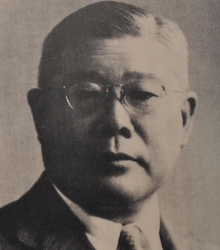
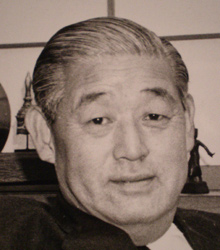
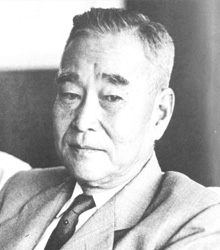
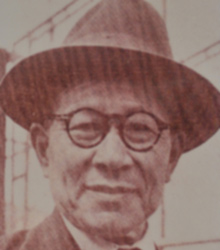
Fukjiro Hirayama

Working to realize Professional Engineer (PE) system that Japan needs

He graduated from the Department of Civil Engineering at the University of Tokyo in 1912 (his classmate was Toshiro Shiraishi), joined the Railway Bureau, and retired as Director of the Construction Bureau in 1937. After the war, he served as President PS Concrete and PACIFIC CONSULTANTS, and chairman the Institute of Professional Engineer (PE) of Japan.

A famous third baseman from his time at Ichiko High School

He didn't play baseball in junior high school. However, he took on the role of third baseman and, once he started practicing, he quickly improved. In his third year, he was captain and still a third baseman. His wholehearted approach to playing made an impression on opposing teams, and he was touted as Hirayama at First High School, becoming one of the most prominent figures in the baseball world.
The foundation of Ichiko baseball practice is its basic training. Simply put, it is extremely short-distance catch-ball. Players throw the ball at each other with all their might over a distance of about four meters. This is a truly boring and painful practice. As players continue to throw the ball, the distance gradually decreases. Players become breathless and dizzy. If they take their eyes off the ball and lose their focus even for a moment, they will get injured. If they do not intuitively sense the ball's characteristics and control its momentum, it will hurt. Even in the cold, they are drenched in sweat. Hirayama never once became depressed or complained during this practice. He practiced honestly and faithfully, without cutting corners or trying to flatter anyone.
(From "Memories of Hirayama Fukujiro" by Ichiro Kimijima, compiled by the Hirayama Fukujiro Memorial Publication Committee)

Dad's Stuff

When we, young engineers, would painstakingly complete our blueprints and take them to see him, he would look them over intently and give us detailed guidance. He would also frankly offer his opinions and enjoy discussing them with the young engineers. Looking forward to this, we would eagerly head to his office, but there was one problem: his cigarettes and red pencils. Standing before the blueprints, he would smoke nonstop without a care in the world. Cigarette ash would fall onto the blueprints without any hesitation, sometimes leaving burn holes in them. The Engineer couldn't bear to see burn holes appear in the blueprints they had worked so hard to complete. So, knowing his habit, the other Engineer would hold their breath and wait for cigarette ash to fall, and as soon as it landed on the blueprint, they would blow away the ash. The ash would then fly toward him, who was sitting across from them. While this was happening repeatedly, lively and enjoyable discussions were taking place with my father.
Also, when discussions got heated, my father would often take out his red pencil and carelessly mark the drawings. This was also something that Engineer didn't appreciate, as it was quite a struggle to completely erase the red pencil marks from the drawings. If he wasn't careful, the drawing would tear, or other lines and letters would disappear along with it. So, when I asked my father to look at a drawing, I would put the cap on the pencil and place it next to the drawing to prevent any damage. This careless habit was often seen in the consultants' design office, even in his later years, thirty years later, and I was a victim of it until the very end. At the same time, it brought back memories of my younger days, and I would smile as I thought, ``Here we go again, that habit.''
("The Heart of the Next Cypress" by Yasuo Kono, published by PACIFIC CONSULTANTS CO., LTD.)

Hirayama Fukujiro's achievements

Establishment of Professional Engineer (PE) system

The system of Professional Engineer (PE) is said to have been established by the brothers Shiraishi Toshiro and Munenori, who were well versed in the civil engineering world of Western countries and who organized the Tuesday Society Consultation Office, and Hirayama Fukujiro, who came to the conclusion that the introduction of a Western-style consulting business, or consulting engineer system, would be essential to the role of engineers in the postwar era.
Quoted from the Wikipedia entry for "Construction consultant" / Wikipedia author, 2010, "Construction consultant" Wikipedia Japanese edition, (Retrieved June 15, 2011, http://ja.wikipedia.org/w/index.php?title=%E5%BB%BA%E8%A8%AD%E3%82%B3%E3%83%B3%E3%82%B5%E3%83%AB%E3%82%BF%E3%83%B3%E3%83%88&oldid=33722734).

This is a qualification for those who wish to become Professional Engineer (PE), but because their work is based on the trust and confidence of their clients, just like that of doctors or lawyers, they must not only possess sufficient knowledge and experience in their own specialized skills to carry out their work, but also possess the personality of an engineer who is impeccable. (Omitted) With regard to the specialized skills of an engineer, they must possess specialized knowledge backed by abundant practical experience.
I don't know how well Professional Engineer (PE) Act is understood among engineers, but (omitted) there are no privileges associated with a monopoly on professional work. In short, although it is a qualification law, it is not a regulatory law, but merely a subsidy law based on a monopoly on the name.
Because hiring Professional Engineer (PE) is based on trust in Professional Engineer (PE) 's technical expertise, it is irrational to base the selection of Professional Engineer (PE) on competitive bidding, such as fee amount. It must be based on negotiation with a trusted Professional Engineer (PE). In short, the quality of a plan or design is determined not by the number of engineers, but by the quality of the engineers. (Omitted) Naturally, the technical staff of government agencies and large corporations that regularly carry out large-scale civil engineering projects will cultivate high-quality, specialized engineers. Furthermore, as Professional Engineer (PE) system develops, these engineers will not abandon their skills, even if they retire for retirement or other reasons, but will instead become Professional Engineer (PE) and continue to devote themselves to their work. This means that society will always have more high-quality engineers in Professional Engineer (PE) ranks than those currently employed.
(Essays: Living in Civil Engineering and Construction, by Fukujiro Hirayama, published by Sankaido)

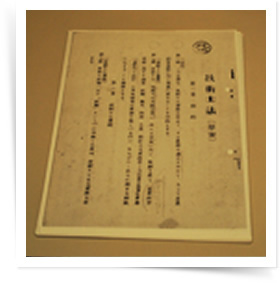
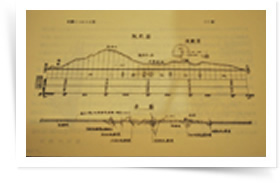
Tanna Tunnel (length 8 km, total construction period 16 years, total construction cost approximately 25 million yen)

When it comes to underground construction, the enemy can be summed up in one word: the combined forces of "water" and "earth." (Omitted) When the "earth" becomes soil or sand that easily crumbles, and water joins in, it becomes extremely difficult to deal with. We must somehow drive away this water.
With the Tanna Tunnel, after much difficulty with the spring water, they decided to dig a "drainage shaft." (Omitted) So, how long were the drainage shafts that were effective? In total, the Atami entrance was just under 20,000 feet long, and the Mishima entrance was just over 28,000 feet long. (Omitted) The tunnel is about 25,700 feet long, so they dug nearly twice as long.
To give an idea of how much water was squeezed out of the tunnel by digging so many drainage shafts, a rough calculation came out to a staggering 20 billion volumes. This was calculated over the period from the start of construction until the groundwater level dropped to the tunnel bed, and it would be equivalent to squeezing out about three lakes the size of Lake Ashi in Hakone.
("December 1933: The Story of the Tanna Tunnel," published by the Ministry of Railways Atami Construction Office)

These large public structures that are useful to the lives of the masses are the culmination of the labor of many people whose names will eventually be forgotten. Whatever their fate, I would like to offer these structures the anonymous praise of "I don't know who built them, but they are wonderful."
(Essays: Living in Civil Engineering and Construction, by Fukujiro Hirayama, published by Sankaido)

Hirayama Fukjiro Profile

  1. Born in Hongo Ward, Tokyo

  2. Entered the Department of Civil Engineering, Faculty of Engineering, Tokyo Imperial University

  3. Worked at the Railway Bureau, Construction Department, Technical Division

  4. Study abroad in the United States from the Ministry of Railways (research topic: tunnel construction)

  5. Director of the Atami Construction Office of the Ministry of Railways

  6. Appointed Executive Manager of Sagami Country Club Incorporated Association

  7. Director-General of the Construction Bureau of the Ministry of Railways

  8. Appointed Vice President of Pacific Consultants, Inc. (U.S. Corporation)

  9. Appointed President PS Concrete Co., Ltd.

  10. Appointed President PACIFIC CONSULTANTS CO., LTD.

  11. Appointed chairman of the Japan Society of Japan Society of Civil Engineers

  12. Professional Engineer (PE) Act was enacted.

  13. Appointed chairman of the Institute of Professional Engineer (PE), Japan

  14. Died of stomach cancer (aged 74)

*Created from "Memories of Hirayama Fukujiro" Hirayama Fukujiro Memorial Publication Committee


INDEX


Pacific Consultants Magazine

This is an E-mail newsletter that delivers the latest information on PACIFIC CONSULTANTS' projects, etc. We distribute it regularly to deliver timely topics such as PACIFIC CONSULTANTS's insights, project information, interviews and discussions, and the latest topics.

The information you enter will be used only for the purpose of sending you E-mail newsletters and contacting you about various information provided by PACIFIC CONSULTANTS, and will not be disclosed to third parties without your permission.
For more information, please see our Privacy Policy.