
On May 26, 2023, the "Act on Regulation of Housing Land Development and Specified Embankment" (commonly known as the "Act on Regulation of Embankment") came into effect. This law is a complete revision of the "Act on the Regulation of Housing Land Development" enacted in 1961, the first such revision in approximately 60 years. The role of local public organizations has become extremely important, and initiatives for "Embankment DX," such as introducing new management systems, are indispensable. We talked to four people from PACIFIC CONSULTANTS who support projects related to Act on Regulation of Embankment as the project team related to Act on Regulation of Embankment: Hirokazu KADOTA, Chiyoshi MINAMI from, Project Management Dept. Project Management Div., Ryohei SANDA (Information Policy Sec., Social Innovation Dept., Kyushu Headquarters), and Naohiro TOGAWA (currently at the Ministry of Land, Infrastructure, Transport and Tourism and other Project Management Sec., PM/CM Dept., Project Management Div.).
INDEX
- Background of the enactment of the Act on Regulation of Embankment
- Key points of the legal amendment
- A massive amount of paperwork is required for both newly constructed and existing embankments
- Permit and management tasks required of local governments
- The need to promote "embankment DX" and PACIFIC CONSULTANTS' initiatives
Background of the enactment of the Act on Regulation of Embankment
On July 3, 2021, heavy rains associated with the rainy season front caused a debris flow in the Aizome River in the Izusan district of Atami City, resulting in a major disaster with 53 houses completely destroyed, 27 deaths (including 1 disaster-related death), and 1 person missing (as of June 24, 2022) *. What attracted attention was the embankment located near the starting point of the debris flow, as almost all of the approximately 55,500 m³ of soil that collapsed originated from this embankment. While the causes of the extensive damage and the management of the embankment are still being debated, the government, taking seriously the fact that there were areas where regulations regarding dangerous embankments were not necessarily sufficient, has taken action with a strong determination to prevent similar disasters from happening again, recognizing that preventing landslides caused by illegal embankments, embankments constructed using inappropriate methods, and their inadequate management is an urgent issue.
* Report on the Investigation and Verification of the Cause of the Aihasagawa Debris Flow, September 8, 2022, Shizuoka Prefecture.
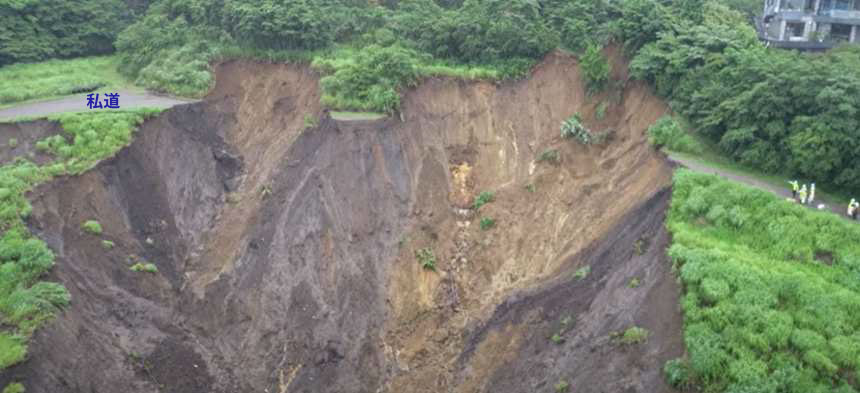
Source: Report on the Investigation and Verification of the Cause of the Aihasagawa Debris Flow (September 8, 2022, Shizuoka Prefecture)
The central change was the fundamental revision of the "Act on Regulation of Housing Land Development" (hereinafter referred to as the "Old Act"), which was enacted in 1961, and the change of its name to the "Act on Regulation of Housing Land Development and Specified Embankment (Act on Regulation of Embankment)." The Old Act was enacted in response to the increase in landslides and sediment-related disasters that occurred along with the rapid increase in land development from the late 1950s, with the aim of implementing necessary regulations to prevent disasters. Prefectural governors and the heads of designated cities, core cities, and special cities were to designate "Housing Land Development Construction Restriction Areas." The housing land development construction work within these areas required the governor's permission, and the work had to comply with the technical standards stipulated by government ordinance and include necessary measures to prevent disasters.
Subsequently, the Great Hanshin-Awaji Earthquake in 1995 and the Chuetsu Earthquake of Niigata Prefecture in 2004 revealed the existence of embankment construction sites at risk of collapse. As a result, some revisions were made in 2006, including clarifying the technical standards for ensuring earthquake resistance. However, this latest revision is the most fundamental since the enactment of the old law.
Key points of the legal amendment
The main revisions are as follows:
| (1) Expanding the Scope of Regulation | - Regardless of land use (residential land, agricultural land, forest, etc.), areas where embankments or other construction could cause damage to houses or other structures are designated as regulated areas by the prefectural governor or other relevant authority. - The permit will be granted for embankment and other earthworks carried out within the restriction areas, including the creation of farmland and forests, and the temporary accumulation of soil and rock. |
| (2) Ensuring Safety | - Establish necessary permit standards for disaster prevention according to the topography, geology, etc. of the area where embankment work will be carried out. - To confirm that safety measures are being implemented in accordance with the permit standards, we conduct "periodic reports on the construction status," "intermediate inspections during construction," and "final inspections upon completion of construction." |
| (3) Clarification of Responsibility | - Clarify that landowners and others have a responsibility to maintain land where embankments or other construction work has been carried out in a safe condition. - When necessary to prevent disasters, corrective measures can be ordered not only from landowners but also from those responsible for the cause of the damage. |
| (4) Setting Penalties | - Strengthen penalties for unauthorized activities and violations of orders. (Maximum penalty: Imprisonment for up to 3 years, fine of up to 10 million yen, and corporate penalties of up to 300 million yen) |
Under the old act, the area of the restriction areas (Housing land development construction restriction areas) covered only about 2.7% of the country's land area. However, under the revised Act on Regulation of Embankment, forests and agricultural land other than residential land are also subject to restriction. Furthermore, areas where houses are clustered together and are deemed to pose a risk of harm will be designated as "Housing land development construction restriction areas," including adjacent and nearby areas. In addition, areas that are far from urban areas or settlements but could pose a risk to houses due to topographical conditions will be designated as "specific land embankment restriction areas." The national government is calling on prefectures making the designations to "designate as wide a range of risky areas as possible as the regulation areas." In fact, about 90% of the designation work will be completed by fiscal year 2025, and it is expected that the restriction areas will rapidly expand to cover 70-80% of the country's land area. Moreover, the restriction land embankment will now include soil disposal and temporary accumulation, and comprehensive regulations will be implemented based on uniform standards nationwide.
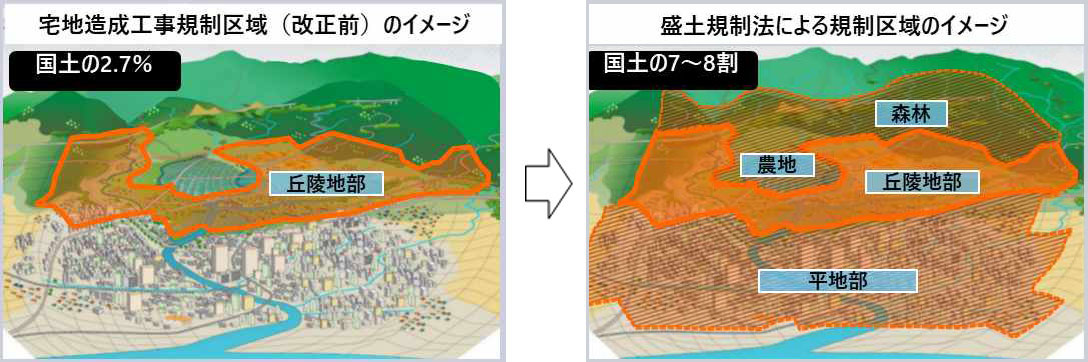
Based on existing materials, some additions have been made by our company.
Source: Overview of the Act on Regulation of Embankment, 3. Overview of the 2022 Amendment (Ministry of Land, Infrastructure, Transport and Tourism)
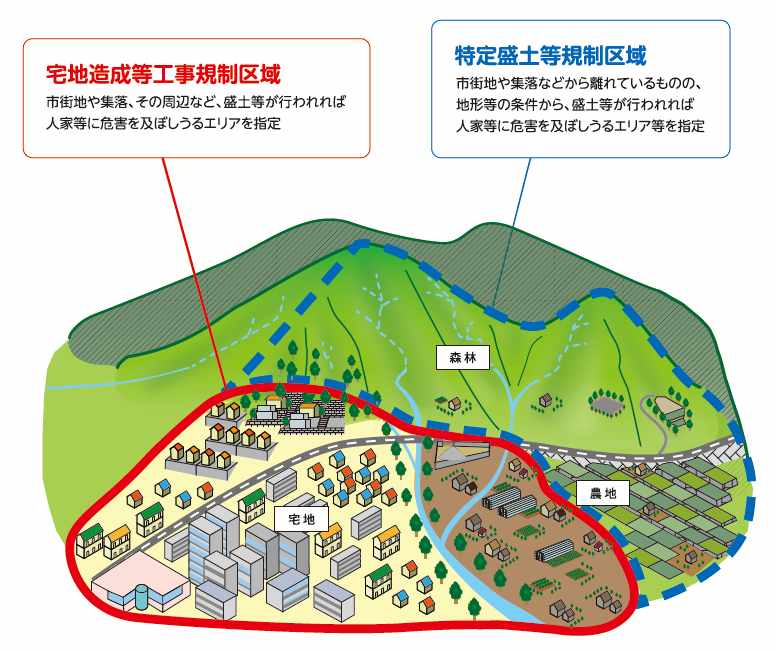
Source: Act on Regulation of Embankment Pamphlet (General Use) (Ministry of Land, Infrastructure, Transport and Tourism)
A massive amount of paperwork is required for both newly constructed and existing embankments
Along with the expansion of restriction areas and the scope of restriction, stricter procedures are now required for permitting and managing embankments.
New embankment construction project
When altering the land's characteristics (embankment or excavation) or temporarily depositing soil and rock within a restriction area, the following procedures are required.
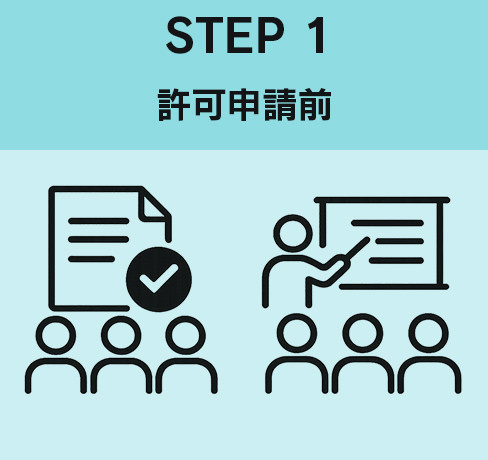
- Consent of all landowners
- Prior notification to local residents through explanatory meetings, etc.
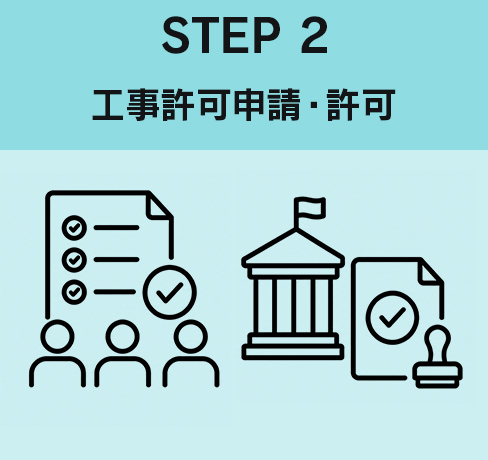
- It conforms to the established safety standards / The client has the necessary financial resources and creditworthiness / The contractor has the necessary capabilities
- Permission from the prefectural governor, etc.
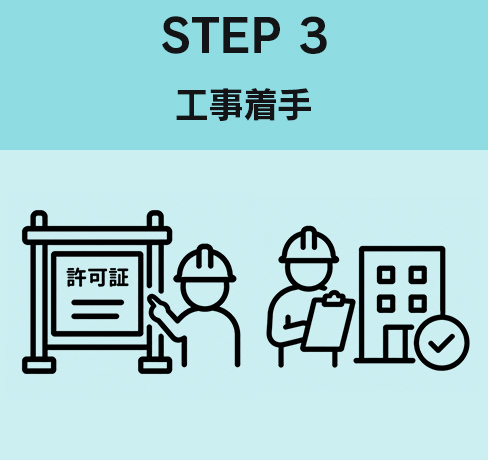
- Presenting the permit
- Regular reports every three months
- Interim inspection conducted
- Completion inspection after construction is finished
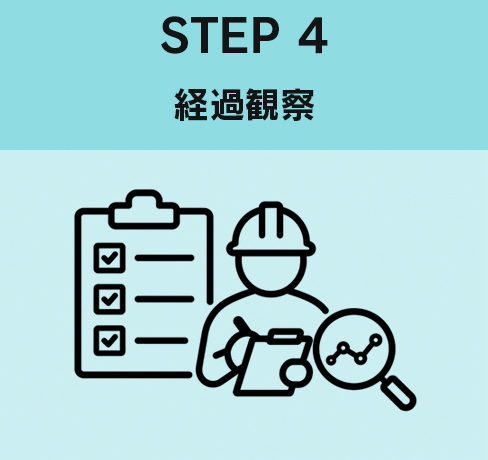
- Follow-up monitoring at a frequency appropriate to the risk of fluctuations, etc.
Existing embankment
The following measures will be required for existing embankments within the regulation areas.
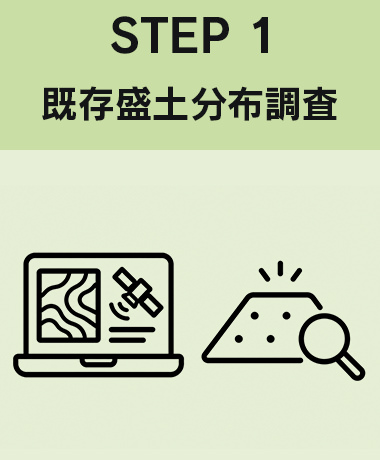
- Collection of topographic data and satellite data before and after construction
- Extraction of embankments, etc.
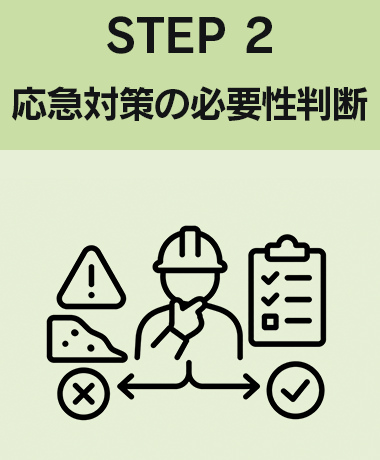
- If necessary,
→After implementing emergency measures such as covering with a sheet, proceed to STEP 3 - If not necesssary, proceed to STEP 3
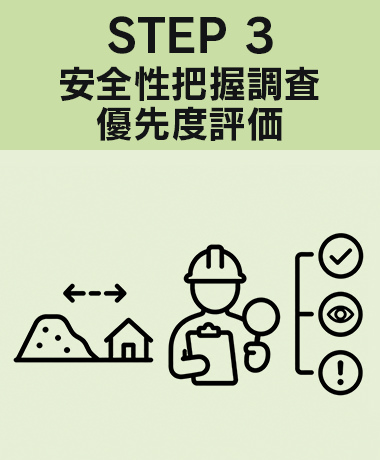
- Confirmation of the distance from the protected area according to the type of embankment, etc.
- Check the condition of the embankment, etc., on-site.
- Prioritization (classified into three categories: "No action required for the time being," "Monitoring," and "Safety assessment required")
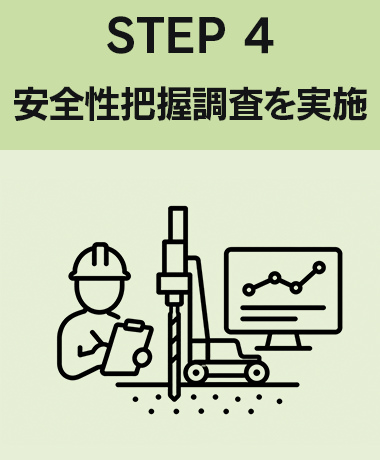
- Ground surveys and stability calculations will be conducted. If safety is confirmed, the site will move to observation.
- If safety measures are required, proceed to STEP 5
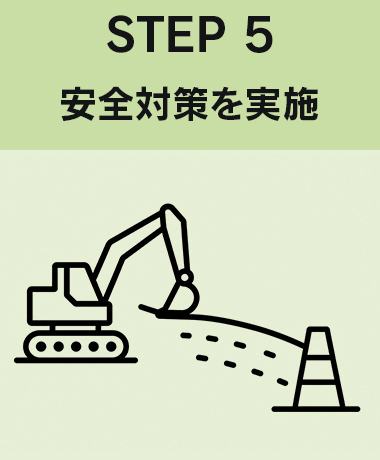
- Measures to prevent disasters related to embankments and other construction work will be implemented, and the situation will be moved to a monitoring phase
Permit and management tasks required of local governments
The implementation of the Act on Regulation of Embankment, driven by the government's strong determination to "never again let a disaster like the one in the Izusan district of Atami City happen," has drastically expanded the scope and targets of previous regulations and imposed stricter procedures, thus requiring various new initiatives from landowners, developers, and local governments responsible for permits and management.
In particular, the 129 local governments, including prefectures, designated cities, and core cities, have the authority and obligation to designate "restriction areas" and restrict dangerous embankments in order to ensure safety within their respective areas *.
It is estimated that there are approximately 51,300 existing embankments in large-scale embankment construction areas alone that require new distribution surveys, and that there are more than 36,000 other existing embankments. While it is said that 60% of the necessary safety assessment surveys for large-scale embankment construction areas will have started by the end of fiscal year 2025, and that surveys for other existing embankments are being started sequentially with completion targeted for fiscal year 2032, the workload is enormous. In parallel, there are also periodic monitoring and ad-hoc surveys that will be necessary in the event of a major earthquake or heavy rainfall.
* Source: Progress report on the designation of regulated areas based on the Act on Regulation of Embankment (Forestry Agency)
Furthermore, each local government will need to accept applications for new embankment projects, in addition to addressing existing embankments. Preliminary consultations are expected, and after acceptance, complex reviews may be required, or corrective actions may be requested. After the permit is issued, intermediate inspections, final inspections, and continuous monitoring must be carried out. It is estimated that there are at least 10,000 new applications nationwide each year, meaning that each local government will receive nearly 100 applications in a simple calculation. Moreover, since accepted projects will accumulate as existing embankments requiring continuous management, embankment-related work will expand year by year.
The need to promote "embankment DX" and PACIFIC CONSULTANTS' initiatives
Given the complexity and sheer volume of work involved in tasks related to the Act on Regulation of Embankment, it is essential to steadily advance digital transformation (DX) to ensure efficient application processing and review, as well as thorough and reliable management. Traditional paper-based file management for each individual site is inefficient for tasks that proceed simultaneously and in separate phases. Furthermore, checking existing embankments and retaining walls using the current method of taking photos on-site, filling out checklists by hand, and then taking them back for organization is unsustainable as the number of cases increases rapidly. In this area as well, DX is indispensable.
PACIFIC CONSULTANTS has supported the government's project to develop the Act on Regulation of Embankment, including the formulation of laws and technical standards, while also creating materials such as "Explanation of the Embankment Disaster Prevention Manual: New Embankments," "Guidelines for Promoting Safety Measures for Embankments and Explanation thereof: Existing Embankments," "Guidelines for Dealing with Illegal and Dangerous Embankments," and "Act on Regulation of Embankment Pamphlet: For the General Public / For Business Operators."
Furthermore, leveraging the knowledge gained during this process, we are developing and providing an "embankment information management system" that can be used by local governments for receiving permit applications under the Act on Regulation of Embankment.
The Act on Regulation of Embankment involves numerous procedures, each requiring different forms and proceeding according to a different schedule for each case. Even the application process itself requires an initial consultation, followed by a process of gradually correcting any deficiencies or shortcomings in the documents, and referring to relevant laws and regulations, until the application is deemed ready for approval. We have developed technology to digitize all of these processes and manage them within a system.
During development, we repeatedly refined the system to make it more user-friendly by incorporating on-site requests through proposals and other means presented to more than 15 local governments. Furthermore, the completed embankment information management system was offered as a subscription-based service, taking into account the implementation policies and operational methods of each local government, and also through a method of developing a system uniquely for each local government, leveraging the knowledge gained from the technical development. This allows us to provide detailed usage options tailored to the needs and budgets of each local government.
In response to the anticipated increase in inspection work, we have launched a new business to support the work of the inspection department. In addition, in collaboration with a surveying app company and Trion Co., Ltd., an ICT solutions company within our group, we have developed a smartphone-based mini-app called "Residential Land Retaining Wall Soundness Diagnosis System" to support the digital transformation of survey work.
Of course, in order for the smooth progress of work related to embankment regulation, support for private business sectors such as development companies that submit applications is indispensable. As part of this effort, PACIFIC CONSULTANTS is developing a web application that will allow development companies and developers planning new embankments to easily examine the location and shape of the embankment in three dimensions.
The regulations on embankment have changed significantly since the Act on Regulation of Embankment came into effect in 2023. Pacific PACIFIC CONSULTANTS will do its utmost to support the nation's comprehensive efforts to implement safety measures, ensuring their effectiveness and contributing to the safety and security of citizens' lives.