
In urban areas and tourist destinations, more and more people are casually sharing and using electric-assist bicycles and electric scooters. Electric micro-mobility, which allows people to travel short distances on their chosen routes at their preferred time, is gaining attention not only as a tourist option but also as a new means of transportation in cities facing population decline and aging, where compactness is increasingly demanded. We spoke with Tomohiro IWAKAMI from Transportation Planning Dept., Social Innovation Div., and Shogo NAGAO from Urban Management Sec.
INDEX
- Electric micromobility is becoming increasingly widespread
- Its position under the Road Traffic Act is also clearly defined
- Growing expectations for a new mode of transportation
- The challenges that have emerged and what is needed for widespread adoption
- PACIFIC CONSULTANTS' initiatives and future prospects
Electric micromobility is becoming increasingly widespread
The terms "micromobility" and "electric micromobility" are not legal terms clearly defined in the Road Traffic Act or the Road Vehicle Transport Act. Mobility is an English word meaning ease of movement or agility, and by extension, it is used as a general term for movement, means of transportation, and even services and transportation systems that utilize them.
In the sense of transportation, micromobility refers to small vehicles designed for one or two people, with limited speed, used for relatively short distances. Electric-assist bicycles and electric scooters are typical examples.
There are two reasons behind the expansion of micromobility.
One factor is a change in lifestyle. As climate change becomes evident to everyone due to global warming, more and more people are choosing lifestyles that minimize their environmental impact. The use of bicycles, which contribute to reducing CO2 emissions, is also encouraged, and in 2017, the "Basic Act on Bicycle Utilization" was enacted, newly positioning bicycles as social infrastructure that contributes to reducing environmental impact, promoting health, and promoting tourism. Furthermore, during the three years of the COVID-19 pandemic from 2020, with restrictions on going out and contact with people, a compact lifestyle that utilizes various living facilities and conveniences within walking distance of one's home became established. As an essential means of transportation for such lifestyles, the need for electric micromobility has also increased.
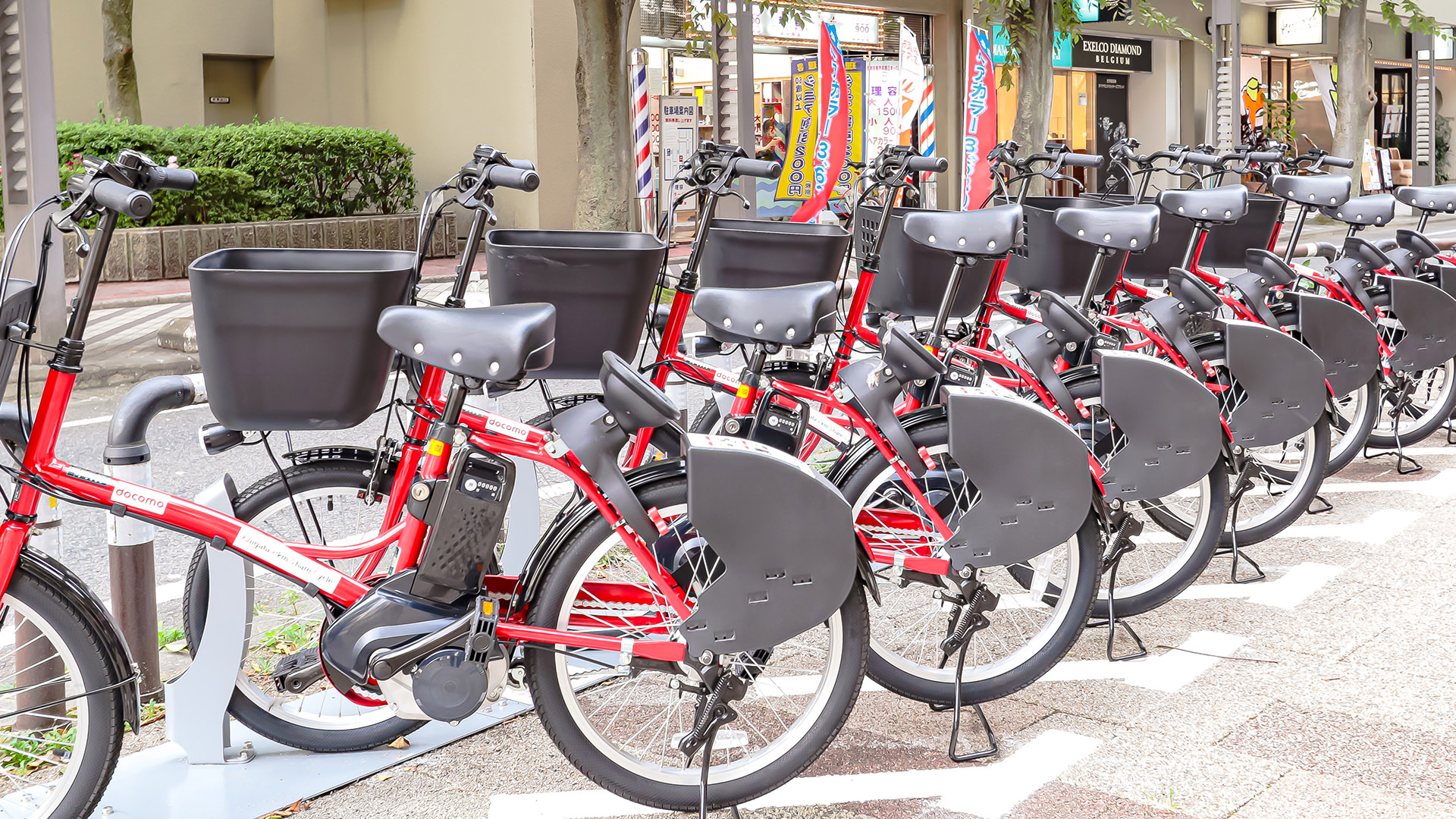
Another trend is the spread of sharing systems that rely on smartphone-based procedures. The "sharing economy," which involves sharing rather than owning and using things when needed, has expanded to various situations by making it easy to make reservations, use the service, and make payments all with just a smartphone. One example of this is shared bicycles based at ports set up in tourist areas and city centers.
The service began to gain popularity in the early 2010s, and in 2021, electric scooters were added to the lineup in addition to bicycles. In 2022, the joint use of ports by different operating companies began, giving a further boost to the spread of shared bicycles. In fact, the number of cities where the service has been introduced has expanded, and the number of installed ports has also increased significantly.
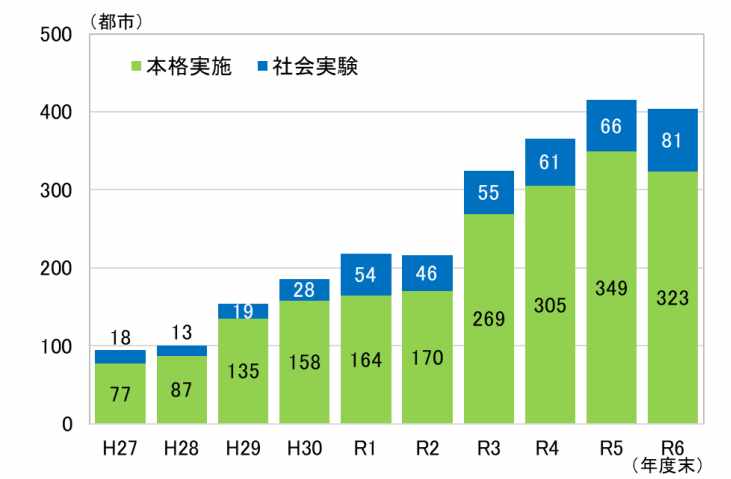
Source: Trends in Shared Bicycle Services (Final Report) (Ministry of Land, Infrastructure, Transport and Tourism)
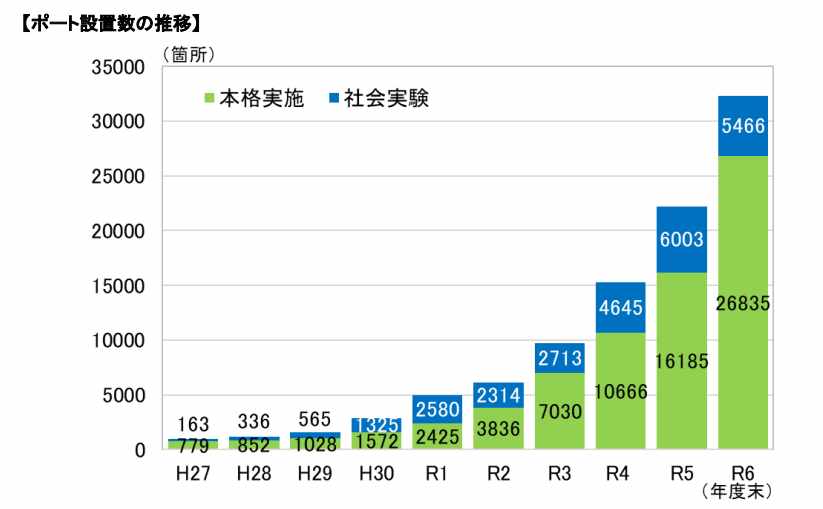
Source: Trends in Shared Bicycle Services (Final Report) (Ministry of Land, Infrastructure, Transport and Tourism)
Its position under the Road Traffic Act is also clearly defined
Furthermore, with the emergence of various electric micromobility vehicles such as "electric kick scooters" (which vary in performance depending on the motor's rated output), "electric scooters," "motorized bicycles (mopeds)," and "mobility scooters" the legal classifications had become confusing. Therefore, in 2023, the government amended the Road Traffic Act and established a new vehicle category, "specific small motorized bicycle," with typical electric kick scooters in mind.
When electric kick scooters first appeared, they were treated as regular mopeds, requiring a driver's license and mandatory helmet use. However, with the revision of the Road Traffic Act, they were reclassified into a new category called "specific small mopeds," meaning that a license is not required for those 16 years of age or older, and helmet use is now only a recommended practice. This has created a more user-friendly environment.
Road Traffic Act for electric micromobility
| Types | Required Licenses | Driving Location | Speed Limit | Compulsory Automobile Liability Insurance |
Wearing Helmet |
|
| Bicycles | Electric-assist bicycle | Unnecessary | Roadway (left side) | At 24km/h Assist stopped |
Unnecessary | Duty to make efforts |
| Scooters | Specific small moped (General electric kick scooter) |
Not required (16 years and older) | The roadway (left side) is the default. Bicycle paths, bicycle lanes |
20km/h | Needed | Duty to make efforts |
| Special designated small moped | Not required (16 years and older) | The roadway (left side) is the default. Bicycle path, bicycle lane. Part of the sidewalk (on the road side) |
6km/h (structural) | Needed | Duty to make efforts | |
| Class 1 moped |
A moped license or regular driver's license |
30km/h | Needed | Duty | ||
| Class 2 moped | Small size limited, regular motorcycle license |
equivalent to the speed limit |
Needed | Duty |
: A classification newly established by the 2023 amendment to the Road Traffic Act.
*So-called senior mobility scooters are treated as pedestrians and are not considered vehicles (they cannot be driven on roadways).
*Some electric kick scooters have a high rated output and are classified as Class 1 mopeds.
*Even if a moped can be powered solely by pedals, all mopeds are classified as mopeds. Some have a high rated output and are classified as Class 2 mopeds.
Growing expectations for a new mode of transportation
The legal amendments made to make electric scooters more accessible stem from the high expectations placed on the role that electric micromobility will play in developing the future mobility environment.
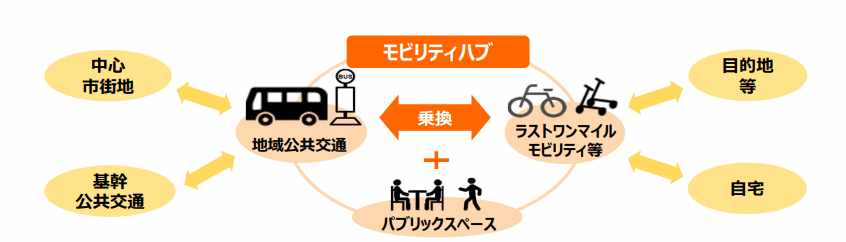
Route buses, which have played a vital role as a means of transportation for residents, are being forced to reduce services or discontinue routes, regardless of whether they are publicly or privately operated, due to declining ridership caused by population decrease, chronic deficits, and a shortage of drivers. While intercity and intercity travel within municipalities can be done by rail, the bus routes that connected these points like capillaries are becoming less accessible, making it particularly inconvenient for the elderly to go out for daily shopping or to visit hospitals and nursing homes. To create sustainable cities, it is necessary to compactly consolidate essential facilities in certain areas, connect these areas with rail, LRT (Light Rail Transit: Next-generation tram system), and route buses, and at the same time, create new means of transportation to support "last-mile" travel within each area. Electric micromobility is considered a suitable tool for this purpose.
Furthermore, incorporating electric micromobility as a new mode of transportation will enable travel in urban centers that is not limited by train or bus routes. For example, in areas where train lines are developed in an east-west direction, connecting electric micromobility ports in a north-south direction will enable travel on new routes. Commercial facilities, sports facilities, cultural facilities, restaurants, and shops that were previously too far to walk to or lacked suitable bus routes and were therefore not included in people's living areas can now be incorporated into their living areas, enhancing the attractiveness of the city they live in. Also, electric micromobility is available at any time, even early in the morning or late at night. A survey conducted jointly by PACIFIC CONSULTANTS and Luup Co., Ltd. on "Actual Usage of Micromobility Sharing Services in Urban Areas" * revealed that the main purposes of use for electric micromobility (LUUP) are commuting to work or school in residential areas, accounting for about 40% of the total, and in commercial and business areas, it is used in a variety of situations such as travel during work, shopping, dining, sightseeing, and entertainment, showing that it is useful for people's essential daily travel needs.
Furthermore, establishing electric micromobility as a means of transportation could make new transportation policies, such as prohibiting cars from entering city centers, a realistic possibility. In terms of tourism development, it would also enable the creation of unprecedented tourist spots and sightseeing routes, leading to an increase in the number of tourists.
The challenges that have emerged and what is needed for widespread adoption
However, electric micromobility is a completely new type of vehicle, and there are challenges in making them safe and reliable for everyone to use.
One aspect of this is the development of the riding environment. Just as dedicated cycling paths and lanes have been developed along with the spread of bicycles, it is necessary to improve the riding environment with electric micromobility in mind. This is a somewhat expansive idea, but for example, in conjunction with the reallocation of road space, safety could be enhanced by dividing lanes according to riding speed, such as lanes, sidewalks for speeds of 6km/h or less, lanes for 10-20km/h, and lanes for speeds of 40km/h or more.
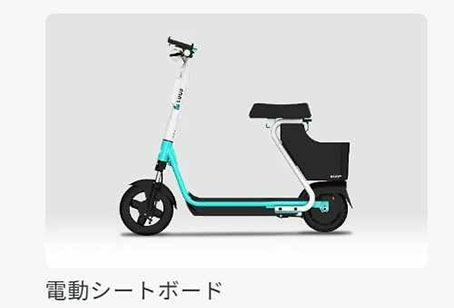
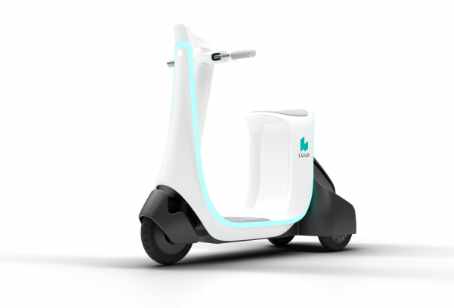
Furthermore, because electric kick scooters, which are driven while standing, pose a significant risk to the elderly, an "seated electric scooter that allows riders to sit and is equipped with a luggage basket has been introduced in some areas since the fall of 2025, and is included in the same category of specific small mopeds. In addition, a concept model of a three-wheeled, small universal car called "Unimo," which can be ridden while sitting, has also been developed, and its full-scale introduction to the market is expected."
Beyond these infrastructure improvements, it is also essential to enhance social acceptance of electric micromobility, including improving the moral standards of both electric micromobility drivers and car drivers who will be sharing the roads with them.
Currently, we see drivers violating traffic rules, such as driving in the center of the road rather than the left side, or failing to perform two-stage right turns. Furthermore, some drivers perceive micromobility as an obstacle and drive in a threatening manner. It is crucial to promote understanding of the necessity of electric micromobility and increase opportunities for people to actually experience and ride these vehicles through social awareness campaigns and traffic safety education in schools.
Source: Materials from the Secretariat of the 2nd Facility Design Working Group (Ministry of Land, Infrastructure, Transport and Tourism)
PACIFIC CONSULTANTS' initiatives and future prospects
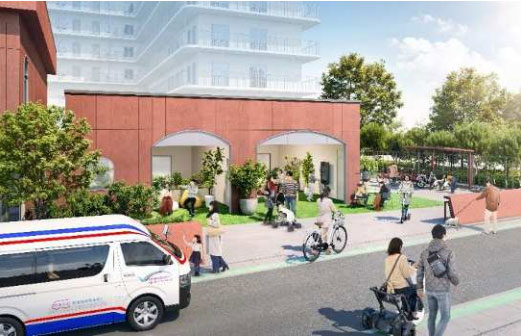
Prioritizing ease of movement is a crucial theme for creating sustainable cities of the future. PACIFIC CONSULTANTS has supported the creation of the national "Third Bicycle Utilization Promotion Plan" and the formulation of bicycle utilization promotion plans for many local public organizations, while also considering support measures for the introduction of shared bicycles from an early stage. From October 2025, as one of the corporate member companies of Park Line Promotion Council, we participated in a mobility hub demonstration experiment promoted by Kawasaki City. We advanced the initiative to operate bus transfer points as "mobility hubs" that serve as bases for providing diverse mobility services such as on-demand transport, shared bicycles, and electric scooters.
Source: Kawasaki City's first mobility hub, "KAWASAKI's Route HUB," begins demonstration experiment! ~Introducing diverse mobility options to expand transportation choices~ (Kawasaki City)
To integrate electric micromobility into urban infrastructure, it's necessary to create mobility hubs that make it easy for everyone, from children to the elderly, to get around. Simultaneously, by adding cafes, libraries, and parks, these hubs can become places where people can gather and enjoy themselves, thus serving as centers for urban revitalization.
At PACIFIC CONSULTANTS, we will contribute to sustainable urban development incorporating electric micromobility by bringing together the diverse technologies and expertise held by our internal departments, including Transportation Planning Dept., Road & Highway Dept., Architecture Dept., DX Business Promotion Dept., and Solution Business Div.