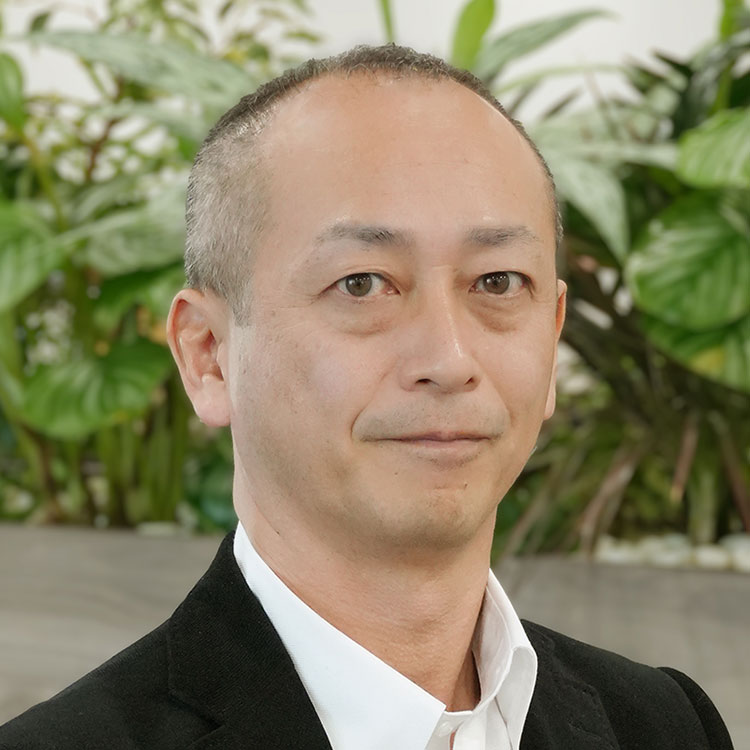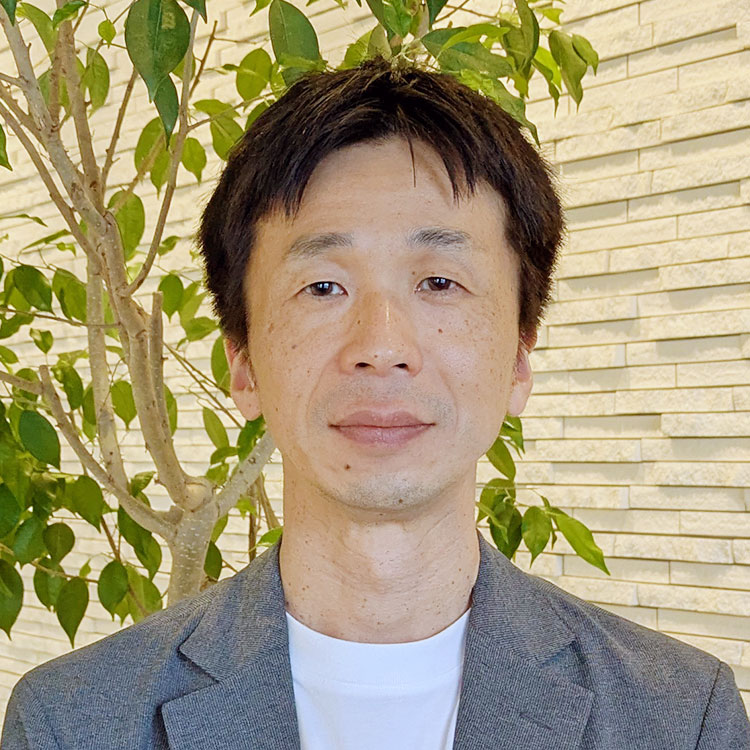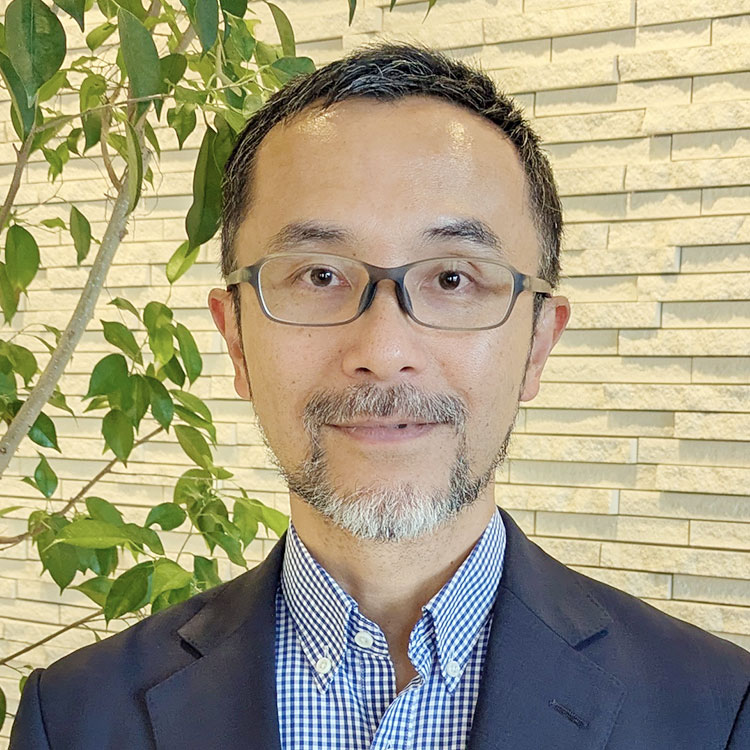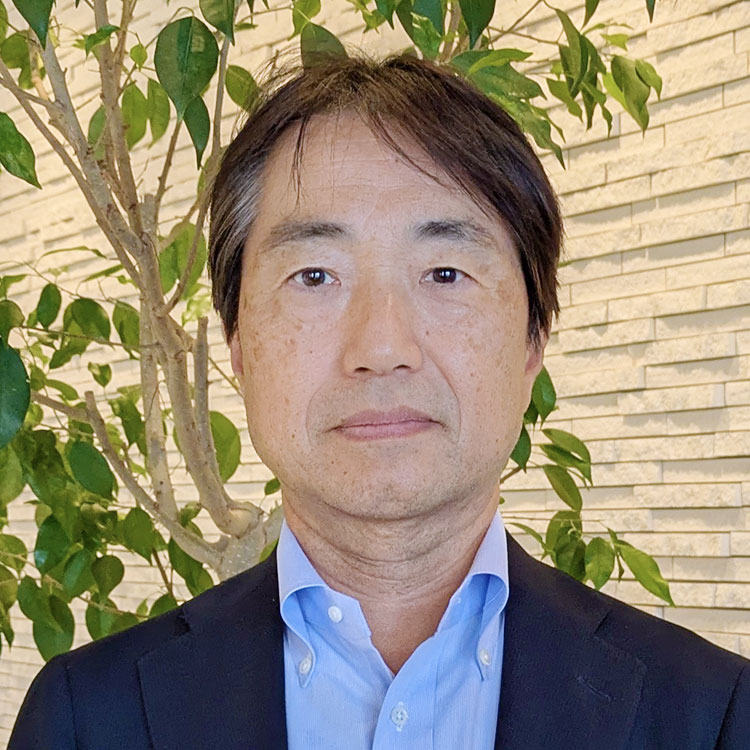

Indonesia is undertaking a national project to relocate its capital from Jakarta to eastern Kalimantan. By 2045, the new capital is expected to have a population of approximately 1.9 million. However, unless development in the new capital and its surrounding areas is properly coordinated, it may become difficult to achieve the initiative’s objectives of alleviating the excessive concentration of population and economic activity in Jakarta and promoting balanced national development. One of the central challenges of the capital relocation is determining how Nusantara can be developed in close coordination with its surrounding cities to create a new regional economy. PACIFIC CONSULTANTS is serving as the lead consulting firm for JICA’s technical cooperation project, the “Project for the Formulation of the Tri-City Development Plan for Indonesia’s New Capital Region.” We spoke with five members of Global Company involved in the project: Yasuo KANNAMI, Vice President of Global Company and General Manager of the International Project Management Dept.; Masato AKASHI, Tetsu MATSUDA, and Hidefumi TSUKAMOTO of the Urban and Transportation Sec., International Smart Planning Dept.; and Masahiro ABE of the International Projects Sec.
INDEX
- What Is the Capital Relocation Intended to Achieve?
- Toward the Creation of a Complementary and Sustainable Economic Region
- Clarifying the Development Vision Through Four Pillars
- Supporting Institutional Capacity Building and Human Resource Development
What Is the Capital Relocation Intended to Achieve?
In August 2019, former Indonesian President Joko Widodo (who was succeeded by current President Prabowo Subianto in 2024) announced a plan to relocate the capital. Jakarta's living environment was rapidly deteriorating due to chronic traffic congestion caused by population growth and land subsidence due to excessive groundwater pumping. Another reason was that 54% of Indonesia's total population and 58% of its GDP are concentrated on Java Island, creating a large economic disparity within the country. The proposed new capital will be built in a largely undeveloped area in East Kalimantan province on Kalimantan Island, 1,200 km east of Jakarta. The reasons for this choice included its location near the geographical center of Indonesia the relatively well-developed infrastructure due to the proximity of cities like Balikpapan and Samarinda, the low risk of natural disasters such as earthquakes and volcanic eruptions, and the availability of sufficient land for government use.
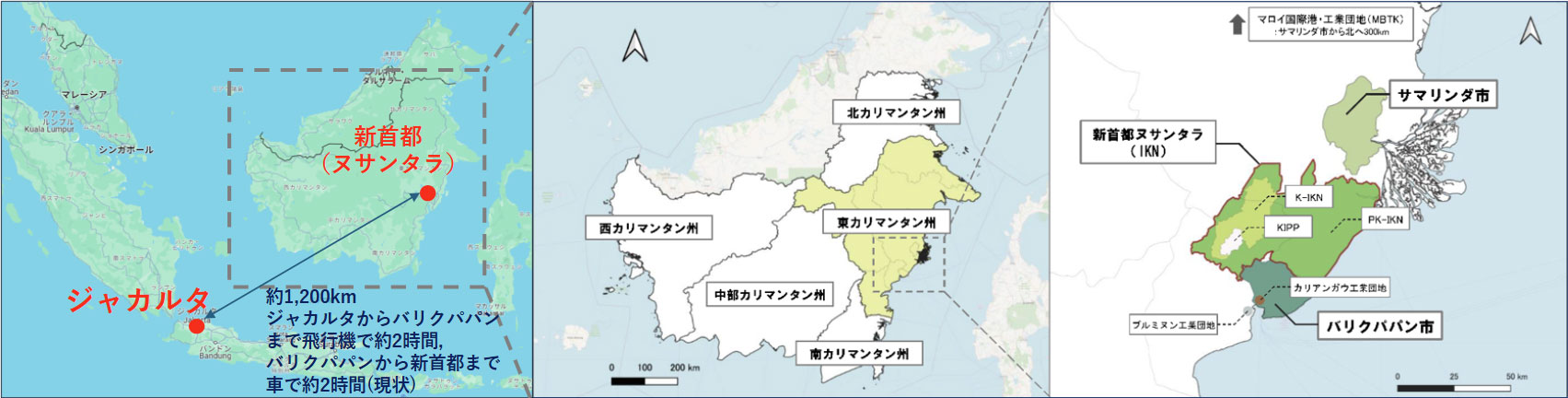
Source: Development status of Indonesia's new capital, "Nusantara," and surrounding cities (JICA)
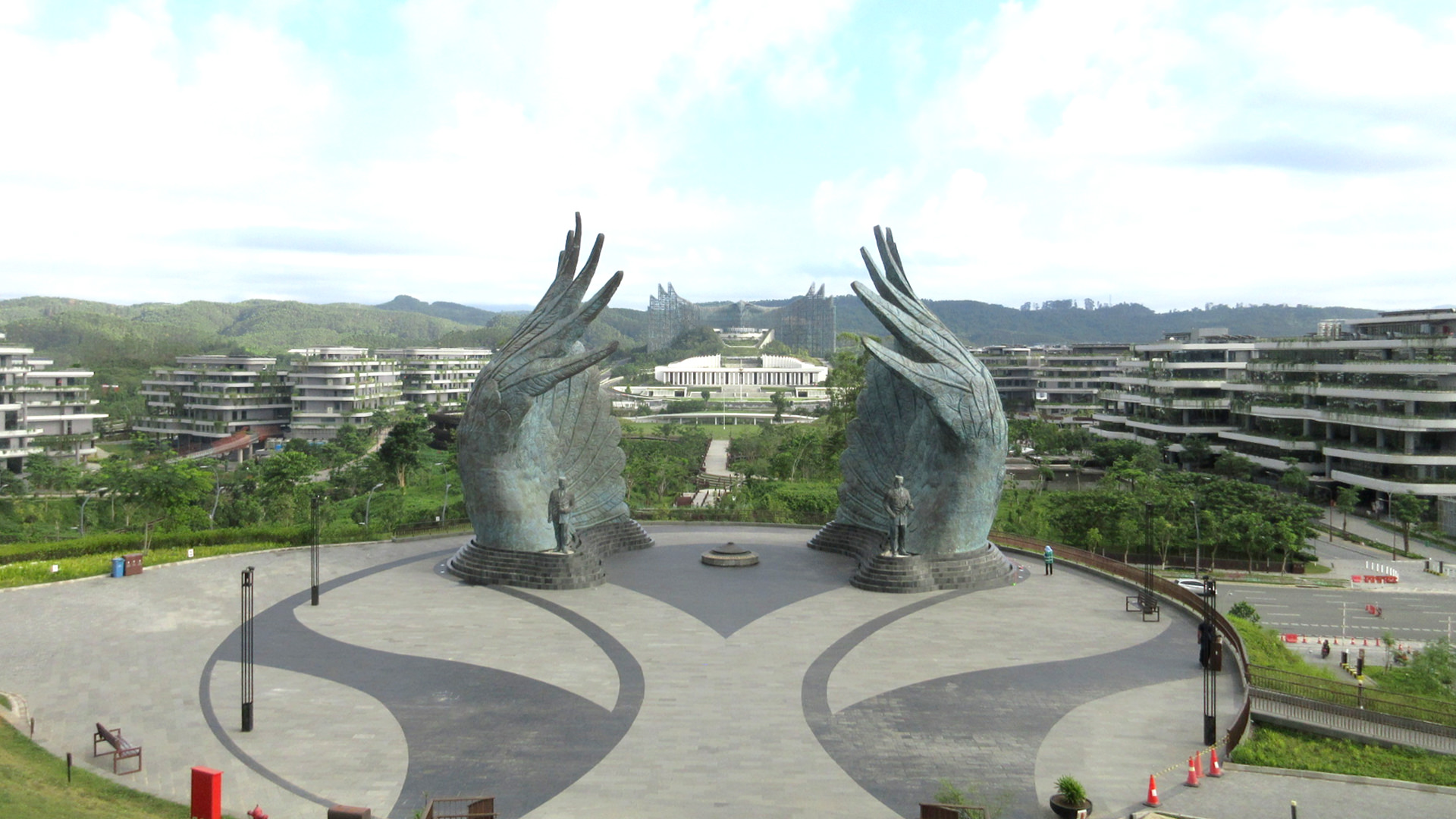
The new capital project was approved by parliament in January 2022, and later named Nusantara (meaning "Archipelago" in Old Indonesian (abbreviated as IKN)), parts of the core area, which is centered on government institutions, have already become operational. A political relocation of the capital is planned for 2028, and development will continue in stages, with the new capital expected to have a population of 1.9 million by 2045.
Toward the Creation of a Complementary and Sustainable Economic Region
This relocation project is not simply about building a new city. If population and socioeconomic functions become excessively concentrated in Nusantara, the same problems that are occurring in Jakarta will be repeated, placing a heavy burden on surrounding cities. That would defeat the purpose of the relocation. The capital relocation is being undertaken to create a new regional economy in East Kalimantan region through regional coordination with surrounding cities and to connect this to the balanced development of the country.
JICA has already been conducting an "Data Collection Survey on Regional and Urban Development in East Kalimantan, Including the New Capital" at the request of the Indonesian government, for over two years starting in June 2022. Building on that, the "New Capital Region Three-City Development Plan Formulation Project" was launched in April 2025, with PACIFIC CONSULTANTS acting as the lead consulting firm. KANNAMI, who is in charge of overseeing the entire project as the Chief Engineer of the project, explains:
"Balikpapan is about 90km from Nusantara, but it is a region that has has prospered from oil refining since ancient times. It also has an airport and has the potential to develop significantly as a gateway to the new capital. Samarinda, located about 110km north of Balikpapan, is the capital of East Kalimantan province and is a major regional city with a population of approximately 1.04 million where the coal industry and other industries have flourished. Our mission is to support the formulation of the Tri-City Development Plan (TCDP) for Nusantara, Balikpapan, and Samarinda. We aim to contribute to the promotion of integrated, complementary, and sustainable urban and regional development, working in cooperation with relevant organizations such as Ministry of National Development Planning/National Development Planning Agency (BAPPENAS), Nusantara Capital Authority (OIKN), the East Kalimantan Provincial Government, Samarinda City, Balikpapan City, Penajam Paser Utara Regency (PPU), and Kutai Kartanegara Regency. How can we integrate the industries, unique culture, and lifestyles that this region already possesses with the power of the new capital? Nurturing next-generation industries is a major theme in Indonesia today, and in that sense, this is a major project that could help shape Indonesia’s future"
Traditional JICA projects have often focused on supporting infrastructure development in specific sectors, such as roads, railways, power plants, and water supply facilities. However, this time, the project will consider all sectors and operate on a broad scale, comprehensively examining industrial development, environmental conservation, energy supply, and waste management. MATSUDA, one of the project members, explains:
"In the areas surrounding the new capital, key themes include developing new urban functions, addressing the impact of population growth on infrastructure and public services, and managing a sustainable environment. We believe it is crucial to bring the stakeholders’ diverse development visions into constructive alignment of various stakeholders, including the national government, the provincial government, and the surrounding local governments, while establishing complementary roles for each stakeholder. How to build the new capital is certainly a major challenge, but if it were to be built on undeveloped wilderness, planning wouldn't be so difficult. However, forming a new metropolitan area while involving existing cities is no easy task. PACIFIC CONSULTANTS has a wealth of experience in regional cooperation among municipalities and PPP, so we believe we can provide technical cooperation that leverages Japan's strengths."
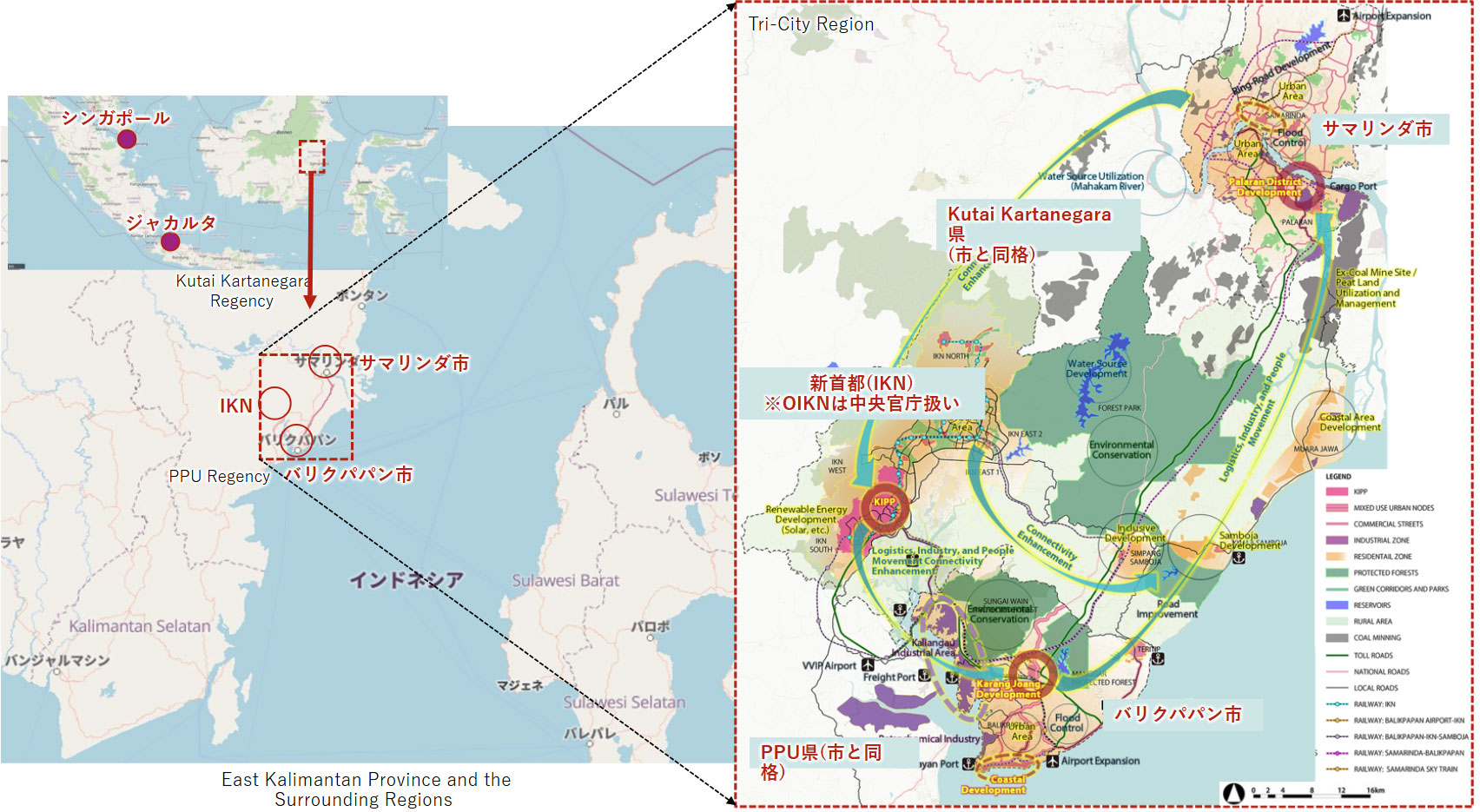
Source: Development status of Indonesia's new capital, "Nusantara," and surrounding cities (JICA)
Clarifying the Development Vision Through Four Pillars
The "Project for the Formulation of the Tri-City Development Plan for Indonesia’s New Capital Region" is underway as a three-year plan until June 2028. In addition to the three cities of the new capital, Balikpapan, and Samarinda, it supports the formulation of a broader development plan that also involves Penajam Paser Utara Regency (PPU), which has a population of approximately 200,000, Kutai Kartanegara Regency, which borders the outer area of Samarinda and has a population of approximately 800,000 located on the outskirts of Samarinda (in Indonesia, both regencies and cities are independent administrative units, and there is no relationship like in Japan where cities are located within regencies)."
The project is progressing based on four pillars: (1) urban development and infrastructure development, (2) economic development and industrial development, (3) environmental and climate change countermeasures, and (4) sociocultural development and gender. For each of these pillars, development plans under each pillar will be formulated through analyses of current conditions and challenges and consultations with relevant stakeholders.
 |  |  |  |
|
|
|
|
MATSUDA, who is responsible for the urban development component, explains the issues currently under discussion:
"To realize the vision of a 'World City for All' in the new capital development, ensuring a safe and comfortable living environment is crucial. To prevent uncontrolled urban sprawl and create a safe and comfortable urban environment, it is necessary to coordinate infrastructure development, such as transportation, with the planned provision of housing and the orderly development of urban areas. Also, people working for companies based in the new capital will have to live in Balikpapan or other areas and commute for perhaps five to ten years until the private housing market is established. However, if everyone relies on cars, it will lead to severe traffic congestion similar to that in Jakarta. I believe we need to consider promoting . Transit-Oriented Development (TOD), centered on public transport nodes and station areas where Japan has expertise."
The development of new industries and the promotion of investment are also major priorities for the new capital region. East Kalimantan has natural resources, including petroleum and palm oil. However, soft ground conditions make it difficult to construct industrial plants and large-scale factories. ABE, who is in charge of this section, says:
"It's a difficult region to significantly develop manufacturing. However, the government wants to foster new industries. We are examining potential directions through interviews with national and provincial government officials and local stakeholders to determine what the region’s existing industrial assets and future potential for agriculture and tourism. Ensuring a stable and sustainable food supply for the population of the new capital region is another major priority is also a crucial issue. The new capital is expected to become an economic zone of around 5 million people, including the surrounding area, so how do we support that population? It will be essential to source food locally rather than rely on supplies brought in from other regions."
TSUKAMOTO, who is in charge of socio-cultural and gender studies, also reflects that investigating the current situation is extremely important.
"While a general hospital already exists in the new capital, transportation is currently inconvenient. In Balikpapan, when there is a shortage of specialists, people have to travel all the way to Samarinda, which is connected by a highway. Also, as is often seen in rural Indonesia, there are elementary schools, but because there is no transportation, parents have to bring their children and wait all day until classes are over. We have state-of-the-art hospitals and universities, yet these kinds of situations are occurring on the other side. We cannot leave this situation unaddressed in the new metropolitan area. We need to consider how to plan for the region-wide delivery of healthcare and education services and I think we can learn from the various initiatives being undertaken in Japan."
Supporting Institutional Capacity Building and Human Resource Development
This project, encompassing a wide area including the tri-city region involves all industrial sectors, resulting in a large number of stakeholders. Indonesian government officials, local municipalities, stakeholders from various sectors, and even Japanese private companies are showing great interest. AKASHI, the deputy project manager, says that this is what makes the job so appealing.
"This is a national project to build a new capital city, and at the same time, it is a project that will have a significant impact on Indonesia's future. The local people are also taking it very seriously. The Japanese government is also considering the possibility of continued support, and there is a high level of interest from more than 1,500 Japanese companies already operating in Indonesia with seminars on the project have attracted far more participants than anticipated. It is very rewarding to be able to work with the local people to create a development plan that reflects the needs of the local people and is acceptable to both those who live in the area and those who will be newly coming to the new metropolitan area."
MATSUDA says that because it starts with identifying the problems, it's challenging but also rewarding.
"This project starts from scratch, with no existing analytical data in any field, and no clear problems in sight. It requires walking around, listening to local people, identifying problems in a city, or considering potential development opportunities given the terrain, creating a narrative for solving those problems, and then compiling it into a proposal. This is an experience you rarely get in Japan. It's a job that tests your intuition, analytical skills, and conceptual abilities."
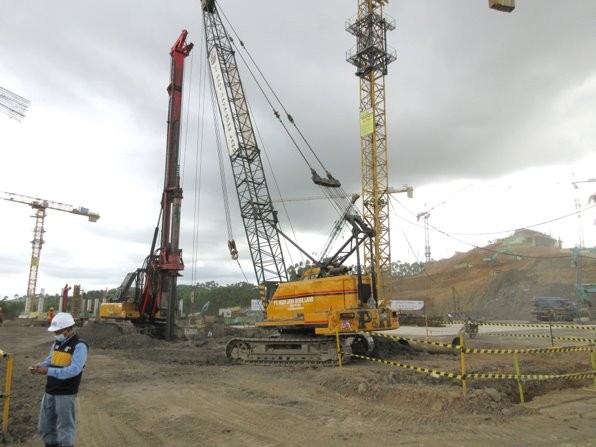
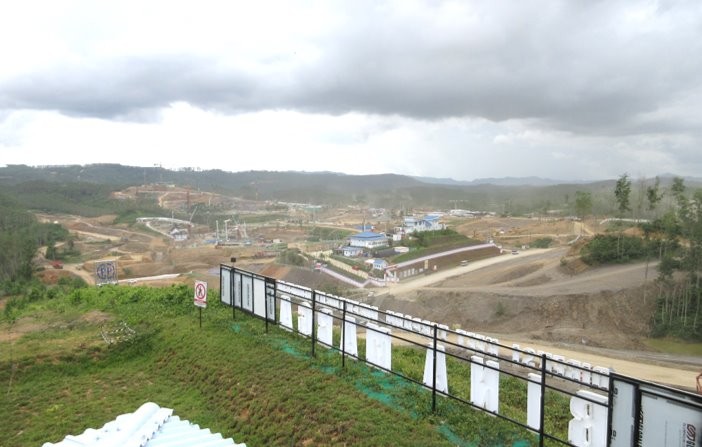
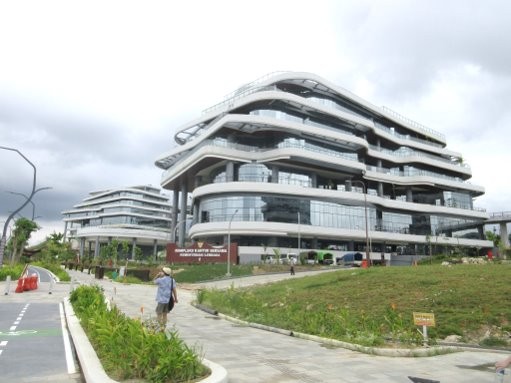
PACIFIC CONSULTANTS' efforts continue towards the project's completion in 2028. KANNAMI concluded with these words.
"As construction of the new capital progresses, various regional issues will arise. I believe that a crucial output of this project is to complete a platform where local people can discuss and resolve these issues together. It's about creating a forum for local dialogue and establish mechanisms for translating decisions into action and ensuring that the fundamental institutional framework remains sustainable over the long term even after the project team’s involvement has ended. Ultimately, the project is about strengthening institutions and developing human capacity. I believe that this will be the foundation for Indonesia's development."
Support continues for Indonesia's ambitious national project, which is not merely about infrastructure development but looks ahead to 2045.