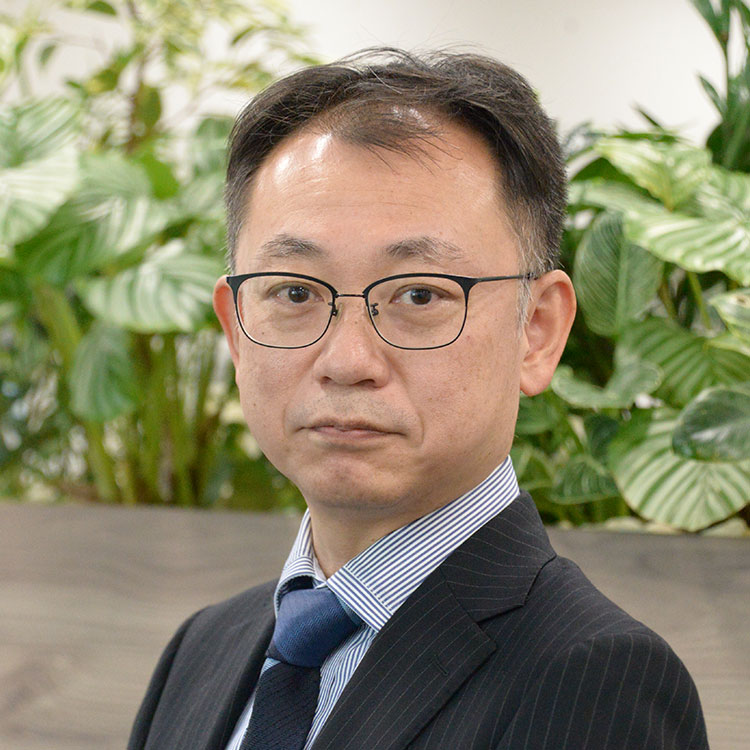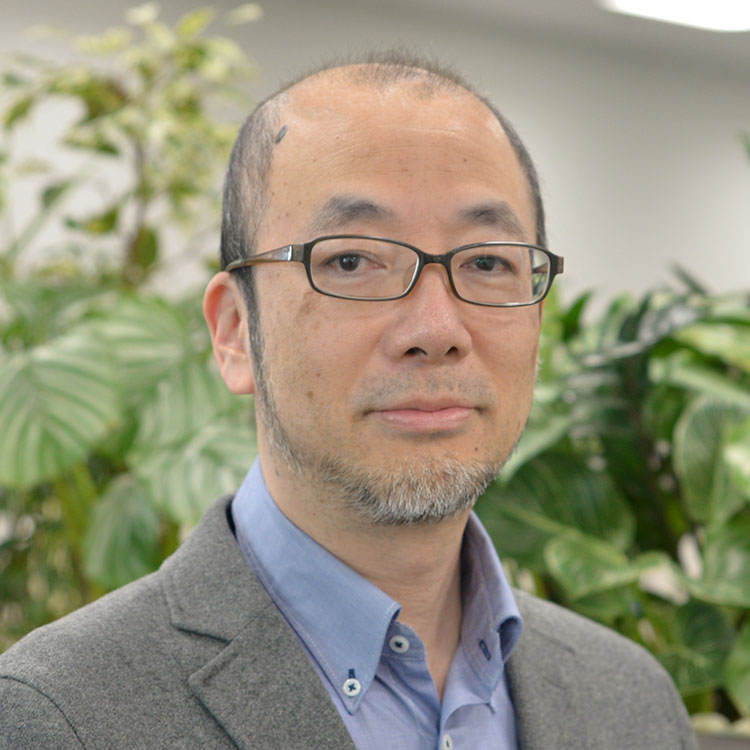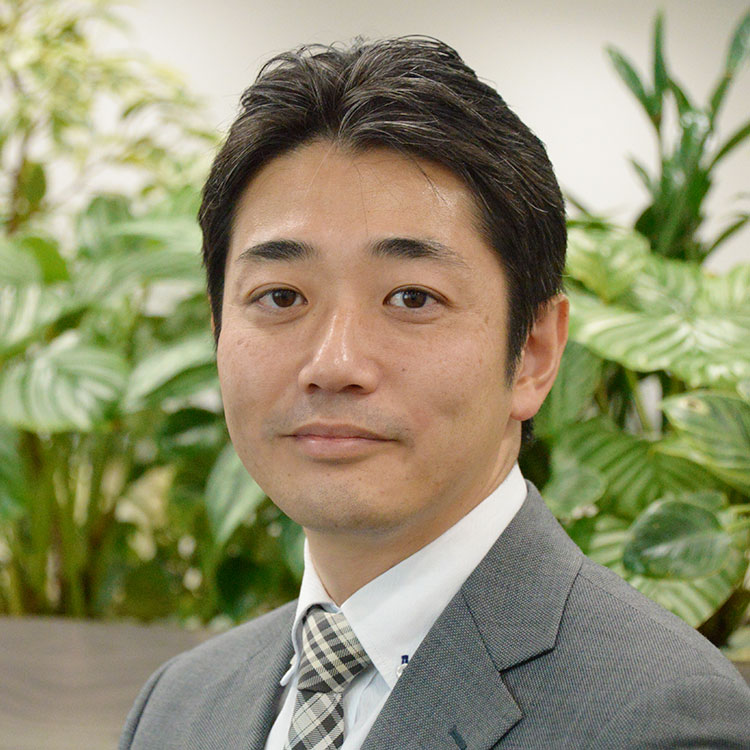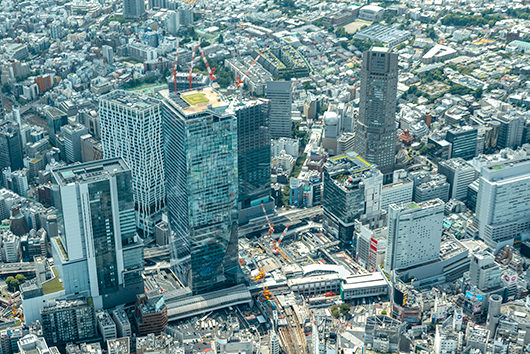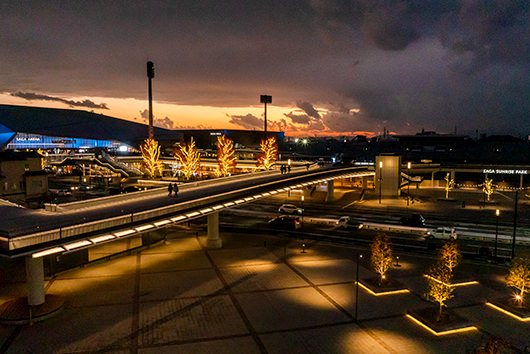

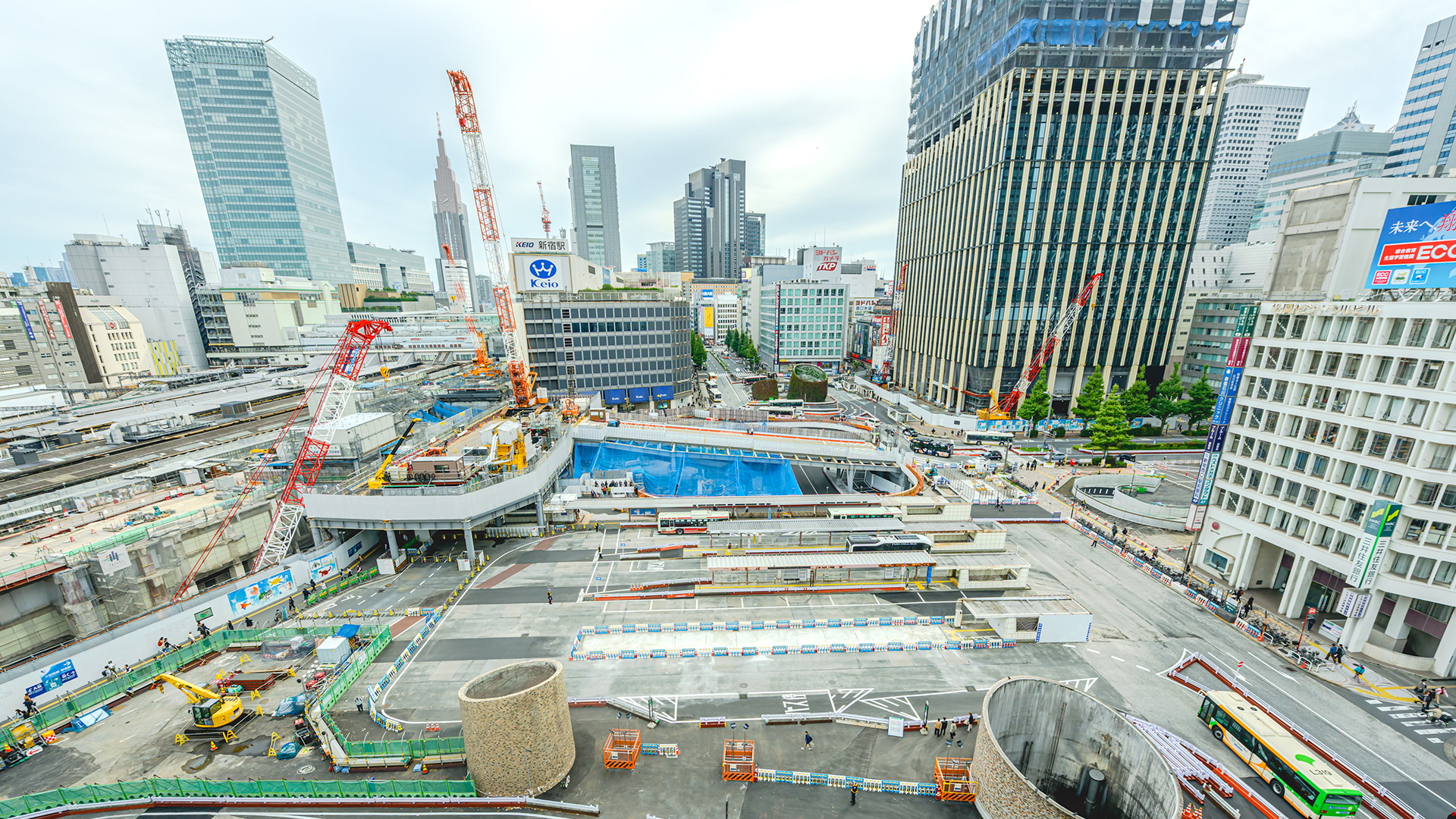
In 1958, Shinjuku, along with Shibuya and Ikebukuro, was designated as a sub-center of Tokyo. Over 60 years later, it has grown into the world's busiest terminal. However, issues have emerged, including limited space for people to stay, complicated transfer routes, and the aging of the station and station building. In 2018, the Tokyo Metropolitan Government formulated the concept "Shinjuku Grand Terminal", which involves a large-scale reorganization of the area immediately surrounding the station. Construction began in 2021, with the goal of roughly completing the project by 2035 and completing it by 2046. PACIFIC CONSULTANTS has been supporting the project from an early stage, including through business plan review. Tetsuya KAWAMOTO and Takayuki YOSHIMI from the Project Management Dept., and Takuto MIKUNIYA from the Global Company's International Smart Planning Dept., talked about the progress of the ambitious Shinjuku redevelopment project.
Overview of the Shinjuku Station Area Redevelopment Project
The reorganization of the area immediately surrounding Shinjuku Station began with the formulation of the "Shinjuku Hub Redevelopment Policy" by Tokyo Metropolitan Government and Shinjuku Ward in March 2018. The urban plan was approved in December 2019, and the "Land Organization for the Area Immediately Surrounding Shinjuku Station" was finalized in July 2021. Specifically, a new deck will be constructed above the tracks to connect the east and west sides, while the current through-car route that crosses the West Exit Station Plaza from north to south will be eliminated. The loop-shaped entrance and exit for the underground parking lot will also be moved to the former Subaru Building side, away from the station, restructuring the area in front of the station into a people-centered space. Furthermore, by coordinating the functional updates of the station and station building, the entire area including the station will be reorganized into Shinjuku Grand Terminal. Not only JR East but also private companies such as Odakyu Electric Railway, Keio Electric Railway, Tokyo Metro, and Seibu Railway are participating, and they aim to create a next-generation terminal in which the station, station plaza, and station building are organically integrated, with four pillars: "Enhancing and strengthening functions befitting the world's best terminal," "Improving mobility between the station and the city and between the cities," "Introducing functions that contribute to strengthening international competitiveness," and "Expanding to the surrounding area." Part of the construction has already begun, with the east and west decks and west exit plaza roughly completed in 2035, and the project is scheduled for completion in 2046.
INDEX
- Shinjuku Station boasts the world's highest passenger numbers
- Shifting from car-centric to pedestrian-oriented station front spaces
- Analyzing the movements of nearly 3 million people using a unique simulation model
- Leading to overall optimization and moving the project forward
- I want to be an engineer who builds towns, not just builds things
Shinjuku Station boasts the world's highest passenger numbers
Shinjuku Station, with seven lines and eight stations, boasts a record-high daily passenger traffic of approximately 3.55 million, making it the world's busiest terminal, according to the Guinness Book of World Records. While the East Exit expanded first as a downtown area, the driving force behind Shinjuku's rise to the top was the redevelopment of the West Exit. In March 1960, the Tokyo Metropolitan Assembly passed the "Basic Policy for the Construction of Shinjuku Subcenter," which called for the relocation of the Yodobashi Water Purification Plant in front of the West Exit station and the creation of a future city on the site. The decision was made to develop streets, parks, and plazas on a vast 96-hectare site, and to build a major business center with a workforce of approximately 40,000. The West Exit Station Plaza project was also initiated as part of this initiative. The basic plan was proposed by the Sakakura Associates Architects and engineers, led by architect Junzo SAKAKURA, who studied urban design under Le Corbusier in France. The plan was to divide the station into upper and lower sections, with the above-ground area in front of the station being a traffic plaza and the underground area being the station concourse, shopping street and parking lot, and to create a large void in the roadway connecting the underground and above ground to let in natural light and wind, while combining the railway facilities, station plaza and street in a three-dimensional manner.Completed in November 1966, the huge void that allowed for views of the sky from underground and the colorful kiln-fired tiles used on the floors and walls attracted a lot of attention.
The development of the block on the site of the former water purification plant was completed in 1968. Starting with the Keio Plaza Hotel in 1971, skyscrapers were constructed one after another, and then in 1991 the Tokyo Metropolitan Government Building, where over 10,000 employees work, was relocated from Yurakucho. The huge town that had been envisioned was born.
However, nearly half a century has passed since the station was developed, and various issues have emerged. The station structure is complex, and transfer routes are difficult to understand because they are spliced together by the station building and the Odakyu and Keio Electric Railway sites, and there are many steps and differences in level. The only space available for pedestrians to stay and interact is the small area in front of the west exit police box, and the area above ground in front of the station is dominated by a busy prefectural road that crosses directly in front of it, making most of the space reserved for cars. Pedestrians have no choice but to take a large detour or walk through an underground passage.
Shifting from car-centric to pedestrian-oriented station front spaces
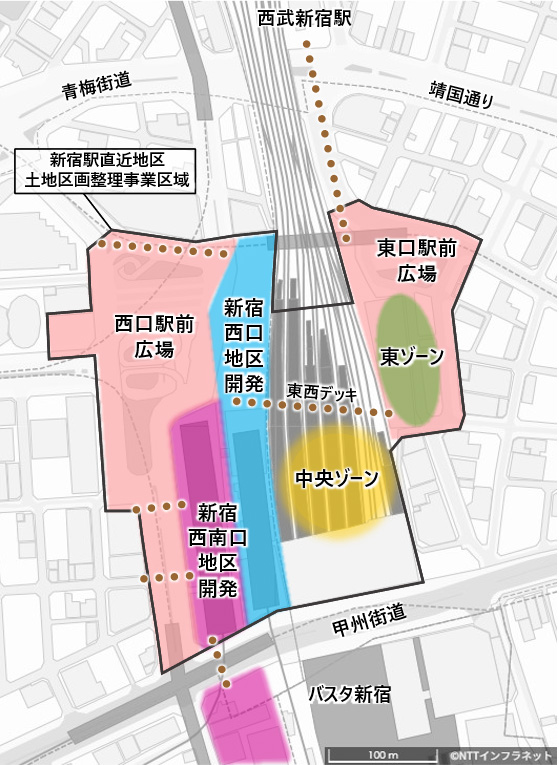
The Shinjuku Grand Terminal concept is a large-scale undertaking that involves multiple infrastructure improvements and private redevelopment projects. The redevelopment policy, which focuses on the area in front of the West Exit station and aims to transform the car-centric spatial structure into a people-centric plaza and town, is centered on the renovation of the West Exit station plaza and underground parking lot. This part of the project is also taking precedence. Other plans include rebuilding the department store and station building, developing the eastern zone, including the East Exit station plaza, creating a central zone and east-west decks that utilize the airspace above the tracks, and redeveloping the area across Koshu Kaido Road in the southwest exit area. Currently, around eight projects are being carried out in tandem, and the area around Shinjuku Station will see a major transformation over the next 20 years.
"The Tokyo Metropolitan Government began considering what to do with the West Exit Plaza from an early stage," says KAWAMOTO, who oversaw the Shinjuku Project at PACIFIC CONSULTANTS and was primarily responsible for conceptualization, urban planning, and traffic volume estimates. "We also began participating in Tokyo's future vision studies around 2011, and in 2018 we were commissioned to carry out the 'Shinjuku Station Area Development Plan Formulation Survey.' This involved preparing documents for urban planning procedures, etc., for the East and West Station Plazas and the areas adjacent to the plazas. Specifically, we identified the complex and widespread impact of automobile and pedestrian traffic, resolved issues, created a pedestrian-friendly space in front of the station, and created a space that was conscious of creating new value as Shinjuku Grand Terminal. We also predicted traffic flow in the future space, examined networks for each mode of transportation, calculated the necessary scale for transportation facilities and decks, and prepared the documents necessary for discussions and coordination with stakeholders such as the National Police Agency and railway business operators."
The urban planning decision in December 2019 was based on these survey and proposal materials, and the Shinjuku Grand Terminal concept was the starting point. However, there were still many difficult problems to overcome in terms of how to realize the Grand Terminal concept, which depicts Shinjuku in 20 or 30 years' time.
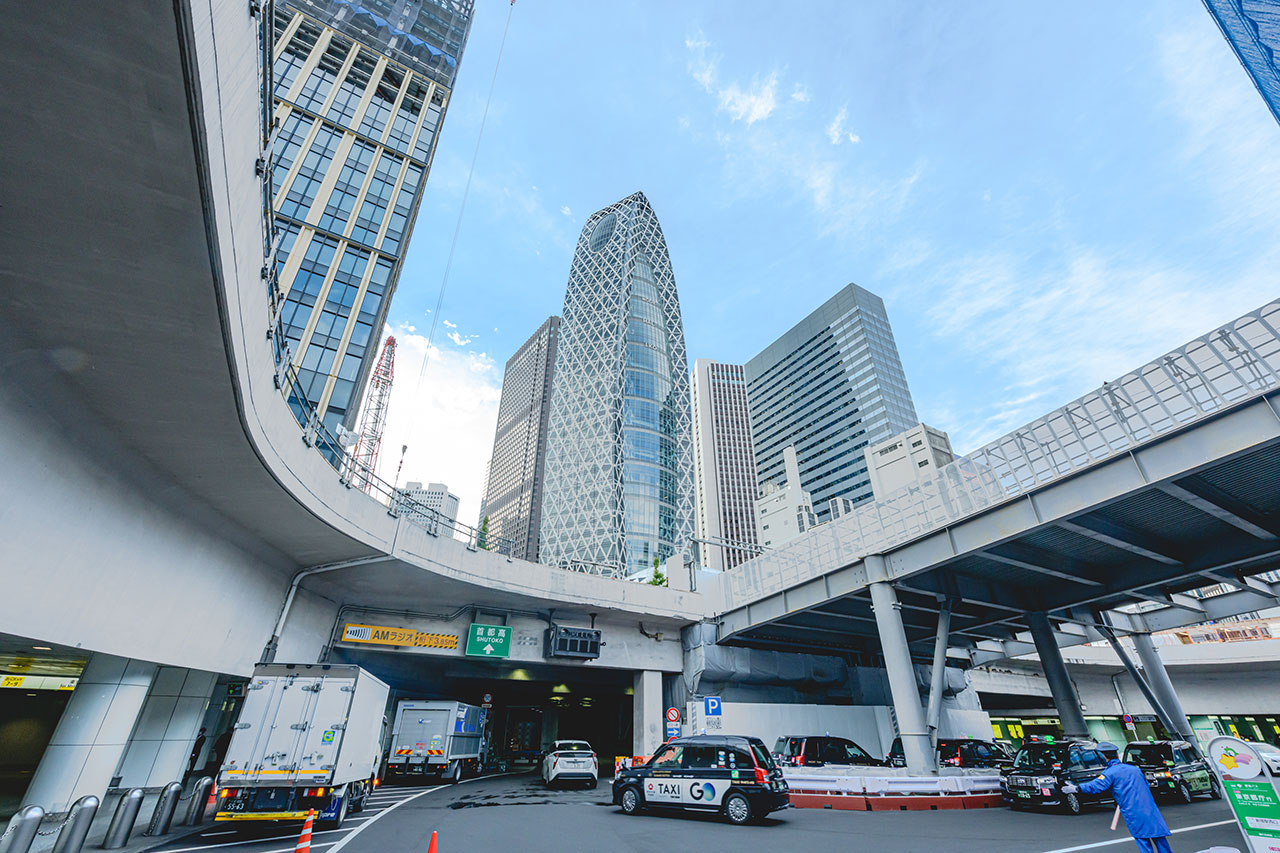
"The Shinjuku Grand Terminal concept aims to 'restore the area to a people-centered plaza and town,' but that is not easy," says YOSHIMI, who was primarily in charge of coordinating the overall land readjustment and providing design and construction support to the landowners. "There's already a major trend toward pedestrian-oriented station plazas in Japan. This is called TOD (Transit Oriented Development), and it aims to integrate station and city development around public transportation hubs, consolidating urban functions that have traditionally been developed piecemeal around stations. This approach promotes efficient, convenient, and safe urban development. The underlying philosophy behind this initiative is a shift from cars to people. However, Shinjuku is, after all, the busiest station in the world, and the area in front of the West exit serves as a link between two major arterial roads: Yasukuni-dori (Ome-kaido) to the north and Koshu-kaido to the south. On the east side, major streets—Shinjuku-dori, Chuo-dori, and Meiji-dori—run toward the station, crisscrossing the area in front of the station, resulting in heavy traffic and frequent congestion. Even if we prioritize people in front of the station, we cannot impose a burden on traffic around the station. Figuring out how to design a new network for people and vehicles, and developing the master plan and infrastructure for this, was an extremely important and difficult issue."
Analyzing the movements of nearly 3 million people using a unique simulation model
PACIFIC CONSULTANTS has the technical expertise and total management capabilities that they have demonstrated in the TOD developments in Shibuya and Shinagawa. Leveraging these strengths, they conducted detailed surveys of pedestrian and vehicular flow and investigated the impact of the plan, playing a major role in formulating the urban plan.
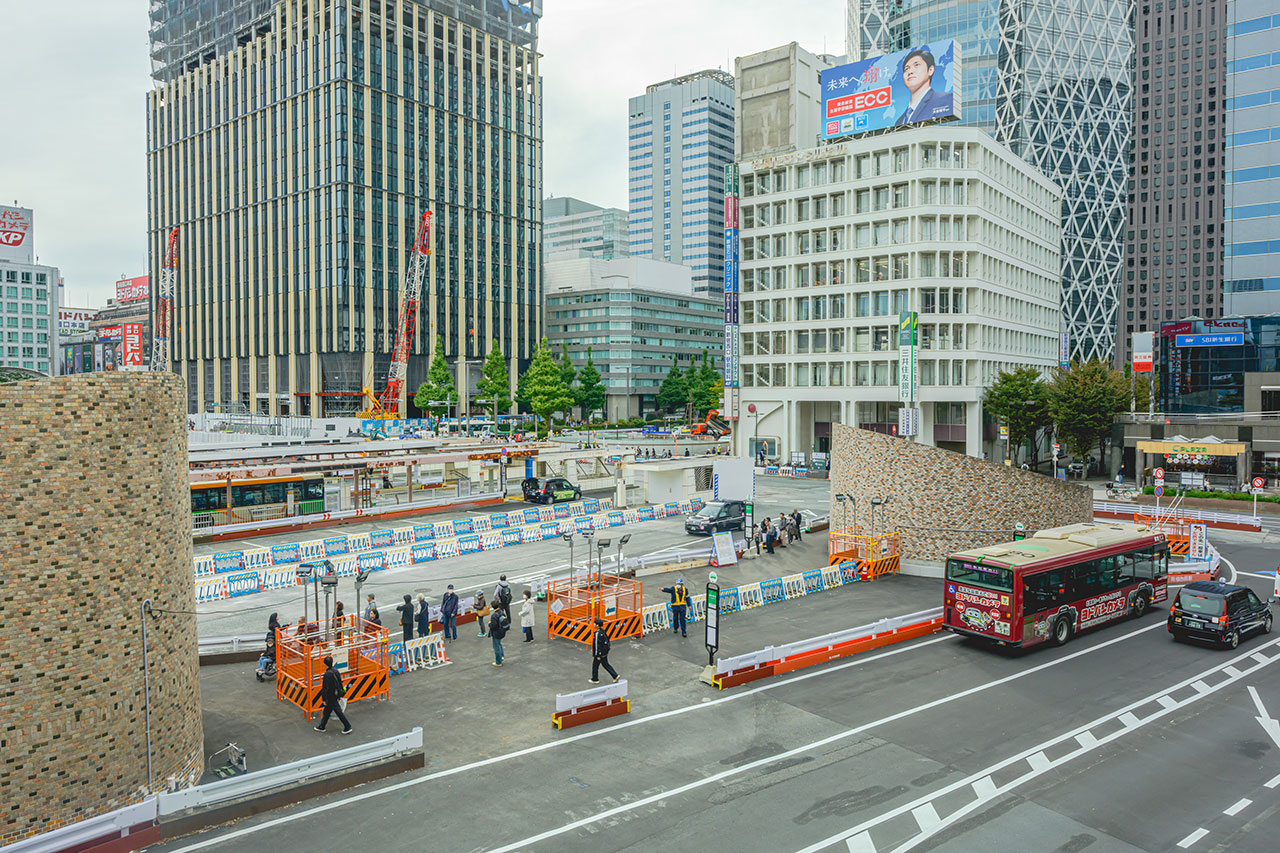
To create the plan, a detailed origin-destination (OD) survey was essential to determine how many people traveled through each ticket gate on each of the seven lines and eight stations, on each day and at each time. However, capturing the precise movements of nearly 3 million people is impossible using conventional survey methods. PACIFIC CONSULTANTS has a specialized department involved in transportation policy, and it has developed and utilized a unique simulation model for automobile traffic volume surveys. It was then modified to apply this to pedestrians, incorporating detailed survey data for further analysis. At the same time, new traffic flow plans were verified to ensure smooth pedestrian movement. This research was not only utilized in the preliminary and basic designs for the station plaza, but also provided support for infrastructure development and transportation planning by private companies such as East Japan Railway, Odakyu Electric Railway, Keio Corporation and Tokyo Metro.
Leading to overall optimization and moving the project forward
Another important role PACIFIC CONSULTANTS played in Shinjuku TOD was in overall management. The project, led by the Tokyo Metropolitan Government and involving private railway companies, involves a wide range of stakeholders, including the Tokyo Metropolitan Government, private railway business operators, the national and local police that manage national highways, and the fire stations that are responsible for evacuation and fire prevention, all of whom have their own positions. Naturally, conflicts have arisen between these parties. For example, road administrators and police are concerned that the reorganization of the area in front of Shinjuku Station to focus on people will cause new congestion on surrounding roads, and private railway operators are concerned that the newly developed transfer routes will be detrimental to the inflow of people into their commercial areas. Deciding on one solution involves the conflicting interests of all involved parties, making it no easy task to reach a conclusion.
One of PACIFIC CONSULTANTS' roles was to coordinate among the parties involved in the project and move it forward.
MIKUNIYA, who has supported the Tokyo Metropolitan Government in design and construction, including managing coordination meetings regarding the review of the basic plan and overall construction management, had this to say:
"I think a major role of ours is to look at the big picture and communicate things like, 'The police are focusing on this point in terms of preventing accidents and congestion,' or 'If we insist on this route, private business operators will be dissatisfied,' so that all the people involved in the project can move forward with a sense of satisfaction. Our job is not simply to create a plaza or facility. We are trying to create a new town."
YOSHIMI shares the same opinion.
"Many people may think of PACIFIC CONSULTANTS as a company that plans and designs structures such as bridges and roads, but that is only a small part of what we do. We share the future that local governments and local people envision, and determine what needs to be done and by when to make that happen. We believe our job is to manage the entire project so that it progresses smoothly, not just through surveys, master plans, and design, but also environmental and impact surveys, consensus building, consideration of construction procedures, and consideration of the safety and comfort of users during construction."
I want to be an engineer who builds towns, not just builds things
The construction is already underway to renovate the West exit plaza and parking lot, with the spiral parking lot entrance being relocated away from the station in January 2025, and the North-South vehicle traffic lines above ground being separated in September 2025, creating a new pedestrian space in the center of the above-ground plaza. Development of the plaza will finally begin, and in 2035 a new station plaza will appear, along with a deck connecting the east exit to the west exit, crossing over the tracks.
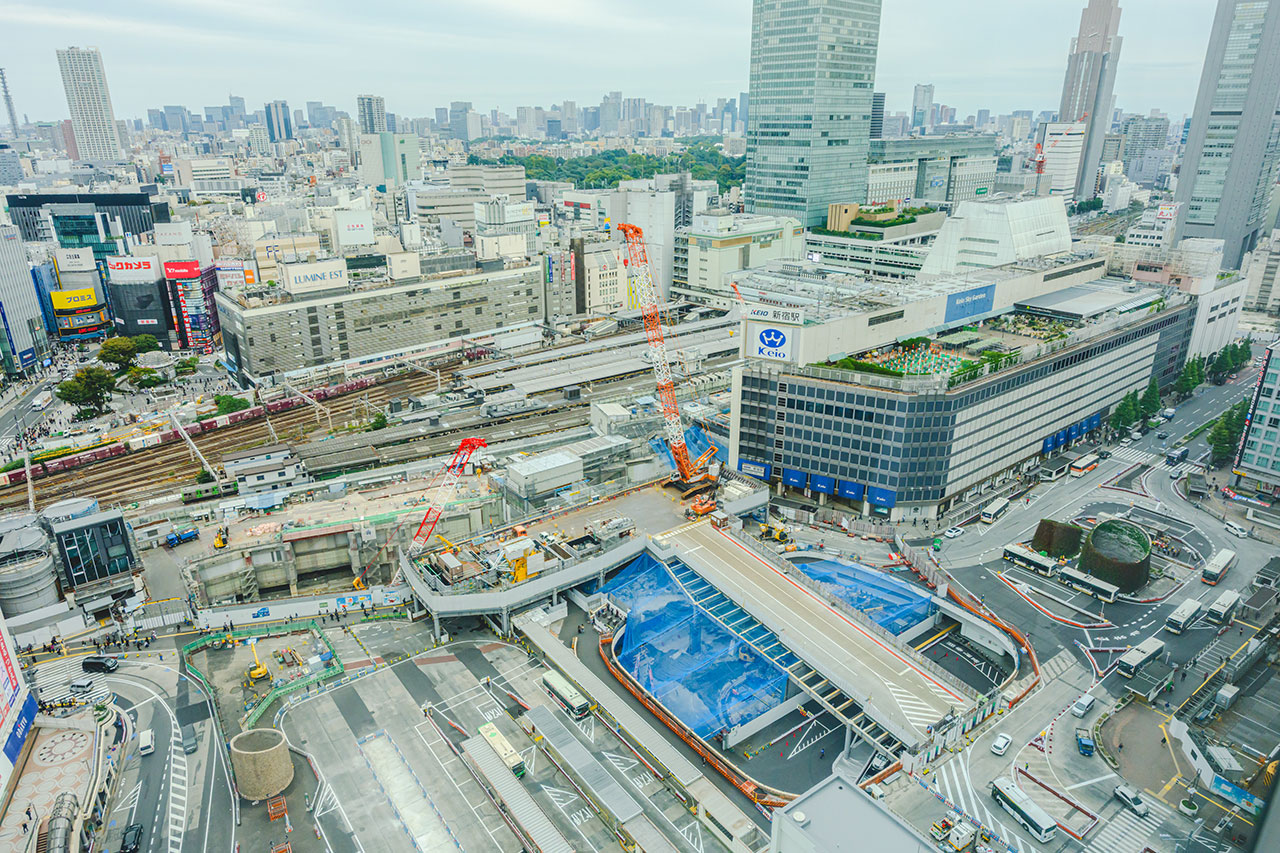
"We need to make it something that the many people who will use it will feel like they've built a great town. To do that, it's important not to just think about each individual part, but to always pursue overall optimization while taking a broader view of the new town as a whole, and I want to continue to keep that in mind as I continue to be involved in this project," says KAWAMOTO.
MIKUNIYA adds, "I hope to incorporate next-generation mobility and create a new form for the station plaza. The ultimate goal is to see what value we can provide to the people who will use it. I don't want to be an engineer who makes things, but an engineer who creates the city of the future. I believe that this is where the value of PACIFIC CONSULTANTS a company responsible for city development, lies."
YOSHIMI also recalls his days as a young man when he joined the company with the desire to work in urban development. "At first, I didn't have the ability to take on the responsibility of urban development. I was determined to learn more, so I gained experience in a variety of fields, both civil engineering and architecture, including planning and designing roads and civil engineering structures, and managing construction. Now that I'm on the front lines of urban development management, I realize that my experiences up to now were not a detour at all. I will continue to do my best as the project manager for this magnificent project," he said, looking back on his time at the company and expressing his enthusiasm for the future.
PACIFIC CONSULTANTS' comprehensive capabilities are about to add a new page to TOD efforts following Shibuya and Shinagawa.