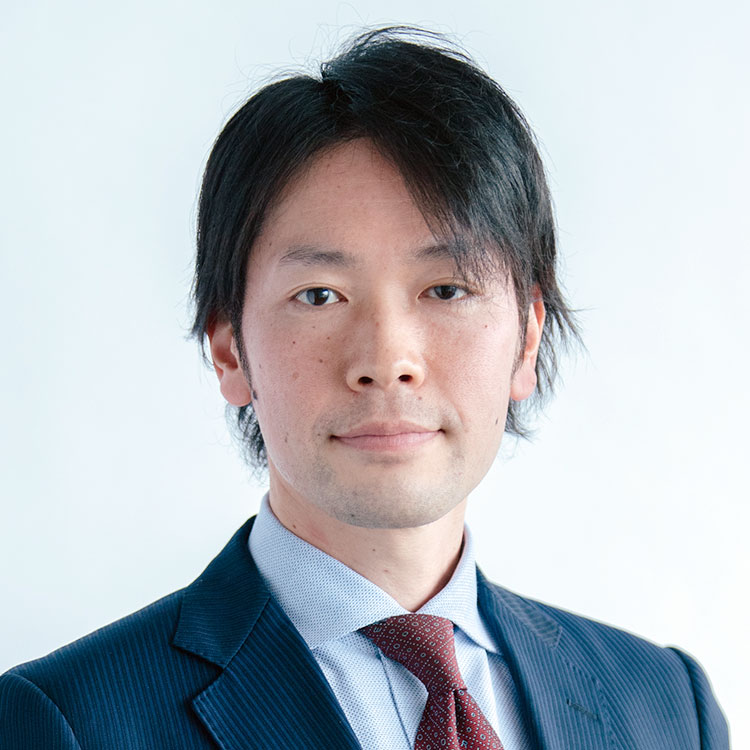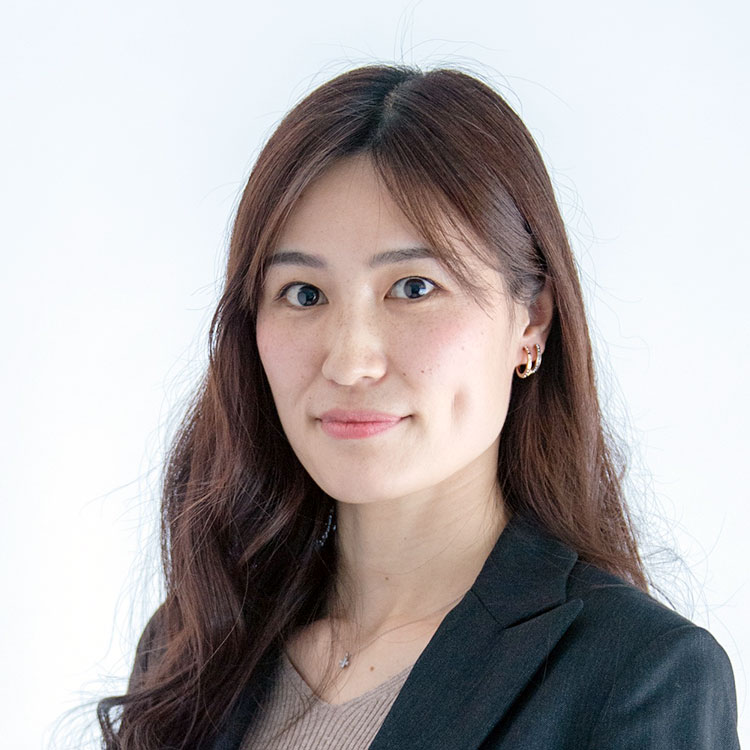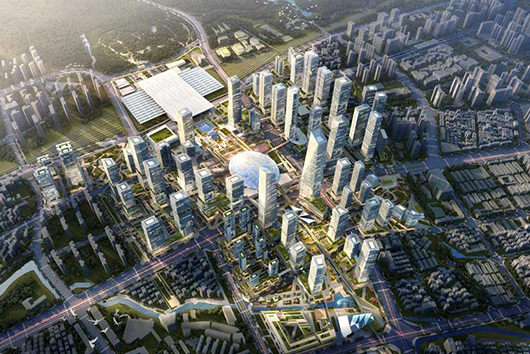

The term "area management" is by no means new. The government spoke of the need for such initiatives nearly 20 years ago, in 2008. Even before that, they had been considering central urban area revitalization, town management, and new roles for regional management. And now, the role that regions must play is becoming increasingly important, and there is a demand for comprehensive improvement of urban capabilities that encompass elements such as disaster prevention, decarbonization, and biodiversity. What does modern area management entail? We spoke with Daisaku TANAKA, General Manager of the Business Design Department, Solution Business Division PACIFIC CONSULTANTS, and Sayaka YAMAMOTO, Project Manager, who are working on various social experiments.
INDEX
- What is area management?
- Promoting walkable living will transform cities.
- Towards Sustainable Area Management
- A social experiment launched with the aim of creating a new type of area management.
What is area management?
In 2008, Ministry of Land, Infrastructure, Transport and Tourism published the "Area Management Promotion Manual." In it, area management is defined as "proactive efforts by residents, business owners, landowners, etc., to maintain and improve a good environment and the value of a region." Specifically, it aims to achieve things like "creating a comfortable and attractive environment," "forming beautiful streetscapes," "preserving and enhancing asset value," "forming attractive brand power and creating safe and secure communities," and "forming good communities." Examples include residential areas with wide sidewalks and abundant greenery created through building agreements, and beautifully maintained shops in office districts. Examples of events to create vibrancy were also presented. This represents the initial stage of area management.
In many cases, the initiatives were spearheaded by the real estate developers responsible for developing the area. While residents and landowners also participated, the real estate developers were primarily responsible for planning and deciding on the initiatives, as well as providing funding and personnel. Their main objective was to maintain and improve real estate value by enhancing the area's attractiveness. The fact that these unprecedented area-specific initiatives not only created beautiful scenery but also sparked new vibrancy and community building was a significant achievement. However, because they were developer-led, their effectiveness may have been limited. Resident-led initiatives were also attempted, but securing funding and coordinating with related organizations proved difficult, and they have not yet become large-scale projects. One new impetus for this was the walkable town development initiative launched by Ministry of Land, Infrastructure, Transport and Tourism in 2019.
Promoting walkable living will transform cities.
Walkable is a new urban development concept centered on pedestrians, and refers to a city designed in accordance with this idea. It aims to transform traditional street spaces from car-centric to people-centric spaces. Specifically, it involves using the roadside (land) adjacent to the road and the road itself as an integrated space to create areas where people can gather and engage in various activities. In 2020, the "Walkable City Promotion Project" was also launched. This project provides national government subsidies covering half of the necessary expenses for municipalities that repair and utilize streets, parks, and plazas to transform them from car-centric to people-centric spaces, and it is still ongoing. In addition, the pedestrian convenience enhancement road system, commonly known as "Hokomichi," also started in 2020. Designated roads allow for benches to be placed on the sidewalks and food trucks to operate, making them places where people can not only walk but also linger.
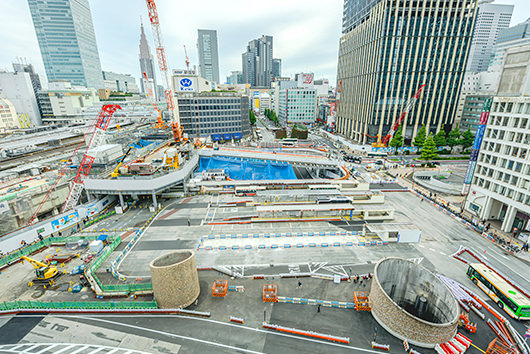
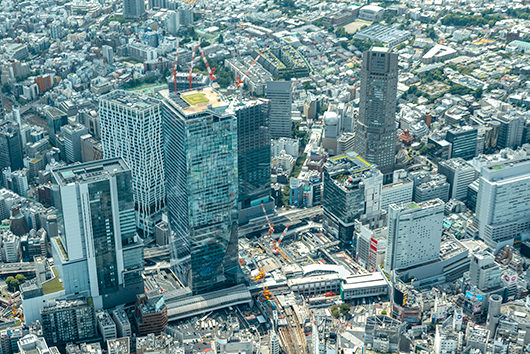
Furthermore, this shift from a car-centric to a people-centric approach has extended beyond road spaces to the concept of station plazas, with new station plaza development underway around Shibuya Station, Shinagawa Station West Exit, and Shinjuku Station West Exit. Walkability has become a crucial indicator for urban development, and the scope has expanded significantly from roads to plazas, and even to public spaces such as rivers and vacant spaces in public facilities, thus advancing the traditional approach to area management.
Early area management focused on creating vibrancy by improving the landscape and aesthetics, and by planning events. However, the walkable concept aims to create comfortable open spaces by connecting road spaces with the adjacent public spaces, thereby creating new places that are attractive to people. Roads go beyond being merely spaces for transportation; they become places where people can linger, fostering new encounters and interactions, and even generating business opportunities. By making infrastructure multi-use, this leads to the creation of new value in the area, and has attracted significant attention as an upgraded form of area management.
Towards Sustainable Area Management
However, what is required of cities today is not just walkability. Cities where people gather, new encounters and interactions, and businesses are born must also possess sustainability, including disaster prevention, decarbonization, environmental coexistence, and biodiversity. In fact, certification systems that evaluate such sustainability have been devised and are becoming widespread in the international community. The most mainstream and currently the most widely used in the world is LEED. Developed and operated by the American non-profit organization USGBC (US Green Building Council), it evaluates the environmental performance of environmentally friendly buildings and cities. As of December 2025, 123,411 certifications have been issued worldwide *1.
The LEED certification covers various categories, including individual buildings, interiors, building operation and management, development and redevelopment, and housing, but it also includes a category for urban and community development. It evaluates how much a city contributes to improving people's quality of life (QOL) in areas such as natural ecosystems, energy, water, waste, and transportation, and is one of the indicators for comprehensively assessing urban strength. Area management is now evolving significantly towards sustainable area management that enhances urban strength itself and contributes to people's QOL.
A social experiment launched with the aim of creating a new type of area management.
Various initiatives are already underway as part of area management efforts that look towards the future of new cities. PACIFIC CONSULTANTS has also played a part in these efforts.
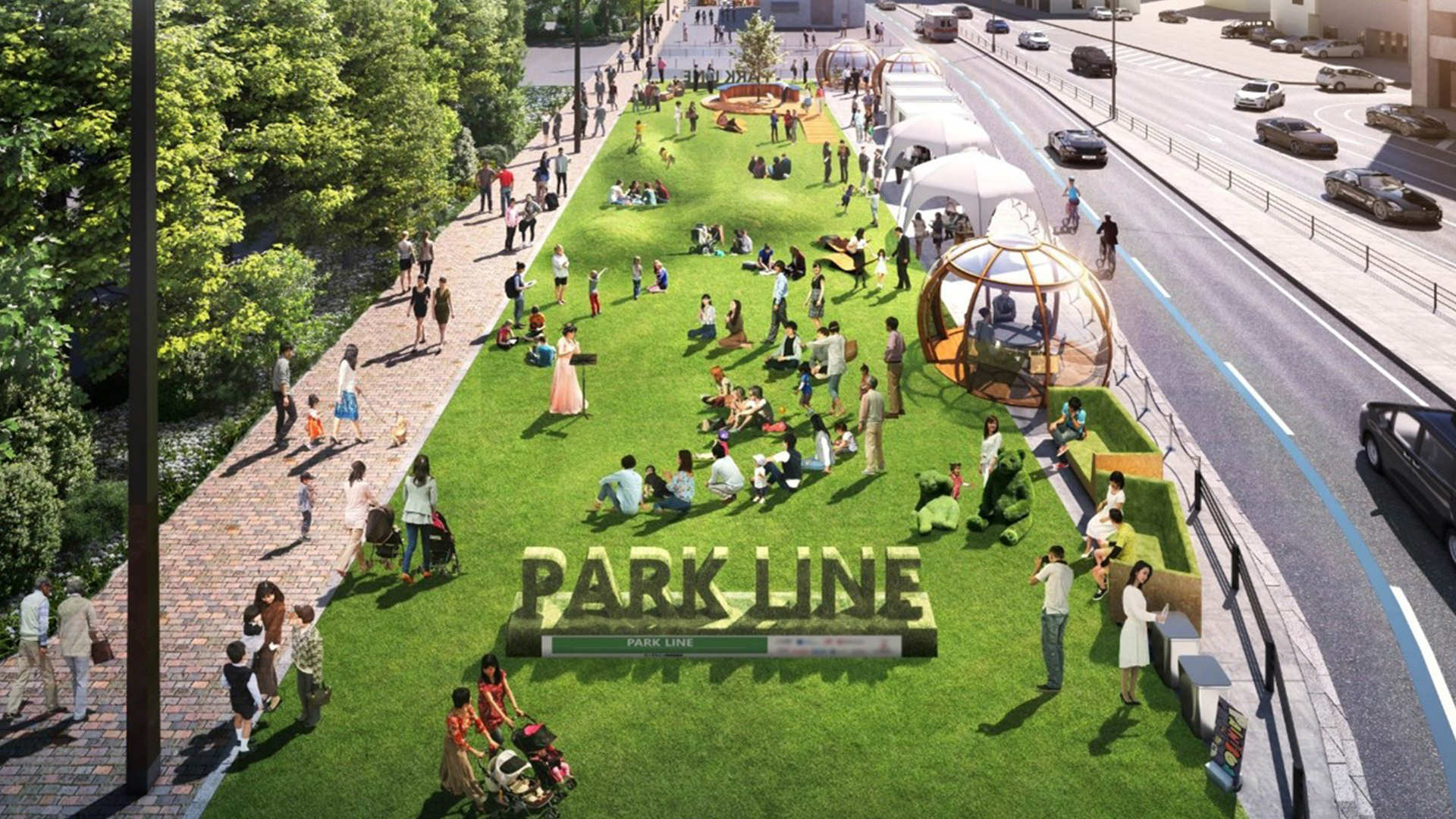
For example, there is establishment and activities of Park Line Promotion Council. This council was launched in December 2020 as a subcommittee of the "Study Group on the Future of Public Infrastructure," which was establishment primarily by PACIFIC CONSULTANTS and Taisei Corporation (it will become a general incorporated association in 2024 *2), and in May 2022, it conducted a social demonstration of "transforming road spaces into public squares" with the aim of "public space management (improving dwell time)."
*2 An intermediary support organization that contributes to solving social and regional issues from the perspective of “public space management,” including the future of public infrastructure, new approaches to utilizing public spaces, and qualitative transformations of public spaces through private-sector management.(Member Companies) Taisei Corp. (Co-Representative), Pacific Consultants Co., Ltd. (Co-Representative), JTB Corporation, Mizuho Bank, Ltd., Daiwa Lease Co., Ltd., NTT Urban Solutions Research Institute, Inc., NTT East, Inc., Docomo Bike Share, Inc., Hakuhodo Inc., Japan Post Real Estate Co., Ltd.
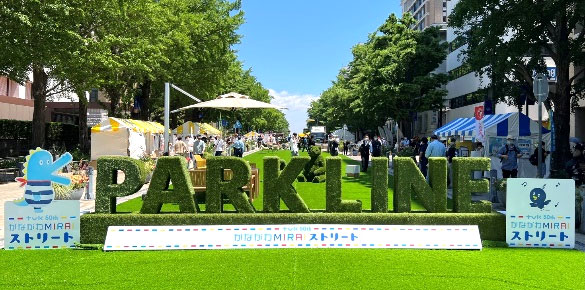
This project involved transforming the road space on Nihon-Odori in Yokohama City into a public square. A 75-meter-long section of roadway space, from Yokohama Park to in front of the Yokohama Port Post Office, was covered with 100% recyclable artificial turf, and various well-being-related activities were planned. The goal was to create a comfortable space on the road, allowing local residents and visitors to experience this new way of using the road. This initiative attracted significant attention, leading to a second phase: a social experiment using the road space on National Route 357 in Chiba, from in front of Chiba City Hall to in front of Chiba Bank. In addition to creating a public square using artificial turf, new measures to improve dwell time were introduced, including the provision of Wi-Fi (within the Park Line demonstration area) and power supply ports.
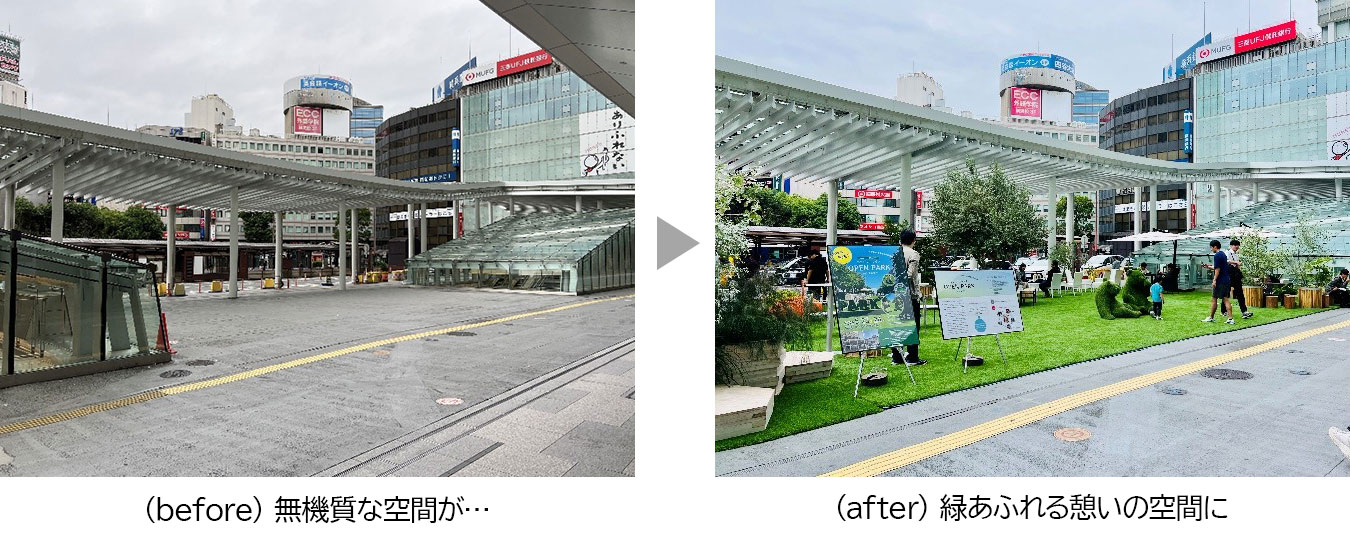
Since then, we have continued to conduct such social experiments in various locations, and most recently, on May 23rd and 24th, 2025, we conducted the "Yokohama Station Central West Exit Plaza Parkization Social Experiment: Yokohama Nishiguchi OPEN PARK #01 Ekimae" at the west exit of Yokohama Station.
The "Yokohama Nishiguchi OPEN PARK" was organized by the Yokohama Nishiguchi Area Management Association, with PACIFIC CONSULTANTS participating as a planning and operational collaborator. Artificial turf was laid in a portion of the station square area that is normally used as a taxi stand and bus stop, and sofas and parasols were placed there. Food trucks and market stalls were set up, and street pianos and jazz live performances were held, exploring the possibilities of a new station square.
Because the location was a station plaza rather than a road, there were many stakeholders and users, including railways, buses, taxis, and commercial facilities, and of course, it was not possible to diminish its normal function as a public transportation hub. Coordination with many related organizations was necessary, and PACIFIC CONSULTANTS, which regularly works in cooperation with various public and private organizations, acted as a hub for coordination among these organizations and supported this social experiment.
At PACIFIC CONSULTANTS, we will continue to explore new possibilities in area management by bringing together the strengths of the national and local governments, resident groups, and private companies, while continuing to examine the various challenges revealed through social experiments. In October 2025, we already launched the Solutions Business Division, a new organization responsible for creating new social value together with various partners, including private companies. Going beyond the conventional framework of construction consulting, we aim to provide new value that balances social responsibility and business viability by providing end-to-end support, from strategy formulation to business feasibility studies and implementation support.