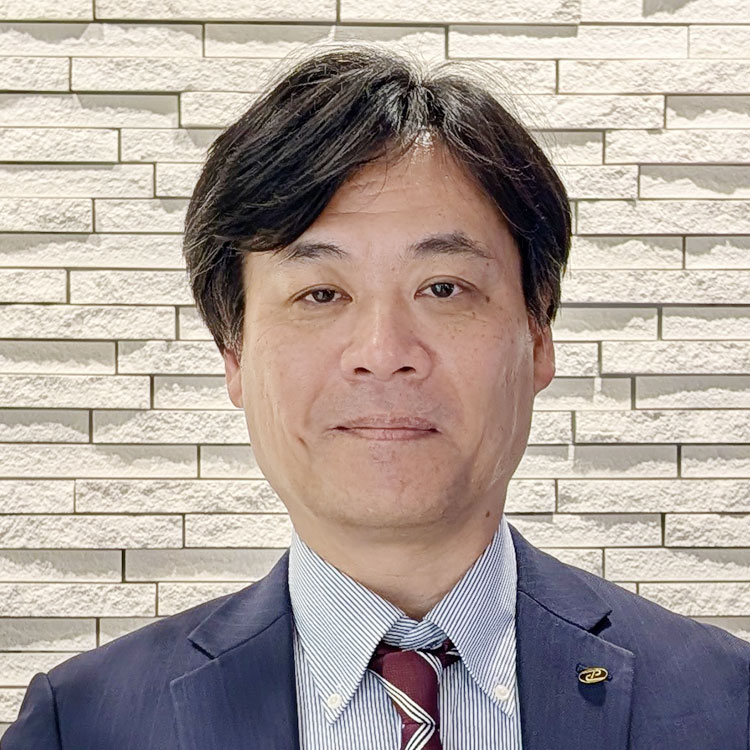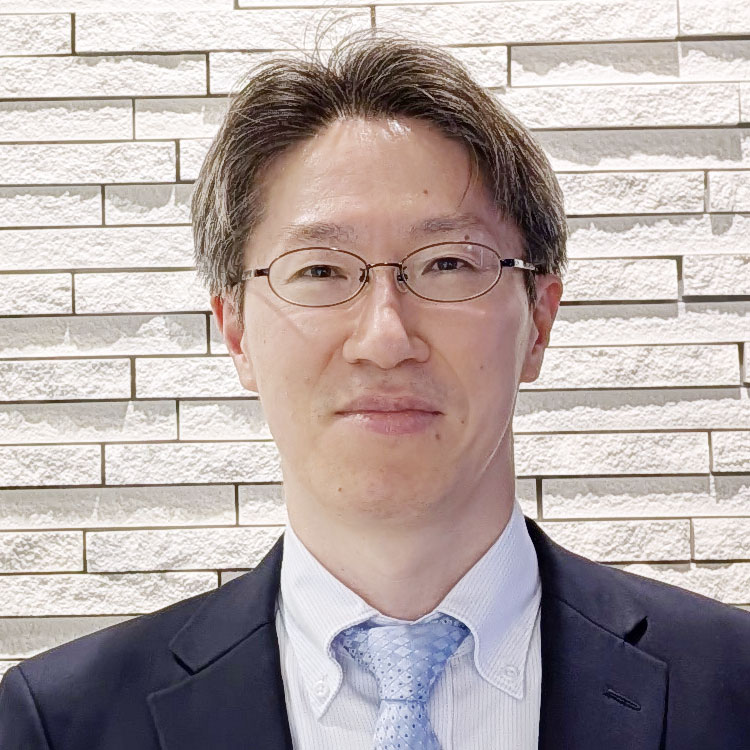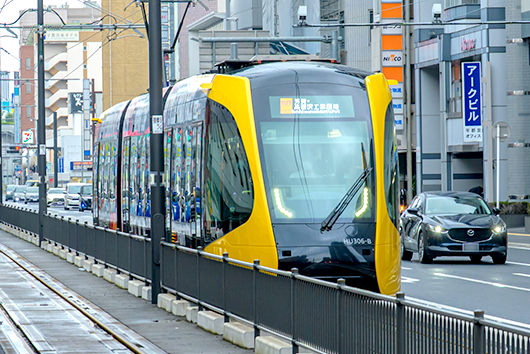

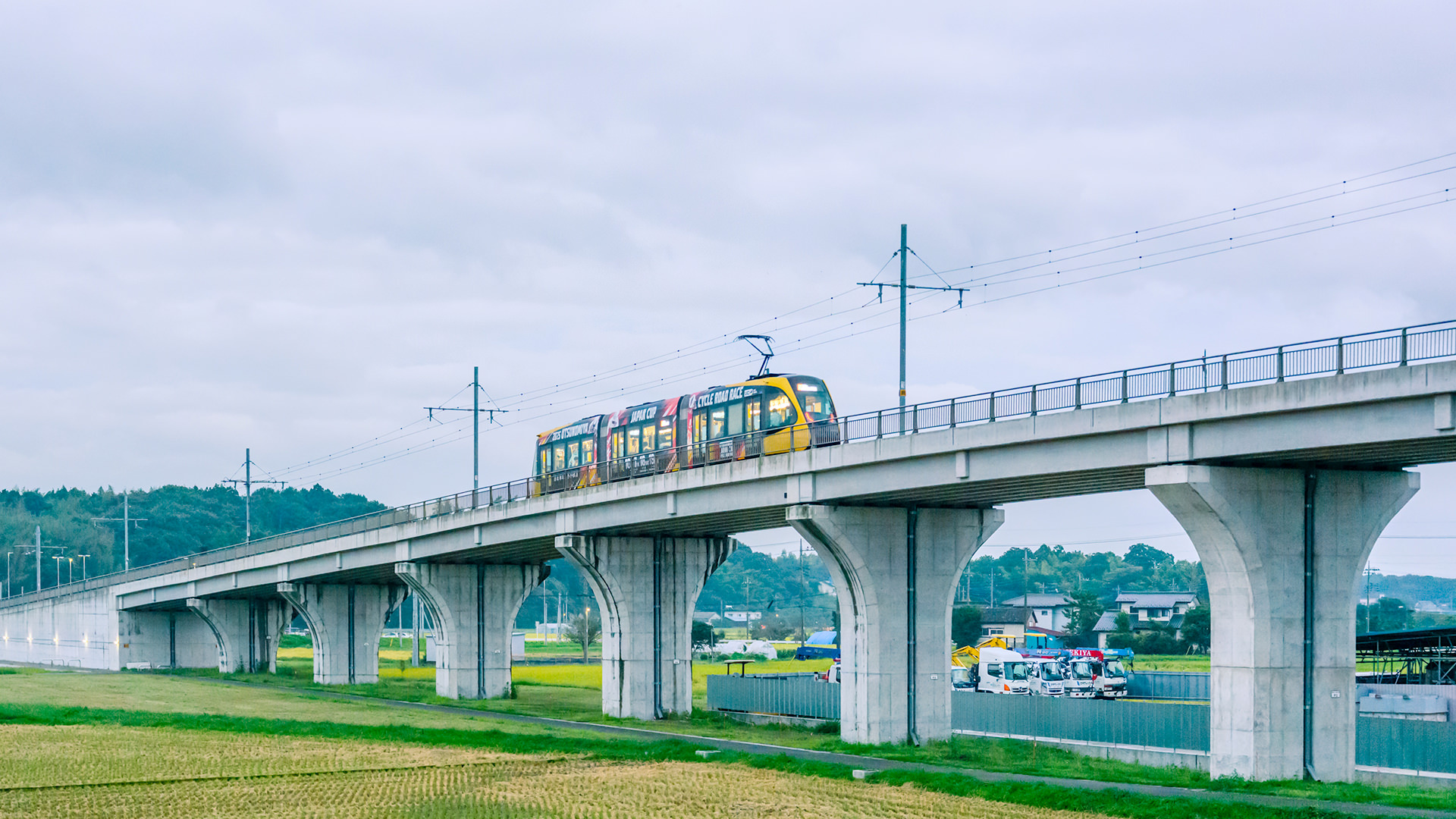
On August 26, 2023, the Light Rail Transit (LRT) "Light Line" opened in Utsunomiya City, marking the first LRT in Japan in 75 years and the first new LRT in the country as it is not an extension or improvement of an existing line. PACIFIC CONSULTANTS participated in the introduction of this LRT, which is expected to play a major role in the next generation of public transportation networks, as a member of the joint venture. They were mainly responsible for the design of sections that were considered difficult to construct on the new line, such as the improvement of the Minemachi Overpass and the Kinu River Bridge. Bunya IKEHATA from the Transportation Infrastructure Div., Osaka Headquarters, who led the project, and Takenori MIKAWA from Railway Planning Sec., Railway Dept., Transportation Infrastructure Div., reflected on the project.
INDEX
- The challenges that Utsunomiya City was facing
- LRT is better than monorail
- Thin rails are used to accommodate the passage of emergency vehicles
- Bridge designs that are suitable for future transportation systems
- The railway line also incorporates unique features that are only possible because it runs alongside people's daily lives
- Light Line that changed our lives
The challenges that Utsunomiya City was facing
Utsunomiya City, the largest city in northern Kanto with a population of approximately 500,000, has long faced challenges with its transportation system. One of these challenges is chronic traffic congestion.
Prioritizing transportation to the Tokyo metropolitan area, railways and roads developed along north-south axes, while the development of east-west transportation within the city lagged behind. However, in the eastern part of the city, centered on the left bank of the Kinu River, there are several industrial parks, some of the largest in the country. Including the industrial parks in the neighboring Haga town, this area alone has a workforce of over 30,000 people, many of whom commute by car. Naturally, logistics within the industrial parks were also active, and the roads leading from Utsunomiya Station to the eastern industrial parks suffered from chronic traffic congestion.
Another challenge was the growing need to develop transportation networks that can cope with population decline and the aging of society.
Tochigi Prefecture is known as the "car kingdom" due to its high reliance on automobiles. The number of privately owned passenger cars per capita is 0.707, the second highest in the country after Gunma Prefecture. Moreover, the so-called donut phenomenon is progressing, with the population of the central urban area declining. If this continues, people will inevitably become even more reliant on automobiles for transportation, which will lead to worsening traffic congestion, increased CO2 emissions, and difficulties for the elderly who cannot rely on automobiles to get around, making it difficult even to maintain urban functions.
In response to these challenges, Utsunomiya City has set forth a future vision of creating a "network-type compact city" that connects multiple compact hubs equipped with essential living functions with easily accessible public transportation. To address this, the city aims to alleviate traffic congestion while simultaneously developing a major east-west public transportation network. The project adopts a "publicly owned, separated infrastructure" model, where the local government develops, owns, and maintains the track infrastructure and vehicles, while private companies lease them and provide operational services.
LRT is better than monorail
Monorails, which have been implemented in various locations across the country, were also considered as a potential new form of public transport. However, the enormous construction costs, the fact that such a large transport capacity was not necessary, and the successful implementation of the Light Rail Transit (LRT) in Strasbourg, France, provided a significant clue, leading to the selection of an LRT, which involves laying tracks on existing roads, as a strong candidate.
Subsequently, Haga Town, a neighboring town with a large industrial park, also joined the project. After various discussions, the "Haga-Utsunomiya Core Public Transportation Study Committee" was established in November 2013, and concrete studies on the introduction route of the LRT began. In 2014, a public proposal process was held for the "Basic Design Services for the LRT Track," and a design consortium of six companies, including PACIFIC CONSULTANTS (representative company: Chuo Fukken Consultants Co., Ltd.), was awarded the contract. Planning and basic design works began for the approximately 15km section from Utsunomiya Station - 6East Exit to Haga Town (Haga-Takanezawa Industrial Park), including the track, stops, and transit centers connecting to bus routes. In November 2015, the operating company "Utsunomiya Light Rail Co., Ltd." was established with investment from Utsunomiya City, Haga Town, the local business community, and local transportation operators. A groundbreaking ceremony was held in May 2018, and the line opened five and a half years later in August 2023.
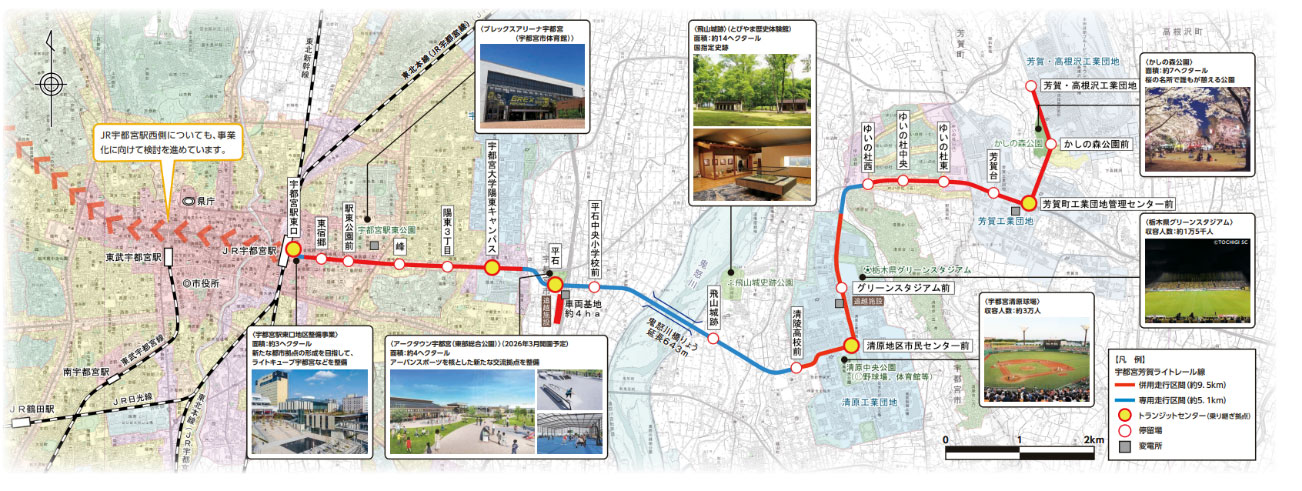
Source: Information provided by Utsunomiya City: "About the Light Line (Haga-Utsunomiya LRT)" (Utsunomiya City Construction Department)
*Ark Town Utsunomiya opened in March 2026.
Thin rails are used to accommodate the passage of emergency vehicles
The Utsunomiya Light Rail (nicknamed "Light Line") has approximately 9.4km of shared road sections and approximately 5.1km of dedicated sections. There are 19 stops, and the trains are low-floor, articulated three-car units that run at 6-minute intervals during peak hours and 10-minute intervals during off-peak hours.
From October 2014 to March 2020, over a period of approximately five and a half years, PACIFIC CONSULTANTS was responsible for the track design of the Kinu Street section, the detailed design of the Utsunomiya Station - East Exit stop and the Utsunomiya University - Yoto Campus stop, and the design of improvements to the Minemachi Overpass and the construction of the Kinu River Bridge. Among these, the improvements to the Minemachi Overpass and the design of the Kinu River Bridge, which will be the first LRT - dedicated bridge in Japan, were considered among the most challenging projects in the entire Utsunomiya Light Rail line. IKEHATA recalls:
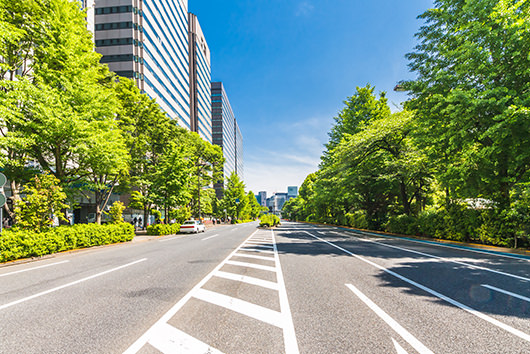
"Kinu Street, which extends from the east exit of the station, is a main street with two lanes in each direction, shoulders, and wide sidewalks. Even if two LRT tracks are laid close to the center line, two lanes of roadway can still be maintained in each direction. However, the Minemachi Overpass, which crosses National Route 4, is only just wide enough for two lanes in each direction. If LRT tracks are laid there, the roadway will be reduced to one lane in each direction. The problem then became the passage of emergency vehicles."
To allow emergency vehicles to pass, they need to travel on the tracks. However, this was impossible on the normal tracks. MIKAWA explains.
"The tracks must be level with the roadway for emergency vehicles. However, typical railway rails are 150mm high. The pavement on this bridge is only 80mm thick, so leveling it is impossible. We either have to completely rebuild the bridge or run a side road straight across Route 4. However, building a new bridge would be incredibly expensive, and running the road underneath would cause congestion on the national highway."
When the design team was racking their brains, someone suggested, "I have a good idea." "There are examples of thin rails being used in Germany and the Netherlands. Why don't we use those?" Upon reviewing the materials, they found examples of thin rails with a height of approximately 60mm. They immediately contacted the manufacturer and local construction consultants to obtain detailed information, not only on the height but also on the fixing method. They thoroughly verified the safety and maintainability. As a result, they found that it could be used without any problems, and after obtaining approval from the Traffic Safety and Environment Research Institute, they succeeded in adopting it for the first time in Japan. They provided detailed specifications to the Dutch manufacturer and requested the production of the rails. Because it was a unique method of fixing the rails to the concrete slab with rubber, they also received advice on the construction aspects.
"If we hadn't come across these rails, we wouldn't have been able to use the existing Minemachi overpass. In that sense, I think it was extremely significant," MIKAWA recalls.
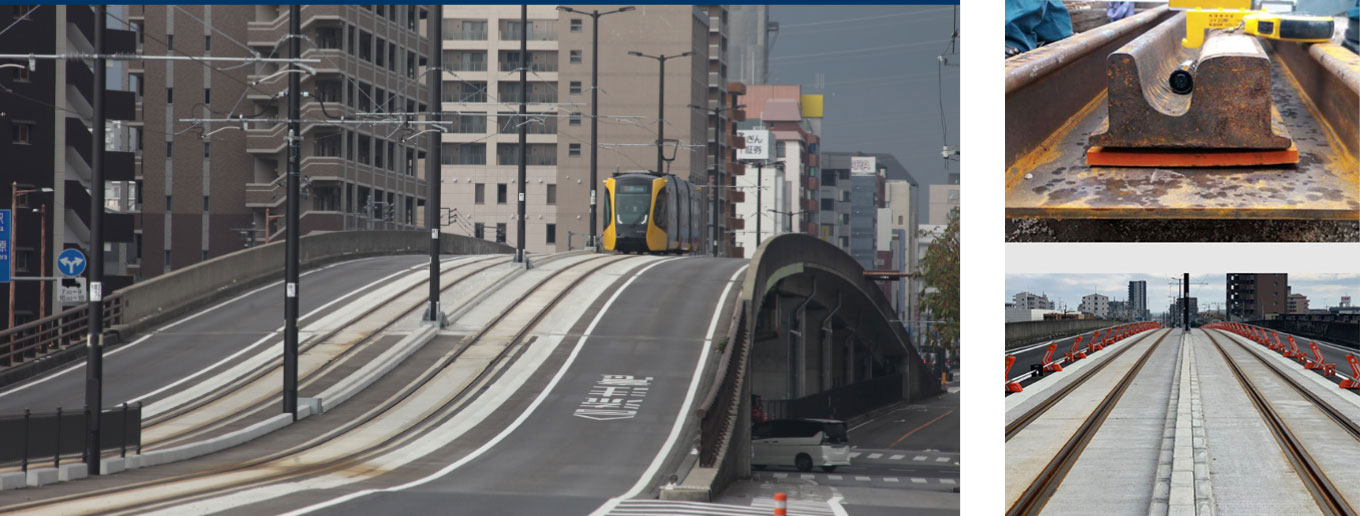
Source: Edilon Sedra / “Case Issue M03 | 2023, New Light Rail on Minemachi Overpass, Utsunomiya”
Bridge designs that are suitable for future transportation systems
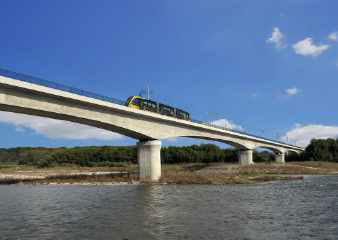
Simple and light bridge design
As can be seen from the route map, the Light Line, after leaving Utsunomiya Station, does not head straight for its final destination, the Haga-Takanezawa Industrial Park. Instead, it branches off from the shared section of Prefectural Road 64 (commonly known as Kinu Street or Yanagida Road) and enters a dedicated section, heading slightly south, crossing the Kinu River, and entering the Kiyohara district, where the industrial park, baseball field, soccer field, and community center are located. From there, it heads north, rejoining the shared section of Prefectural Road 64, and passes through the Utsunomiya Technopolis Center and Haga Industrial Park before reaching its final destination, the Haga-Takanezawa Industrial Park. Crossing the Kinu River required the construction of a new bridge.
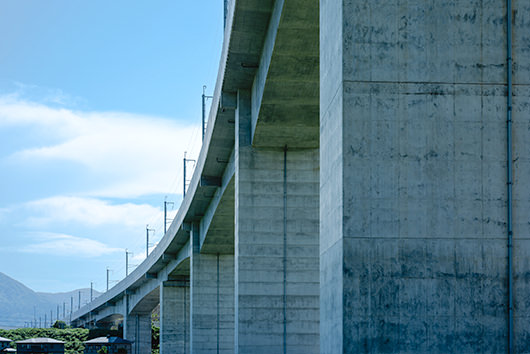
"At 643 meters in length, it is the longest PC-structured railway bridge in Japan," says IKEHATA. The project required a groundbreaking vehicle design that evokes the image of next-generation public transportation, as well as a bridge that would blend seamlessly with the rich natural landscape of the Kinu River.
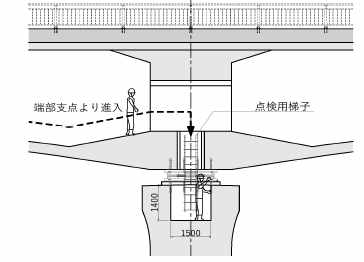
The inspection ladder was also concealed, allowing access from inside the beam.
"By using a nine-span continuous box girder bridge, we emphasized the horizontal lines, creating a light and beautiful appearance. Furthermore, considering both aesthetics and maintainability, we ensured that the inspection scaffolding for the support sections between the piers and the box girder was not exposed. If the scaffolding were exposed, there would be concerns about it falling during a major disaster, and the scaffolding itself would require maintenance. This would not be suitable for a future public transportation system. We created inspection spaces in advance on the bridge seat surface of the piers, allowing access from within the girder using ladders. In addition, while electrical, signal, and communication track equipment, as well as gas pipes and cable television conduits that were required, are usually suspended beneath the slab, we have all housed them within ducts on the bridge deck. Drainage pipes are also installed within the box girder and ultimately collected at the end piers, preventing water from flowing into the river. This eliminates concerns about drainage pipes falling out."
The railway line also incorporates unique features that are only possible because it runs alongside people's daily lives
Designing the LRT tracks, which run through existing roads and station plazas, and operate in areas close to people's daily lives, required various considerations. Utsunomiya is known as the "City of Thunderstorms" because it is a place prone to thunderstorms, and drainage channels have been carefully constructed beneath station plazas and roads in the city center. Maintaining these channels was essential. MIKAWA explains.
"We adopted the thin rails used on the Minemachi Overpass for these sections as well. This allows us to run the tracks within the thickness of the existing pavement, eliminating the need to reroute the underground waterway. Furthermore, this creates a level surface between the tracks and the road, contributing to improved pedestrian safety."
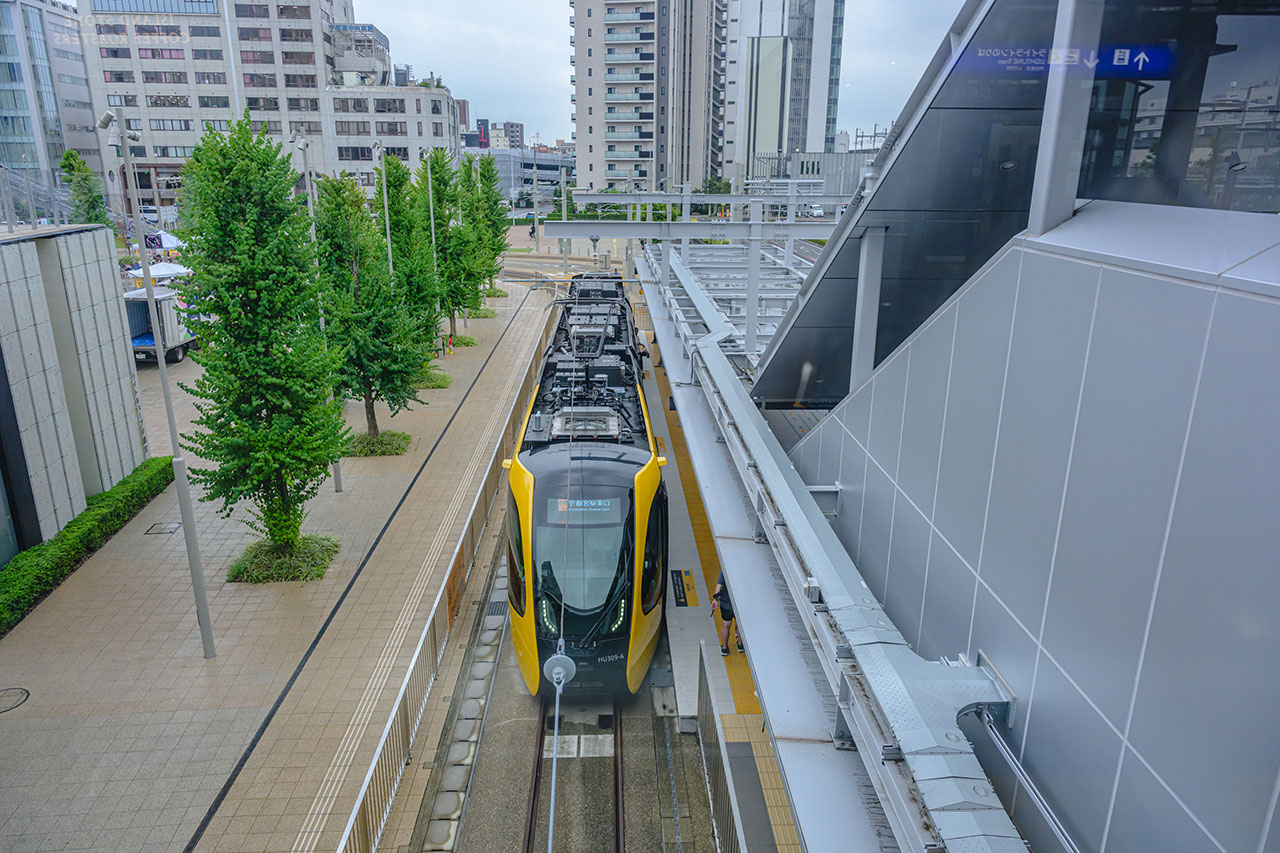
Here too, a thin rail was adopted.
Furthermore, in the design of the Utsunomiya Station - East Exit Stop and the Utsunomiya University - Yoto Campus Stop, local elements were incorporated to express the unique character of Utsunomiya, using local wood for the ceiling and Oya stone for the benches. Of course, since these materials are prone to deterioration, the areas in which they are used were carefully selected. In addition, in the dedicated section passing near Hiraishi Central Elementary School, a construction method was adopted in which the rails are fixed to a concrete slab with resin instead of ballast, taking into consideration low noise and vibration.
Light Line that changed our lives
Since its opening in August 2023, the Light Line has been bustling with passengers far exceeding initial projections, with approximately 390,000 users in the first three months after opening. This is 1.3 times the initial forecast. In particular, usage on weekends and holidays was three times the initial forecast. In a survey, in addition to improved satisfaction with commuting to work and school, many people cited "increased opportunities to go out" and "improved convenience of public transportation as a whole" as benefits of the opening, and it has had a significant effect on maintaining and increasing the resident population and maintaining and increasing land prices (based on "The Situation After the Opening of the 'Light Line'" (materials from the 37th Haga-Utsunomiya Core Public Transportation Study Committee, November 27, 2023) and "The Effects of the Development of the 'Light Line'" (materials from the 40th Haga-Utsunomiya Core Public Transportation Study Committee, May 16, 2025)).
Currently, the "Light Line" is in its second phase, with detailed design work underway on a 5km section that will loop from the east exit to the west exit of Utsunomiya Station, extending to the vicinity of the Education Hall. The goal is to open the line in 2036. MIKAWA reflected on his work.
"Installing tracks while improving existing roads was a new challenge for Railway Dept. There were many difficulties in the design process, but when we hear stories of elementary school students being able to go to the sports park on their own, or elderly people having more opportunities to go out, all the hard work just melts away. We were able to be involved in a very valuable project. It's the ultimate reward for an engineer."
IKEHATA also says he feels a great sense of accomplishment.
"The Light Line has become a good example for the future of compact cities and core public transportation. It has attracted a lot of attention from local governments nationwide, and we would be happy if this leads to the introduction of more LRTs."
The Utsunomiya Light Rail, built from scratch, is aiming to become a catalyst for the spread of LRTs in Japan, conveying various insights and lessons learned along the way.