
Bicycles have many advantages, including being easily accessible to many people, emitting no carbon dioxide, contributing to health promotion, and helping to maintain transportation functions during disasters. Promoting their use will play a major role in realizing a sustainable society. We talked to Takashi KURISU, Chief Consultant of the Transportation Planning Promotion Sec., Transportation Planning Dept. Social Innovation Div., PACIFIC CONSULTANTS, and Yu MASUIKE from the same section, who are involved in supporting the formulation of the national "The Third Bicycle Utilization Plan" and in the planning of bicycle utilization policies for many local governments.
INDEX
- The value of bicycles is being re-evaluated
- The third bicycle utilization promotion plan
- Japan has allowed bicycle to ride on sidewalks
- The shift to "bicycles should, in principle, use the car road."
- The increasing use of bicycles is transforming our lives and communities.
- What PACIFIC CONSULTANTS can do
The value of bicycles is being re-evaluated
In recent years, policies utilizing bicycles have been accelerating in various fields such as urban planning and transportation planning around the world. Against the backdrop of this global trend, the value of bicycles is being re-evaluated in Japan as well.
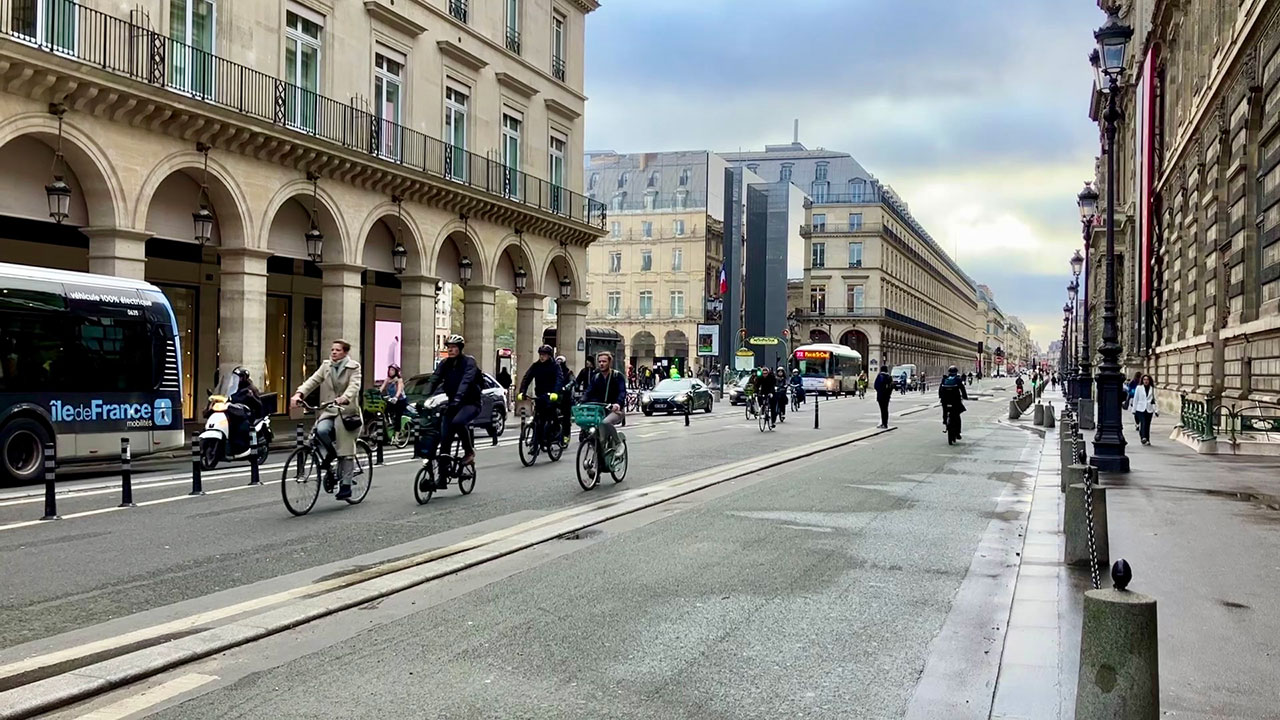
The prototype of the modern bicycle is said to has been invented in England nearly 140 years ago, giving it a long history, but now its appeal is attracting renewed attention. The reason behind this is the strong demand for reducing CO2 emissions. Rethinking the way cities operate, which rely on gasoline-powered vehicles for transportation and delivery, is an essential element in achieving carbon neutrality by 2050, and the bicycle is one of the most powerful tools for this.
Japan is already considered one of the countries where bicycle use is advanced. The number of bicycles owned is very high at approximately 68.7 million (about one bicycle for every two people), and the bicycle share (the proportion of bicycles among all modes of transportation, including walking, cars, and public transport) is also at a high level of about 12%.
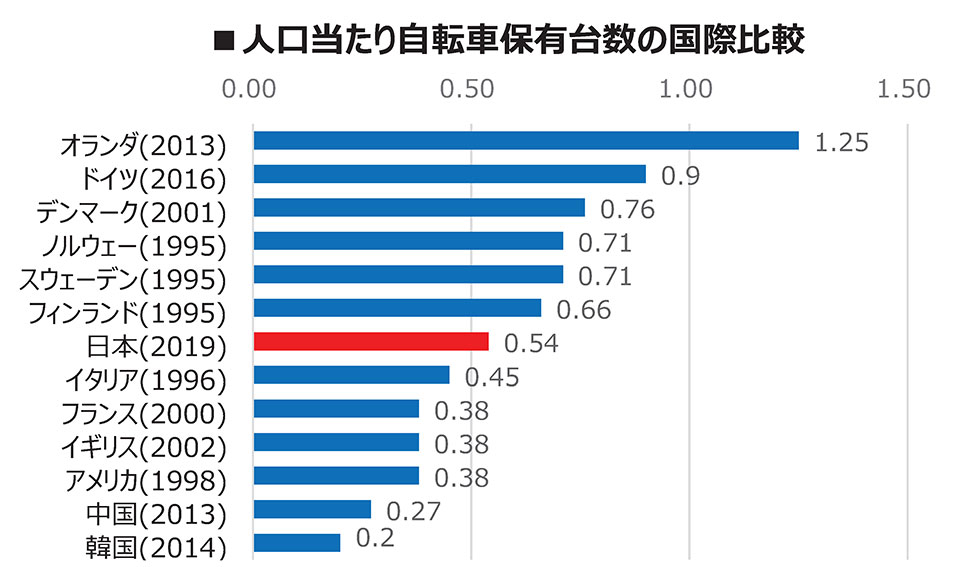
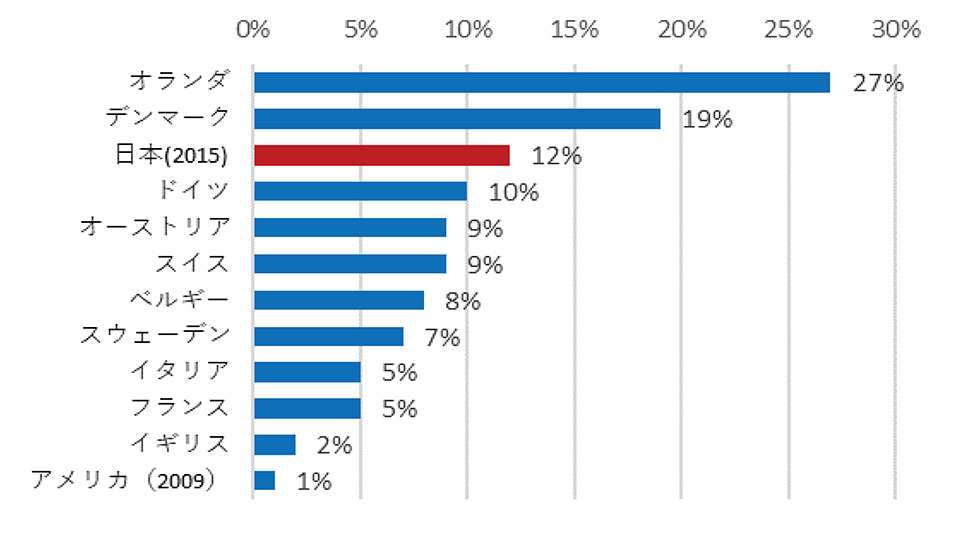
Source: "Traffic Safety Measures for Local Roads and Bicycle Utilization Promotion Policy" (New Road Research Group, Road Bureau, Ministry of Land, Infrastructure, Transport and Tourism, August 1, 2025, Road Traffic Safety Measures Section, Environmental Safety and Disaster Prevention Division)
Moreover, in Japan, where natural disasters such as earthquakes occur frequently, bicycles play a significant role in maintaining transportation functions during disasters. Furthermore, for elderly people who are unsure about driving cars, bicycles are an easy and convenient means of transportation, and they also play a major role in promoting health and tourism.
The third bicycle utilization promotion plan
The government is taking serious steps to further promote the use of bicycles. The starting point for this was the "Bicycle Utilization Promotion Act," which came into effect in May 2017. Based on this, the first and second plans were formulated and implemented, and in May 2026, "The Third Bicycle Utilization Promotion Plan (covering the period until fiscal year 2030)," in which our company also played a role in the formulation support, was approved by the Cabinet.
The latest third plan has several distinctive features that set it apart from the previous first and second plans. One of these is the explicit inclusion of a "vision" at the beginning, something that was not present in previous plans. This vision outlines the society that the plan aims to create through bicycle use and the role that bicycles should play, clearly stating the philosophy of "expanding the role of bicycle transportation by realizing an environment where bicycles can be used safely and comfortably, and aiming for a sustainable society where people and communities can live in harmony and prosperity." Furthermore, it aims to establish bicycles, which connect people and communities and support the quality of life and the sustainability of communities, as an important means of transportation on par with walking and public transport by 2030. Thus, this plan presents a vision for the first time, making it clearer what kind of state the plan aims to create and by when, through the promotion of bicycle use.
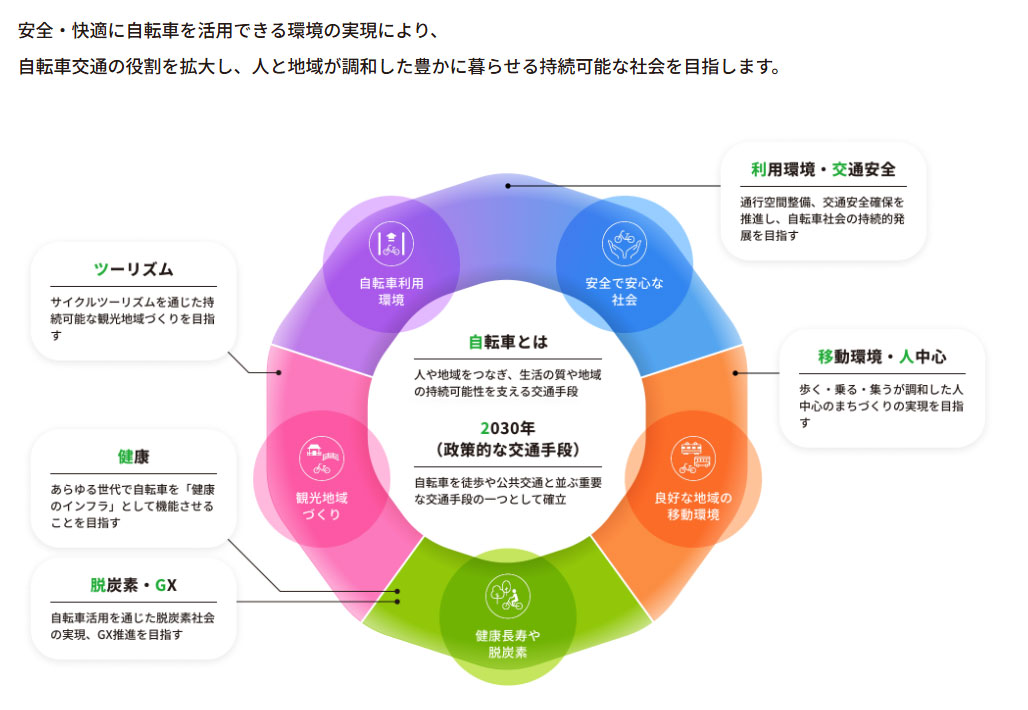
Source: "Regarding the Bicycle Utilization Promotion Plan" (Ministry of Land, Infrastructure, Transport and Tourism, GOOD CYCLE JAPAN website)
The following five goals are listed in the table below.
The five goals of the Third Bicycle Utilization Promotion Plan (FY2026-2030)
| Five Goals | Specific Indicators |
| [Goal 1] To realize a good cycling environment by developing a safe and comfortable riding environment | ・Number of municipalities that have formulated the bicycle utilization promotion plan ・Number of municipalities that have formulated bicycle network plan ・Extension of bicycle lane development |
| [Goal 2] To realize a safe and secure society free from bicycle accidents | ・Helmet usage rate ・Coverage rate of bicycle liability insurance, etc. |
| [Goal 3] Creating a good local mobility environment by expanding the role of bicycle transport | ・Number of municipalities that have introduced shared bicycles ・Number of companies and organizations that have declared themselves as a "Company Promoting Commutation by Bicycle " - Dissemination rate of marks related to bicycle safety standards |
| [Goal 4] To realize a vibrant, healthy, and long-lived society and a decarbonized society by promoting bicycle use | ・Creating opportunities for exercise and sports through cycling (percentage of people who engage in cycling as exercise or sport, percentage of people who participate in exercise and sports, percentage of people with regular exercise habits) ・Extending healthy life expectancy ・Number of members in the Decorating Support Group (PPP Council) who are working on using public transport, bicycles, or walking ・Share of bicycle use for commuting purposes |
| [Goal 5] Promote tourism development and regional revitalization through the promotion of cycle tourism, etc. | ・Number of model routes aiming to develop advanced cycling environments ・Percentage of travelers using motorcycles or bicycles for domestic travel (overnight stays and day trips) |
This goal has also been reorganized and expressed more specifically as "creating a good local mobility environment through the expansion of the role of bicycle transport," and the previously absent goal of "realizing a decarbonized society" has been added. The Bicycle Utilization Promotion Plan has been reviewed sequentially from the first to the third plan, but the third plan demonstrates the government's intention to take the promotion of bicycle utilization to a new phase.
Japan has allowed bicycle to ride on sidewalks
One of the things necessary to take the promotion of bicycle use to a new phase is to make it commonplace for bicycles to travel on the car road.
First of all, bicycle use in Japan has some distinctive characteristics. Let's start with its characteristics as a mode of transportation. In Europe and America, bicycles are primarily seen as practical vehicles that are sturdy and fast, but in Japan, the "mamachari" (utility bicycle) has uniquely developed, designed to be easy for women to get on and off, with a low saddle for a comfortable riding position, allowing for slow rides, and often equipped with a shopping basket and a double kickstand. As a result, it is common for women and the elderly to ride bicycles as a means of transportation, and bicycles are used for a wide range of purposes, including commuting to work or school, shopping, picking up and dropping off passengers, and leisure.
Another distinctive feature is that bicycles can be ridden on sidewalks. This is also a feature rarely seen in other countries. Originally, even in Japan, bicycles were meant to be ridden on the car road. However, against the backdrop of a sharp increase in traffic fatalities due to the rapid progress of motorization, the Road Traffic Act was amended in 1970 as an unavoidable emergency measure for traffic safety, allowing bicycles to travel on sidewalks.
However, the coexistence of pedestrians and cyclists on sidewalks is dangerous. In fact, according to a survey by the National Police Agency, while the total number of bicycle-related accidents is on a downward trend, it has remained flat at around 70,000 since around 2020, and both the proportion of bicycle accidents in all traffic accidents and the number of accidents involving bicycles and pedestrians are on an upward trend.
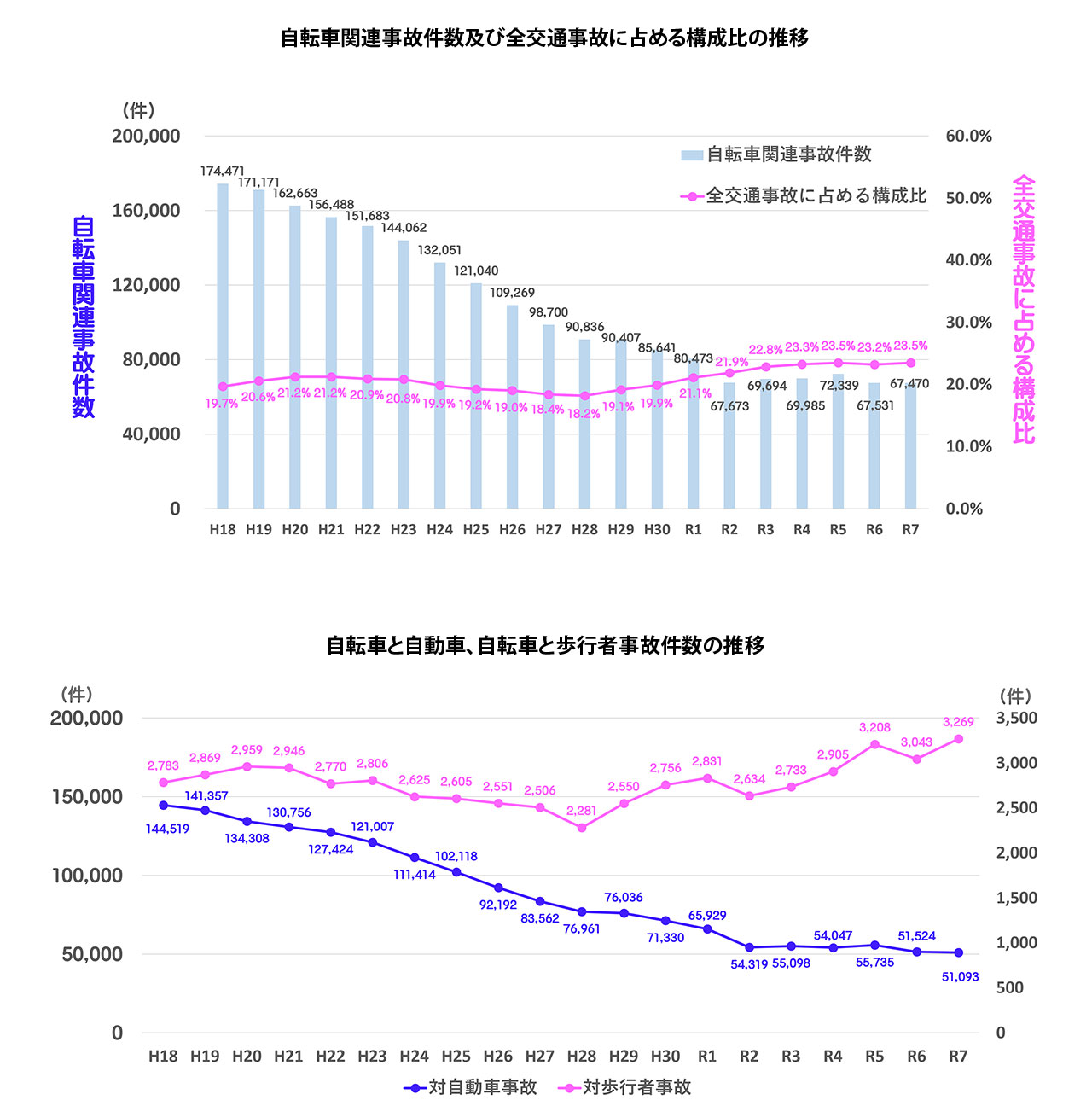
The shift to "bicycles should, in principle, use the car road."
Amid challenges such as addressing accidents between pedestrians and cyclists, the government amended the Road Traffic Act in 2007, clearly defining bicycles as "vehicles" and stating that "travel on the roadway is the general rule, with travel on sidewalks being the exception." It also clarified that bicycles may only travel on sidewalks in the following five cases.
① There are road signs and markings.
② The driver is a child or infant.
③ The driver is elderly.
④ Having a physical disability
⑤ In cases where it is unavoidable due to road conditions or traffic conditions.
Furthermore, in 2012, the "Guidelines for Creating a Safe and Comfortable Bicycle Use Environment" were established. In April 2023, wearing helmets became a recommended practice, and in 2026, the bicycle traffic violation notification system (the so-called blue ticket) was introduced. Since the revision of the Road Traffic Act in 2007, the consistent goal has been to return bicycles to "the roadway as a general rule" instead of sidewalks.
The revised Road Traffic Act of 2026 introduced "blue tickets" to ensure that bicycles are recognized as vehicles and comply with traffic rules, aiming to deter bicycle accidents. In addition, drivers are now required to proceed at a safe speed commensurate with the distance when passing a bicycle on the right side if there is insufficient space. This not only strengthens enforcement against serious and dangerous violations by cyclists, but also calls on drivers to recognize bicycles on the road as vehicles, sending a message that we should create a society where bicycles and cars can coexist safely and securely on the road.
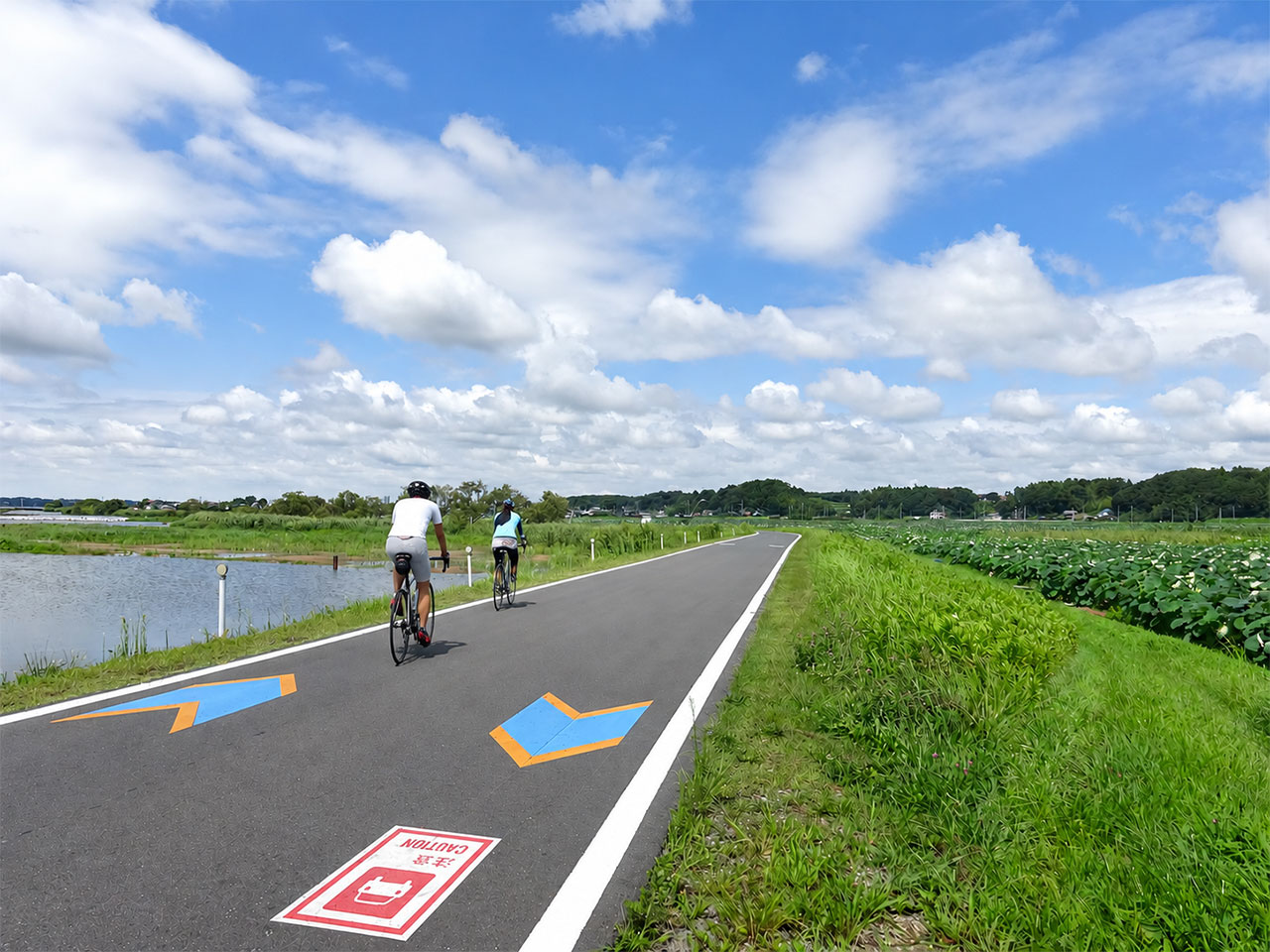
Of course, in order to enable coexistence, it is necessary to improve the current roadways so that they are easily accessible to all road users, including cyclists. The government has announced plans to strengthen the planned development of bicycle traffic spaces, which are based on the principle of bicycles traveling on the roadway, including "bicycle paths," "dedicated bicycle lanes," and "arrow-shaped road markings when bicycles are mixed with roadways," and to extend the current length of developed bicycle paths from 9,841 km (preliminary figure for FY2024) to 12,000 km by the end of FY2030, when the third plan is completed.
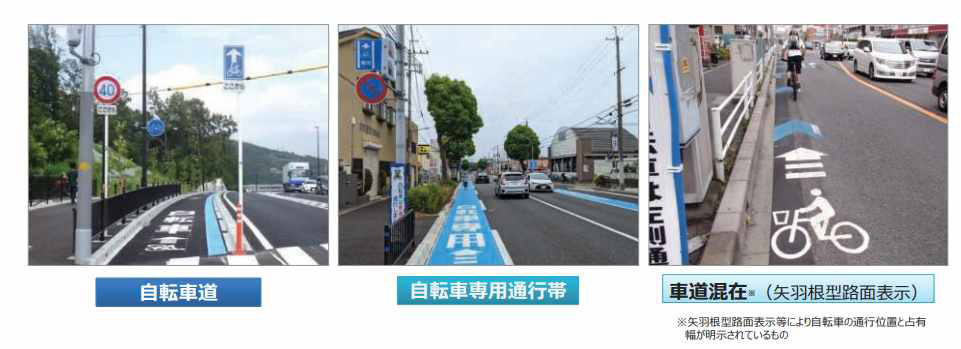
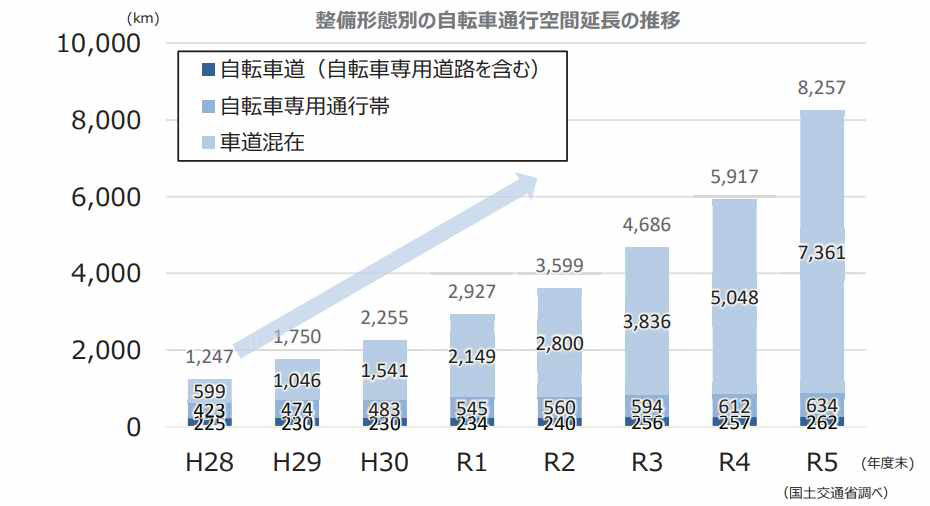
Source: "Traffic Safety Measures for Local Roads and Bicycle Utilization Promotion Policy" (New Road Research Group, Road Bureau, Ministry of Land, Infrastructure, Transport and Tourism, August 1, 2025, Road Traffic Safety Measures Section, Environmental Safety and Disaster Prevention Division)
The increasing use of bicycles is transforming our lives and communities.
The national and local governments are working to improve the cycling environment and are also promoting various other initiatives.
One example is the spread of shared bicycles, which allow users to ride from anywhere they want, anytime, and return anytime, all with just a smartphone, without having to own a bicycle. Development is progressing with the aim of improving the convenience of daily life and promoting tourism, and by developing shared bicycle ports mainly around train stations, there is also a goal to strengthen cooperation with public transportation.
As of the end of March 2025, the number of cities fully implementing shared bicycle services will reach 323 (plus 81 cities conducting social experiments), and the number of ports will exceed 30,000 nationwide as of the end of fiscal year 2024, representing an increase of approximately 50% compared to the previous year *.
Furthermore, the number of routes operating cycle trains, which allow passengers to bring their bicycles on board without disassembling them, has expanded to 145 routes operated by 74 companies by fiscal year 2024. While only about 10% of these trains operate on a regular basis, they are steadily expanding by flexibly setting the sections and times of operation.
Efforts are also underway from the perspective of promoting tourism. The number of "National Cycle Routes," designated by the government as cycling routes that Japan can be proud of on a global scale, has reached six, and seven more routes are currently under review.
Another important aspect of promoting bicycle use in the future is creating opportunities for children to learn about the joys of cycling. According to a survey by the Japan Bicycle Industry Promotion Association * comparing the percentage of bicycle users by age group in 2012 and 2021, the percentage of those aged 50 and over increased significantly from 29.5% to 53.5%, while the percentage of those aged 9 and under and teenagers decreased sharply from 25.4% to 15.4%.
If things continue as they are, we may see an increase in the number of adults who never ride bicycles. It is important for children to have fun and get acquainted with bicycles from a young age, as this will lay the foundation for the expanded role of bicycle transportation in 10 years.
What PACIFIC CONSULTANTS can do
PACIFIC CONSULTANTS has been providing various forms of support to Ministry of Land, Infrastructure, Transport and Tourism 's "Promotion of Bicycle Utilization," primarily in the field of transportation policy, in collaboration with engineers in various fields such as roads and DX promotion. In addition to supporting the formulation of the national 3rd Bicycle Use Promotion Plan and the bicycle use promotion plans of many local public organizations, we have also been involved in studies related to cycle tourism, including the National Cycle Route, as well as supporting bicycle safety education and the organization of events.
In 2017, we independently developed "TABIRIN," a travel and cycling information media platform. We continue to operate it with the aim of supporting more enjoyable and comfortable cycling trips by introducing cycling courses and maps recommended by local governments and other organizations, and connecting people who enjoy cycling with local communities.
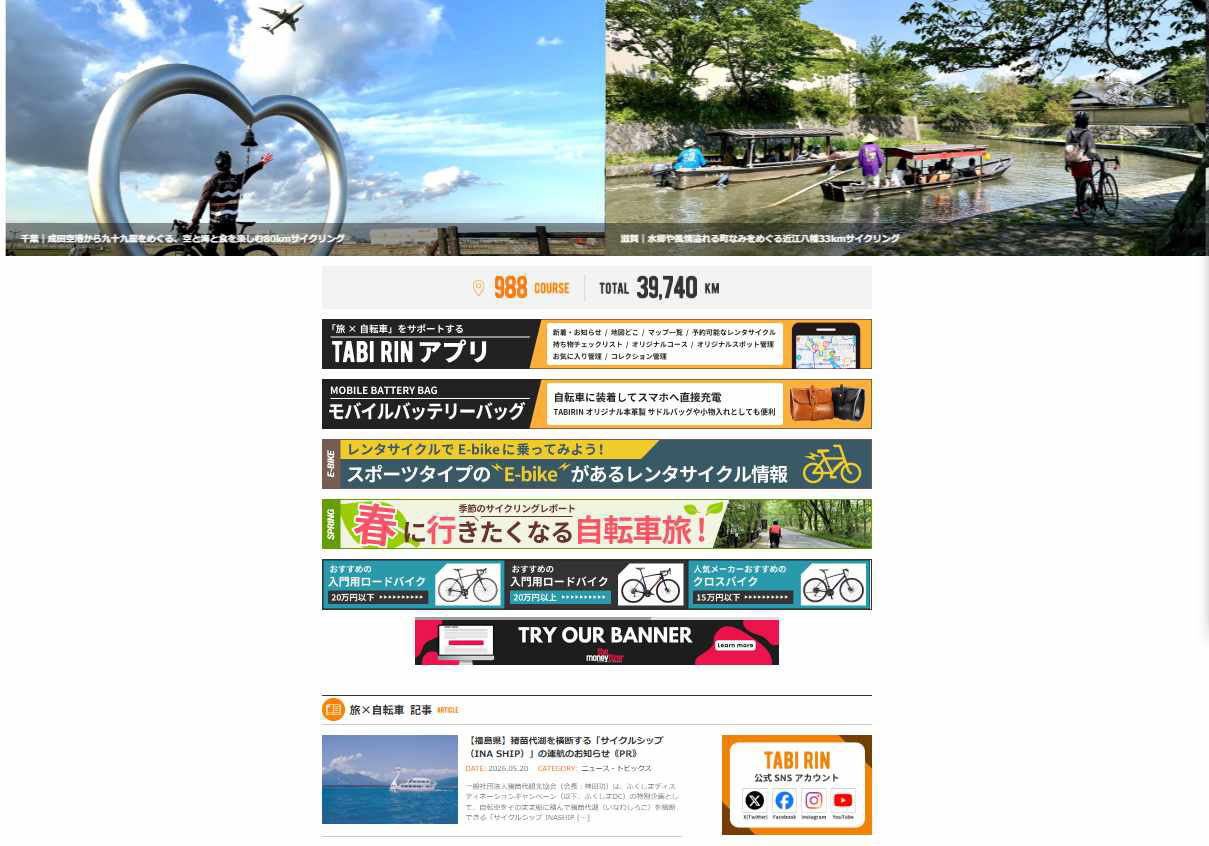
"TABIRIN This content is produced and distributed independently by PACIFIC CONSULTANTS.
Furthermore, KURISU, who primarily handles bicycle-related tasks, has been involved in cycling and road cycling races since his student days. In addition to winning races, he has experience as a member of the "Yowamushi Pedal Cycling Team" and domestic professional teams, as well as participating in international competitions such as the Amateur World Championships. While responsible for policy formulation and plan development, he himself is a cyclist, riding on various road environments both domestically and internationally, experiencing firsthand not only the enjoyment and convenience of cycling, but also the challenges of safety and riding environments. His strength lies in possessing both an administrative perspective and a user's perspective, and he is leading the bicycle utilization promotion team at PACIFIC CONSULTANTS, utilizing this knowledge.

Ministry of Land, Infrastructure, Transport and Tourism's Social Infrastructure Development Council (Road Subcommittee) published a new vision in 2020 titled "By 2040, the Landscape of Roads Will Change." Based on the principle that "the foundation of road policy is the realization of people's happiness," this groundbreaking vision sets forth the "return" of roads to their function as communication spaces, and calls for the re-positioning and promotion of bicycles within this larger vision.
In 2027, "Velo-city", one of the world's largest international conferences on cycling and urban planning, will be held in Ehime Prefecture for the first time in Japan. Taking full advantage of this opportunity to draw global attention to Japan, PACIFIC CONSULTANTS will continue to contribute to the promotion of bicycle utilization.