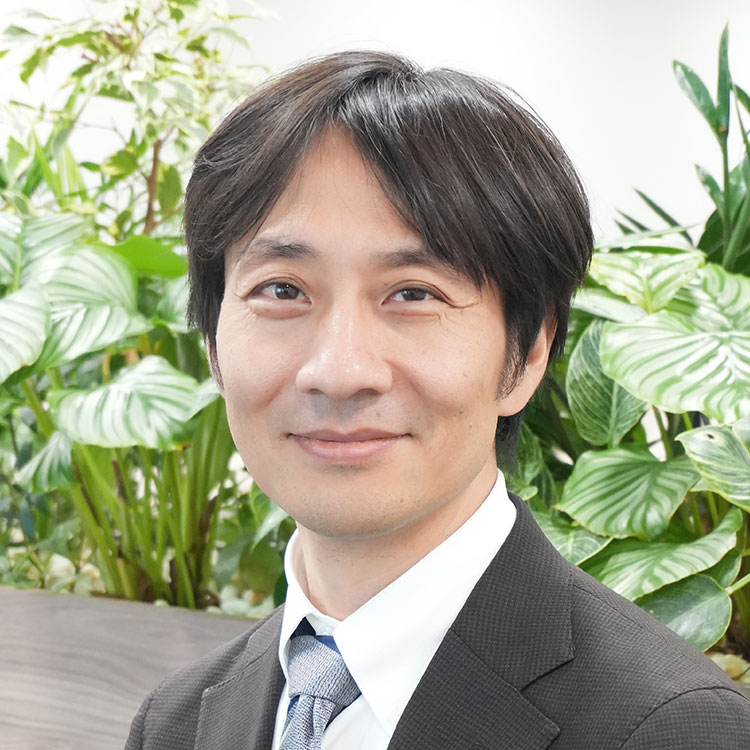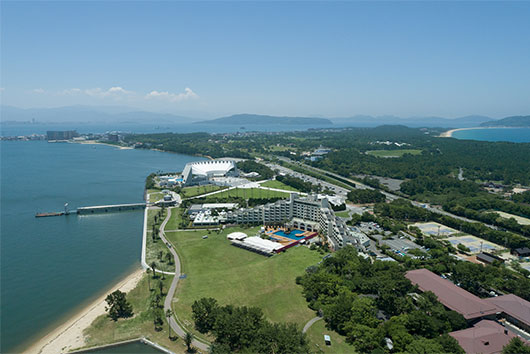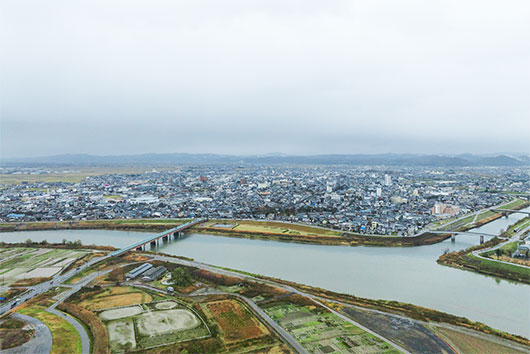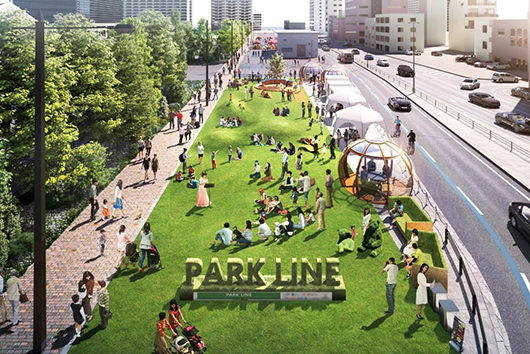

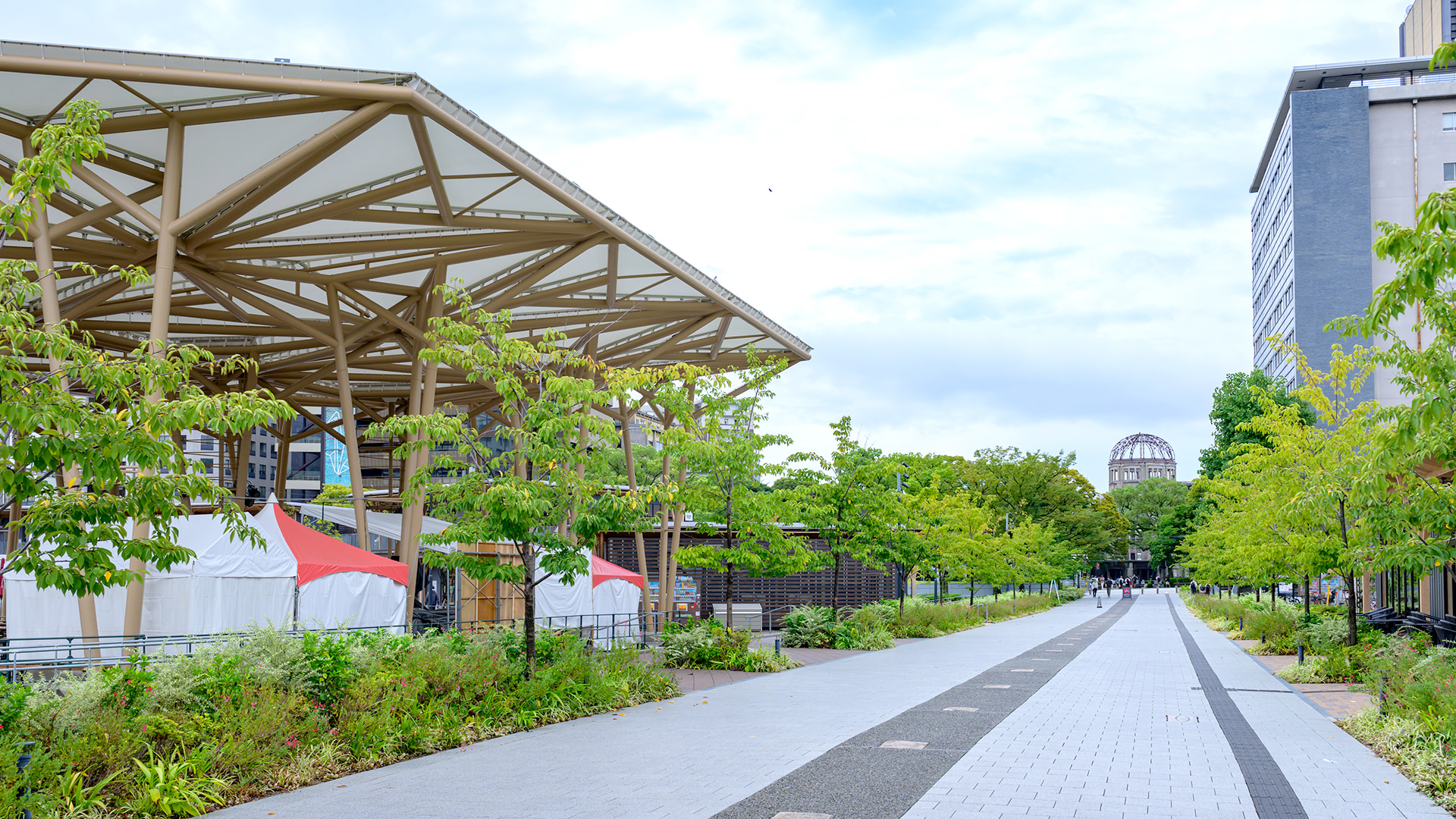
Opened in the spring of 2023, Hiroshima Gate Park has attracted many citizens and tourists to various events of all sizes held throughout the year, playing a significant role in revitalizing the central area of Hiroshima City. Based on the fundamental principle of creating a welcoming space that will become the face of Hiroshima, how could the project to create an attractive park without placing a heavy financial burden on Hiroshima City be made feasible? PACIFIC CONSULTANTS, which has a proven track record in PPP/PFI projects, supported Hiroshima City's challenge by structuring the project scheme and creating the conditions for public bidding for operators. We spoke with Junichiro Murakami of Project Promotion Sec., Chubu Social Innovation Business Division, Chubu Branch, who played a central role in the project.
INDEX
- The use of the former Hiroshima Municipal Stadium site has been under consideration
- Large commercial facilities are not suitable
- How to create an event plaza
- Creating an environment that makes it easy for private business sectors to participate
- Event attendance exceeds expectations, reaching approximately 1.27 million people annually
The use of the former Hiroshima Municipal Stadium site has been under consideration
The predecessor of Hiroshima Gate Park was Hiroshima Municipal Stadium. In 1950, when Japanese professional baseball was divided into two leagues, the Hiroshima Carp were founded, and in July 1957, Hiroshima Municipal Stadium, complete with lighting facilities, was completed. As indicated by its location within Central Park, which was developed based on the "Hiroshima Peace Memorial City Construction Act" (enacted in 1949), the stadium was planned with the intention of creating a sports hallowed hall befitting a peace memorial city, and was built with funding from donations from many influential local companies that supported the project.
However, after half a century, the stadium beloved by many citizens, began to show signs of aging, with its cramped seating and functionally inconvenient facilities such as the players' locker rooms becoming increasingly apparent. In 2004, Hiroshima City established the "New Stadium Construction Promotion Council," a public-private partnership. While rebuilding at the current site was one option, the decision was made to relocate and construct a new stadium on the site of a former freight yard near JR Hiroshima Station. The new stadium was completed in March 2009. Subsequently, the old Hiroshima Municipal Stadium was closed, and in 2012, demolition work was completed, with only a portion of the right field stands remaining. However, discussions on the use of the site were slow to reach an agreement. This was because there was a surge in demand for the construction of a soccer stadium on the site of the old Hiroshima Municipal Stadium. Discussions continued among the four parties: Hiroshima City, Hiroshima Prefecture, the Hiroshima Chamber of Commerce and Industry, and Sanfrecce Hiroshima. While other potential sites were also being considered, it was finally decided in February 2019 that the Central Park Free - Lawn Area would be the construction site for the new soccer stadium. In response, the city established an expert committee to consider the future use of the entire Central Park and began discussions, while also starting a full-scale examination of how to utilize the former Hiroshima Municipal Baseball Stadium site, which is part of the park.
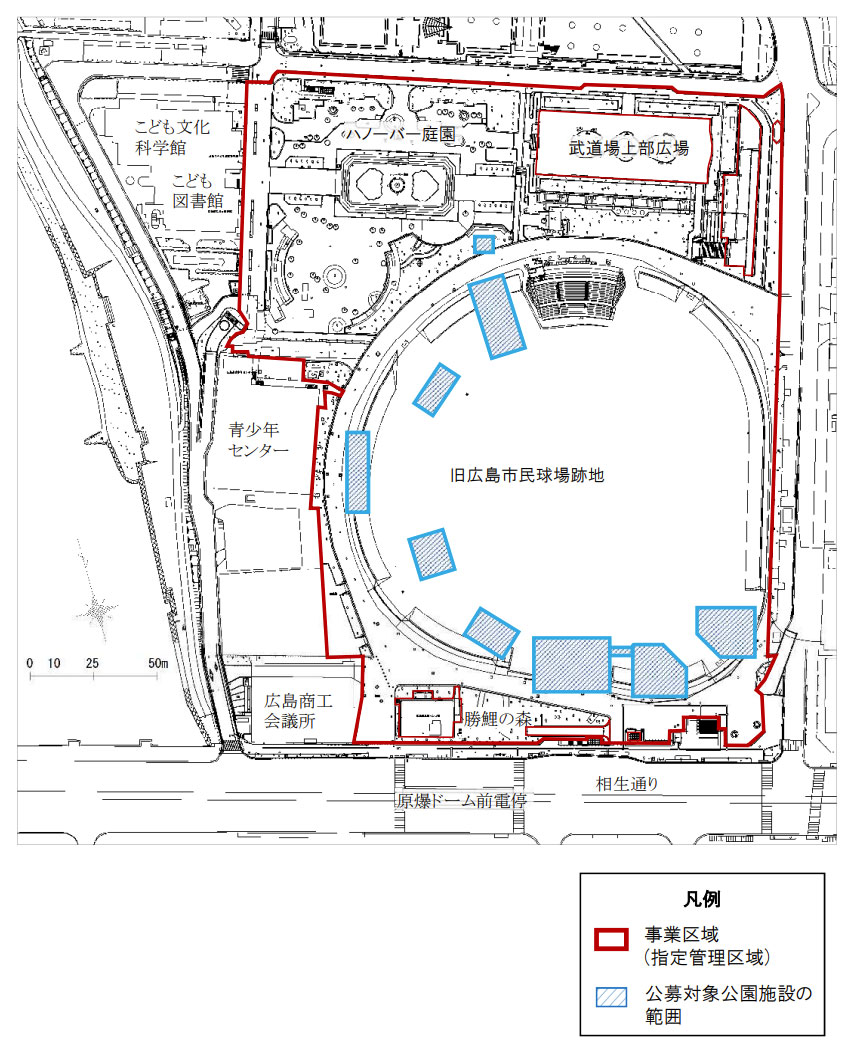
Source: "Location of Publicly Solicited Park Facilities" (Hiroshima City)
Large commercial facilities are not suitable
The former Hiroshima Municipal Baseball Stadium site has been cherished as a symbol of post-war reconstruction, and it is also the closest location within Central Park to the Atomic Bomb Dome and Peace Memorial Park. For this reason, the city wanted to create an event plaza open to the public rather than constructing a large commercial facility there. However, they felt it necessary to commission a professional consultant to investigate what kind of plaza to create, what kind of business model to use, and how to manage its maintenance, so they conducted a public proposal process. PACIFIC CONSULTANTS was selected from among the four applicants and was commissioned to conduct a "Feasibility Study for Introducing Private Sector Involvement." MURAKAMI, who was central to the project, reflects on the experience.
"The approximately 4.7-hectare site within Central Park, centered around the former Hiroshima Municipal Baseball Stadium, is a prime location in the heart of Hiroshima City, adjacent to the bus terminal, which serves as Hiroshima's gateway. The city's intention was to create an attractive public space where various events are held throughout the year, attracting both local residents and tourists."
It was understandable that the city of Hiroshima and its citizens felt that a massive commercial complex was unsuitable for this location. However, maintaining the plaza by creating year-round vibrancy through events, rather than relying on physical facilities to attract visitors and generate revenue, was no easy task. Normally, the use of private sector resources presupposes the construction of a certain level of commercial facilities, as this is what makes it attractive to private companies to participate. However, this project presented a new challenge: how to successfully introduce private sector resources without constructing a large-scale facility.
How to create an event plaza
The "Feasibility Study for Introducing Private Sector Involvement" began with interviews. This was to gather ideas and opinions from private business operators specializing in the city's plan to develop the former Hiroshima Municipal Baseball Stadium site into an event plaza. However, MURAKAMI had an idea about who should be interviewed.
"The key to this project is how to create an attractive event space, and it's where the power of 'soft' (informative/soft) aspects comes into play. We compiled a list of local newspapers, television and radio stations, and advertising agencies that have a track record of planning and implementing various events in the city, and proposed them to the city."
Detailed discussions focused on event planning, including what kinds of events could be held in the new plaza, what kind of location would be easiest to implement, what scale of lighting and sound equipment would be needed, and what kind of commercial facilities would be desirable to accompany it. The city had initially considered covering the entire plaza with a large roof so that events could be held regardless of the weather, so opinions were also sought on that.
"As we listened to their opinions, many said that when planning events such as ball sports or motorcycle jumps, the presence of a roof would actually be a constraint. If a roof is to be installed, it should only be for temporary shelter in case of sudden rain, and many private companies wanted as much open space as possible to allow for flexible use."
Creating an environment that makes it easy for private business sectors to participate
Following the survey on introducing private sector involvement, the consideration of utilizing the former Hiroshima Municipal Stadium site moved to the next phase. This involves gathering various opinions from private business sectors, determining specific business models, creating requirements for public bidding, and selecting a business operator. PACIFIC CONSULTANTS was also commissioned to provide advisory services for this business operator selection process for two years.
"Regarding the business model, we proposed utilizing Park-PFI, a system newly established by the June 2017 amendment to the Urban Park Act. This system allows private sectors to develop revenue-generating facilities such as restaurants within the park, as well as park facilities such as pathways and plazas, in an integrated manner. This reduces the financial burden on park managers while creating more attractive parks. In addition, we decided to use the designated manager system, which entrusts park management to private companies on behalf of local governments. This allows the private companies managing the parks to have the right to grant permission for use and to earn revenue from usage fees. We have also introduced a 'profit-sharing' mechanism that returns a portion of the revenue to the city, so the city can not only significantly reduce management and operating costs, but also receive a share of the revenue."
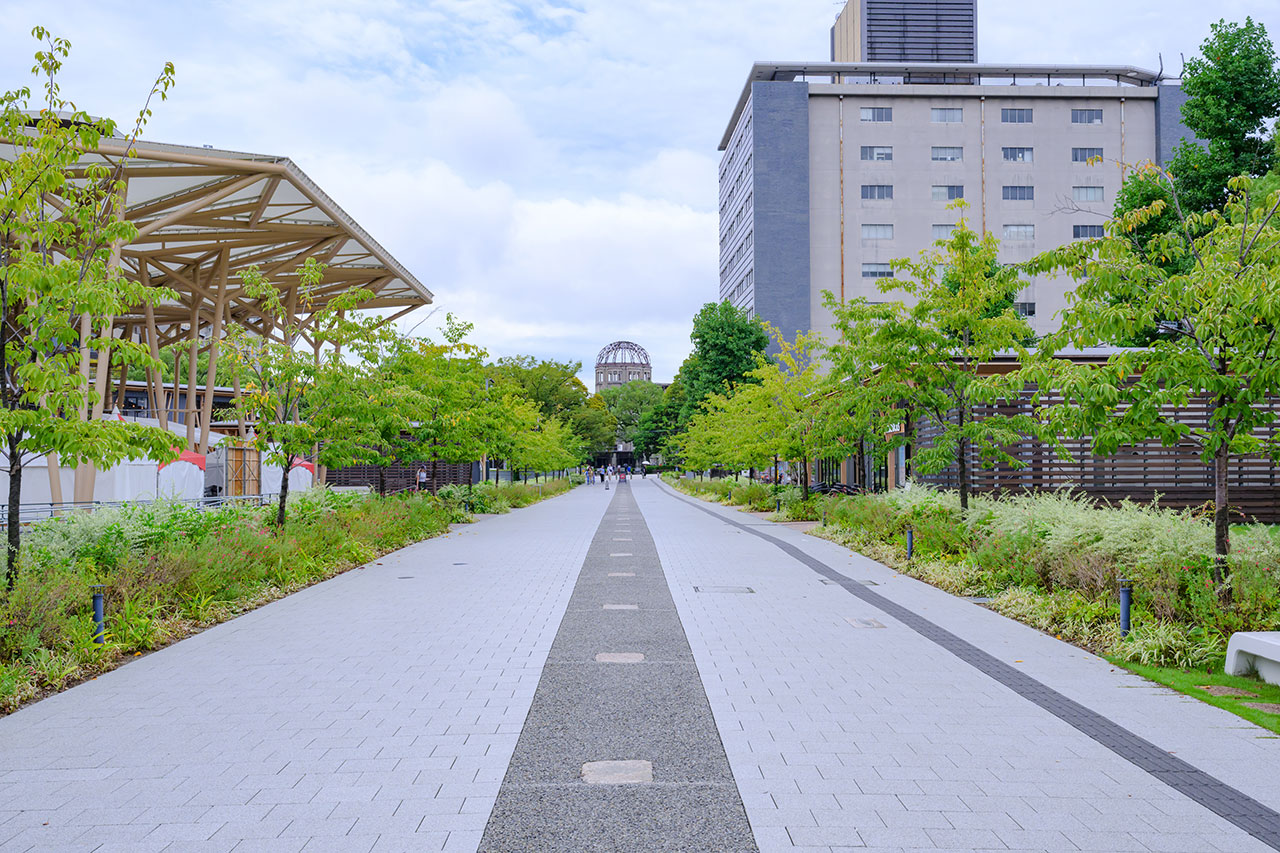
Furthermore, regarding the public bidding conditions, apublic sounding was conducted, and based on the opinions and requests of approximately 30 private business sectors that applied, the details were considered so that more businesses would find it attractive and apply. Decisions were made such as "It must be a plaza where various events can be held at all times" and "There must be a food and beverage facility that visitors can easily stop by. In addition, we are seeking proposals for a variety of other facilities that will create a lively atmosphere. However, the building area must be 2,000 m² or less, the total floor area 4,000 m² or less, and it must be no more than two stories high." In addition, requests were compiled such as "A high-quality design befitting the area around the Atomic Bomb Dome and Peace Memorial Park" and "An open space with lawns and benches" and "Development of a covered space of approximately 1,000 m² where small events can be held and visitors can relax" and "Development of a park path along the north-south axis that connects to the newly constructed soccer stadium, making the axis visible as a dignified park path with the Atomic Bomb Dome in the background." The request also included: "As a designated manager, the company will undertake maintenance, operation, and promotion of use of specific park facilities"; "Hold events that are expected to attract around 1,000 visitors per day for more than 60 days a year"; "Return a portion of the usage fee revenue to the city"; and "In cooperation with each facility within Central Park, the company will establish a council responsible for the overall management of the park and become a member of that council."
"We received a lot of valuable opinions from private business sectors, so I think we were able to finalize things like the format of the event plaza, the scale of the revenue-generating facilities, the conditions for the project's success, and the requirements for the designated management services relatively smoothly," said MURAKAMI. The public tender was officially opened in March 2021. MURAKAMI supported the establishment and review of the application materials, the selection of a committee of experts, and the signing of a contract between the selected business and the city.
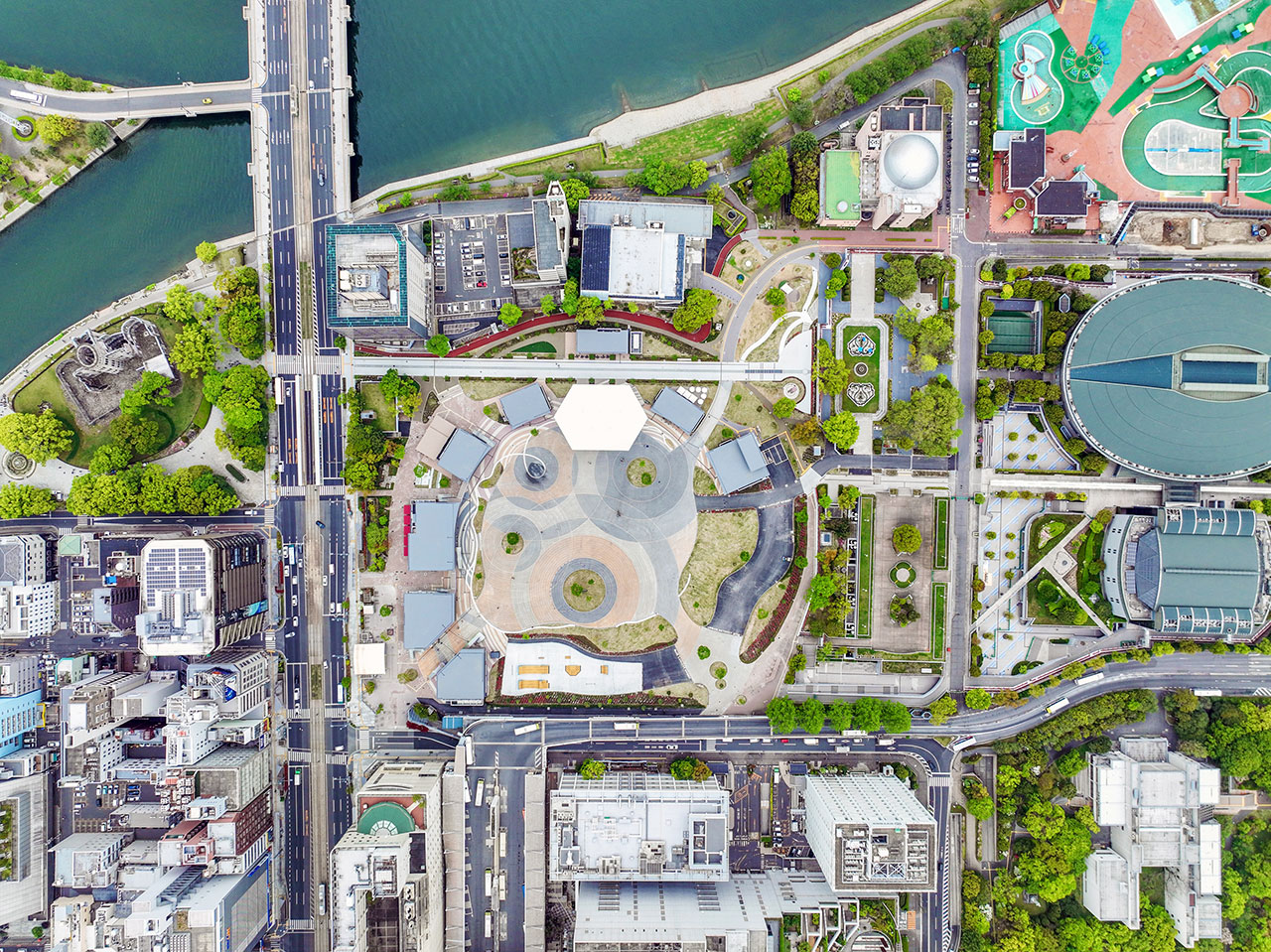
©NEW HIROSHIMA GATEPARK
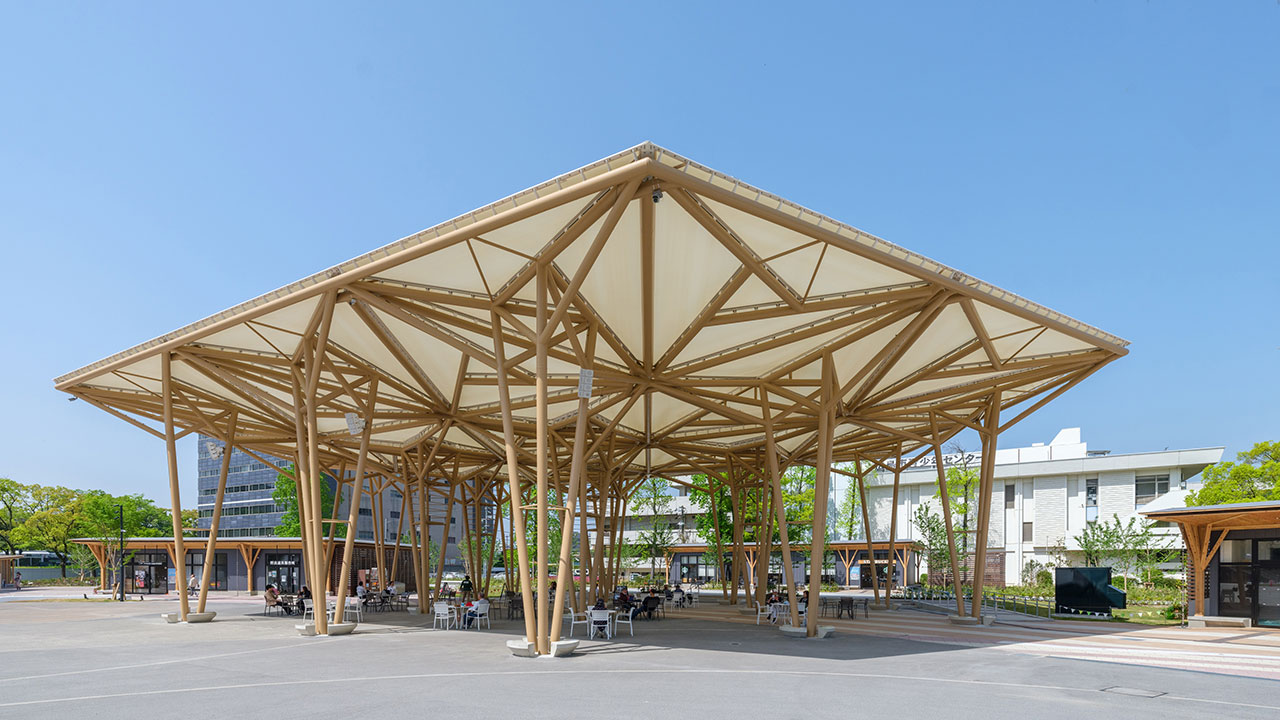
©NEW HIROSHIMA GATEPARK
©NEW HIROSHIMA GATEPARK
Event attendance exceeds expectations, reaching approximately 1.27 million people annually
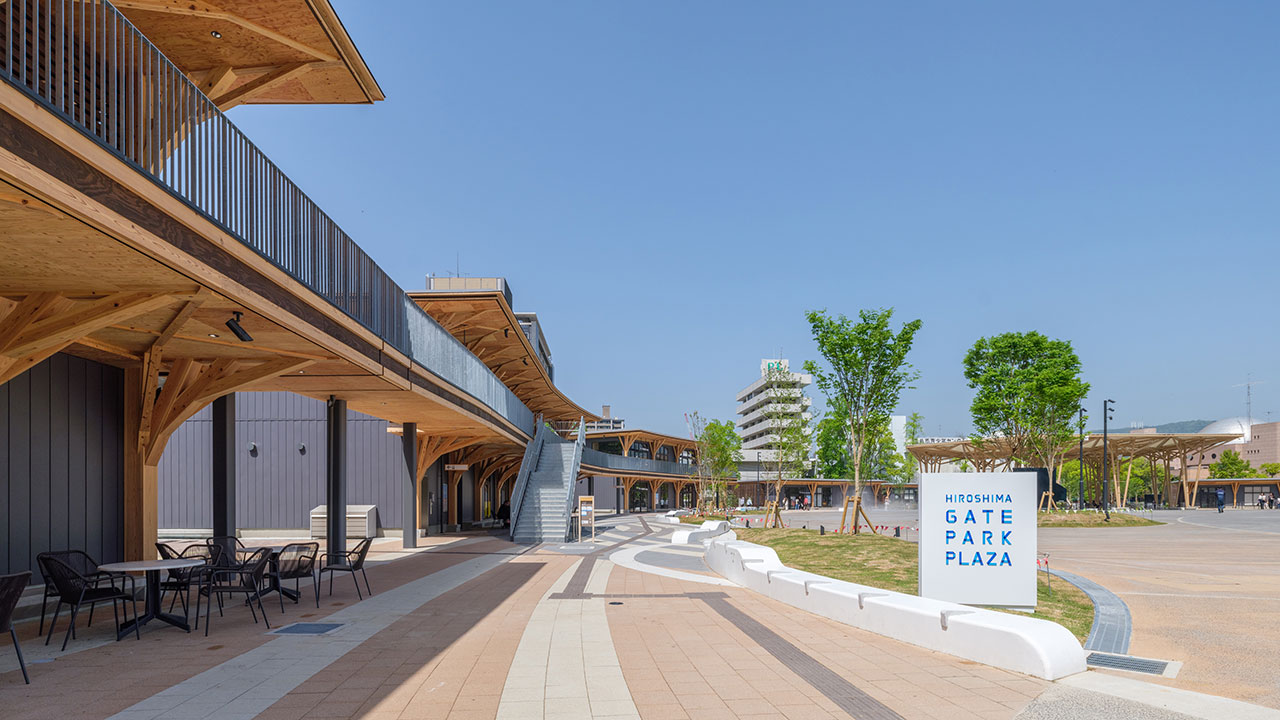
The group selected through a public bidding process was "NEW HIROSHIMA GATEPARK," private business sectors group with NTT Urban Development as the lead company. Its members included prominent local companies such as Chugoku Shimbun, Hiroshima Bus Center, and Hiroshima Electric Railway. MURAKAMI also recalls, "The ideal players stepped forward to take on the responsibility of creating a plaza in this location." After detailed design work, construction began in 2022, and on March 31, 2023, "Hiroshima Gate Park" was born, featuring eight commercial buildings surrounding a plaza of approximately 6,500 square meters capable of hosting large-scale events.
In its first year, the venue hosted events with over 1,000 attendees on 133 days and events with fewer than 1,000 attendees on 110 days. The total number of event attendees in the first year far exceeded expectations, reaching approximately 1.27 million. In subsequent years, the venue has continued to be bustling with various events, gaining popularity as a new spot for interaction and relaxation in the heart of Hiroshima.
MURAKAMI, who originally studied architecture and joined PACIFIC CONSULTANTS with the desire to be involved in urban development, reflects that PACIFIC CONSULTANTS was able to support this project precisely because it has specialized departments for PPP/PFI in addition to architecture and urban development, and employs engineers who are well-versed in finance and legal matters such as the PFI Act and the Urban Park Act.
"With the population declining, I believe that projects that introduce private sector vitality into public spaces such as former public facility sites to revitalize communities will continue to be a major theme for regional revitalization. I would like to continue to be involved in PPP projects for public spaces, utilizing my experience from the feasibility study stage to the creation of Hiroshima Gate Park, and contribute to creating vibrant communities," he said, expressing his aspirations.