

Skip to content
Go to site menu

PACIFIC CONSULTANTS
Urban and Infrastructure Projects for the Future

For over 70 years since our establishment, PACIFIC CONSULTANTS GROUP has been providing technical services related to the planning, investigation, engineering, design, construction management and maintenance of a wide range of social infrastructure, including roads, railways, rivers and ports.
Our goal is to create a society where people around the world can live in peace and security, and to protect the global environment and pass on a rich Earth to the next generation.
Taking on the challenge of resolving social issues through cutting-edge integrated solution services.
We will share the knowledge and project stories of our professional consultants.
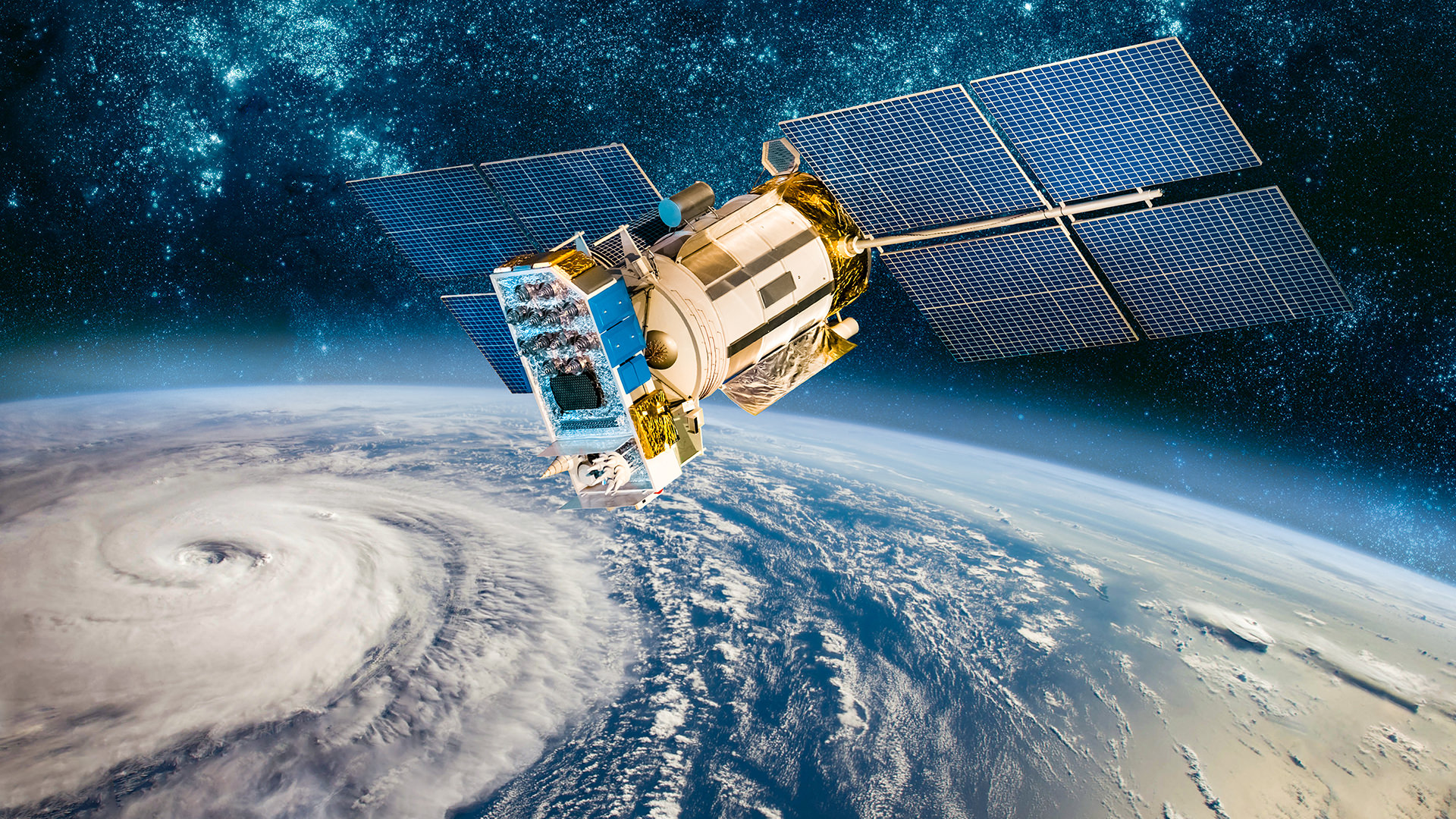
Use of SAR satellites in disaster prevention

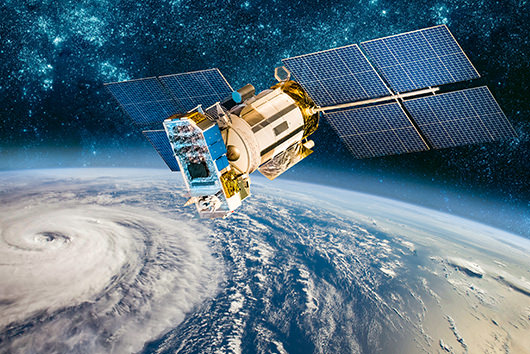
As the government's long-term assessment predicts a high probability of a massive earthquake and natural disasters are becoming more severe and frequent due to climate change, the efficiency and sophistication of disaster prevention and mitigation measures through DX is an urgent issue. As an important tool for this, commercial SAR satellites are attracting attention because of their ability to observe the ground at high frequencies regardless of time of day or weather conditions. PACIFIC CONSULTANTS We interviewed Mr. Toshiteru Yanagimachi of the Resilience Promotion Office Technical Manager, Mr. Tsukasa Mitokawa of the Disaster Prevention DX Promotion Office Assitant Manager, and Mr. Nobukazu Sasaki, Director of Advanced Technology Center Technology Development Sec., who are working on satellite applications in the field of spatial information technology at Digital Service Div. Disaster Prevention Dept..

Redevelopment Project for Shinjuku - the Hub with the World's Highest Number of Passengers

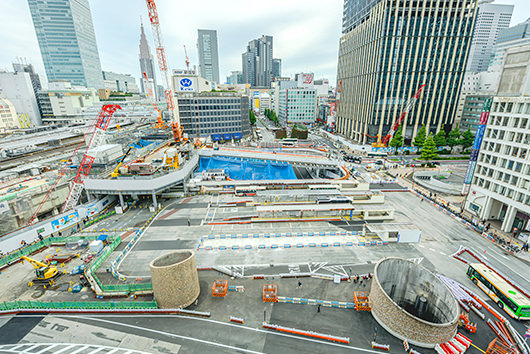
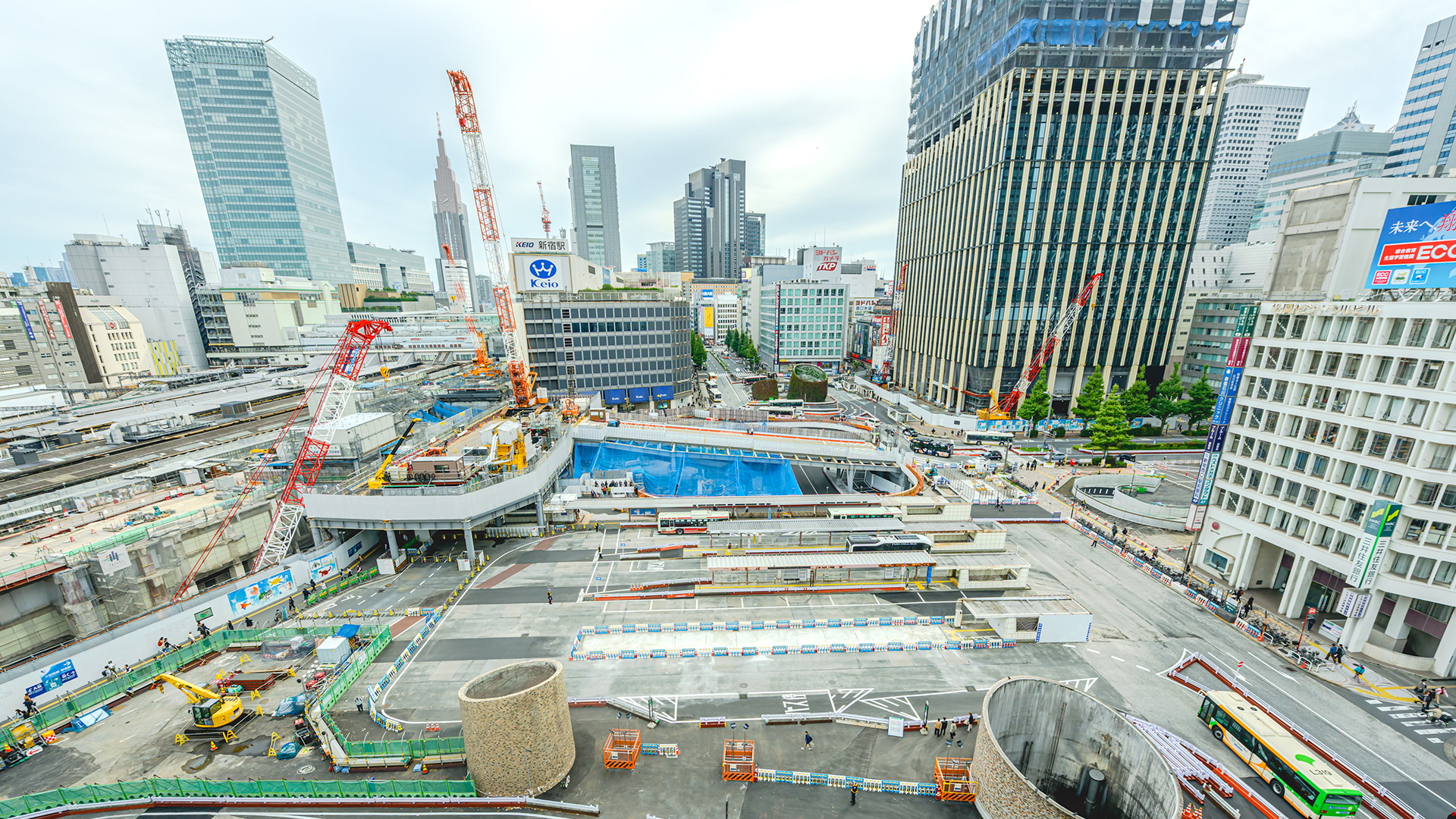
In 1958, Shinjuku, along with Shibuya and Ikebukuro, was designated as a sub-center of Tokyo. Over 60 years later, it has grown into the world's busiest terminal. However, issues have emerged, including limited space for people to stay, complicated transfer routes, and the aging of the station and station building. In 2018, the Tokyo Metropolitan Government formulated the concept "Shinjuku Grand Terminal", which involves a large-scale reorganization of the area immediately surrounding the station. Construction began in 2021, with the goal of roughly completing the project by 2035 and completing it by 2046. PACIFIC CONSULTANTS has been supporting the project from an early stage, including through business plan review. Tetsuya KAWAMOTO and Takayuki YOSHIMI from the Project Management Dept., and Takuto MIKUNIYA from the Global Company's International Smart Planning Dept., talked about the progress of the ambitious Shinjuku redevelopment project.

Responding to the Issue of Replacing Wind Power Generation Equipment

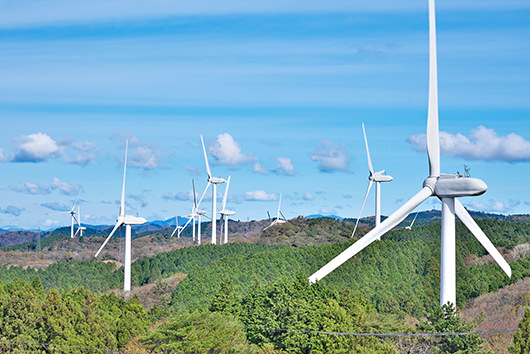
Japan's onshore wind power generation, which began full-scale deployment in the 2000s, now has a cumulative installed capacity well over 5GW, and is expected to reach 18GW by 2030. The country plans to further increase onshore as well as offshore wind power generation in order to achieve carbon neutrality by 2050, but along with new installations, the replacement (upgrading) of currently operating power plants will be essential. We spoke to Kentaro HAGA, Yamato IRIE, and Kana YAMAGUCHI of the Wind Power Promotion Project, Project Management Project Management Dept. Project Management Business Headquarters, who are responsible for wind power generation design at PACIFIC CONSULTANTS Consultants, about the challenges of replacement and key points in formulating an implementation plan.

What is Floating Offshore Wind Power Generation?

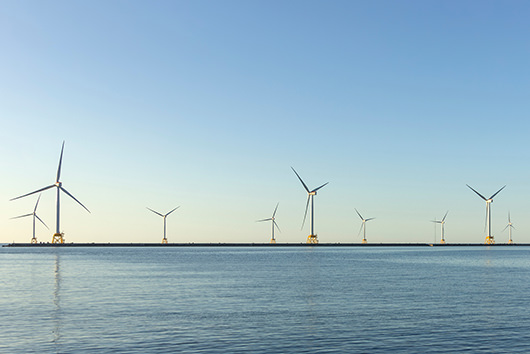
In order to achieve carbon neutrality by 2050, the Japanese government has set a target of 40-50% of renewable energy in the energy mix by fiscal year 2040. Wind power, particularly floating offshore wind power, is expected to play a major role alongside solar power. PACIFIC CONSULTANTS has a proven track record in the wind power field since the early 2000s. We spoke with three people about the current state and future outlook for floating offshore wind power: Takehiko SANO, General Manager of the Wind Power Promotion Project Sec. in the Project Management Dept. of the Project Management Div.; Katsuhide FUJISHIMA, Chief Engineer; and Aya IWANAMI, Assistant Technical Manager at the Earthquake Resistance Center in Structural Dept., Transportation Infrastructure Div.

Energy-related Project in Rankoshi Town, Hokkaido

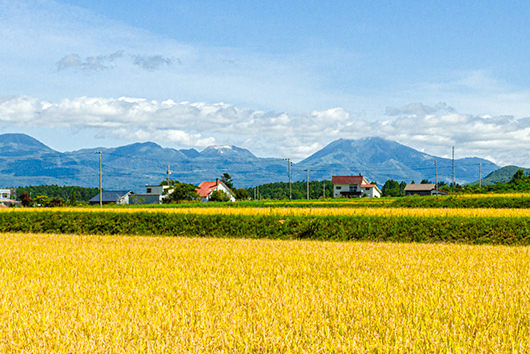
Rankoshi Town in Hokkaido is known nationwide as one of the best producers of delicious rice. It is a beautiful town blessed with abundant nature. However, like many local municipalities, it faces many challenges due to a declining population and an aging population with a low birthrate, and it also needed to take immediate action to achieve carbon neutrality by 2050. PACIFIC CONSULTANTS noticed that Rankoshi Town was considering utilizing "Energy Structure Advancement and Conversion Understanding Promotion Project" of Ministry of Economy, Trade and Industry (METI) and supported its efforts, such as developing solid fuel using rice husks and utilizing wastewater heat from hot springs, which have produced many results. Katsunori AMEJIMA of the Regional Energy Sec., Hokkaido Social Innovation Department, looks back on the project.

Climate Change Adaptation Measures in Ports and Harbors

With rising sea levels and larger typhoons due to climate change, how to protect ports from flooding damage has become a major issue. However, because ports are spread across a wide area and involve a variety of public and private entities, no single entity can take effective measures alone. What is needed is "collaborative protection," in which all stakeholders work together toward a common goal. The government has also published "Guidelines for Creating Collaborative Protection Plans," and in the future, each port will begin full-scale efforts. We spoke with Takayuki Ooie, General Manager of Section of Ports and Harbors and Coast Sec. in the Port Ports and Harbors Dept. PACIFIC CONSULTANTS, and Ryunosuke Kanno Chief Project Manager of Ports and Harbors Planning Sec. about the latest trends in collaborative protection efforts.

What is a Vehicle-Infrastructure Integration (VII) System?

Efforts are underway to realize Level 4 autonomous driving. As navigating intersections on public roads is a major challenge, the development of a Vehicle-Infrastructure Integration (VII) through road infrastructure development has been considered, and demonstration experiment have been carried out in various locations. From next fiscal year, the launch of technical standards and guidelines will finally begin, and the system will enter the widespread adoption phase. We talked to Naoki FUNAOKA from the Transportation Planning Dept., Social Innovation Div., Akira MITSUYASU from the Mobility DX Sec., DX Business Promotion Dept., Digital Service Div., Ryotaro TOMINAGA from the Transportation Strategy Sec., Social Innovation Div. of Chubu, and Daichi NAKAYAMA from the Transportation Policy Sec., Social Innovation Div. of Hokkaido, PACIFIC CONSULTANTS, who have all conducted numerous demonstration experiments tailored to local traffic conditions, about the current state and challenges of road-vehicle collaborative systems.

Introduction of Perovskite Solar Cells to Public Infrastructure

In February 2025, the government approved the 7th Basic Energy Plan, setting a goal of "The ratio of renewable energy to the power supply mix in FY2040 to be about 40% to 50%". Solar power generation is expected to be at the center of this. In particular, perovskite solar cells, which are being developed, are very thin and flexible, so they are expected to expand their installation locations at once. The Prime Minister, TAKAICHI, also called for domestic energy, including perovskite solar cells, to be important as energy security, and called for immediate implementation of measures, and we talked to Tetsuo KOMORIYA, the General Manager of  Renewable Energy Promotion/Development Sec., Basin Structural Dept., Land Infrastructure Div. and Chisato KAWAI, General Electricity Sec., Facility Engineering Dept., Transportation Infrastructure Div. of PACIFIC CONSULTANTS, who are considering the introduction of solar panels to existing public infrastructure.

The Current State of Infrastructure Maintenance as Seen in the Problem of Aging Water Pipes

The sewerage accident in Yashio City, Saitama Prefecture, has raised concerns about the current state of water and sewerage infrastructure and its future maintenance. A national expert panel has compiled recommendations with unprecedented speed, making unprecedentedly bold proposals, such as "ensuring redundancy and maintainability," "reviewing pipeline planning and design," and "actively promoting wide-area collaboration, including technical staff," calling for fundamental improvements. We talked to three people at PACIFIC CONSULTANTS who are in charge of water and sewerage projects: Masayuki HACHIUMA, General Manager of Water Supply & Sewage Dept., Land Infrastructure Div.; Masafumi NIIHIRA of the Sewerage Design Sec. within the same department; and Mitsuru AMANO of Water Circulation Design Sec., about what specific measures will be needed going forward.

Pacific Consultants Magazine

This is an E-mail newsletter that delivers the latest information on PACIFIC CONSULTANTS' projects, etc. We distribute it regularly to deliver timely topics such as PACIFIC CONSULTANTS's insights, project information, interviews and discussions, and the latest topics.

The information you enter will be used only for the purpose of sending you E-mail newsletters and contacting you about various information provided by PACIFIC CONSULTANTS, and will not be disclosed to third parties without your permission.
For more information, please see our Privacy Policy.