
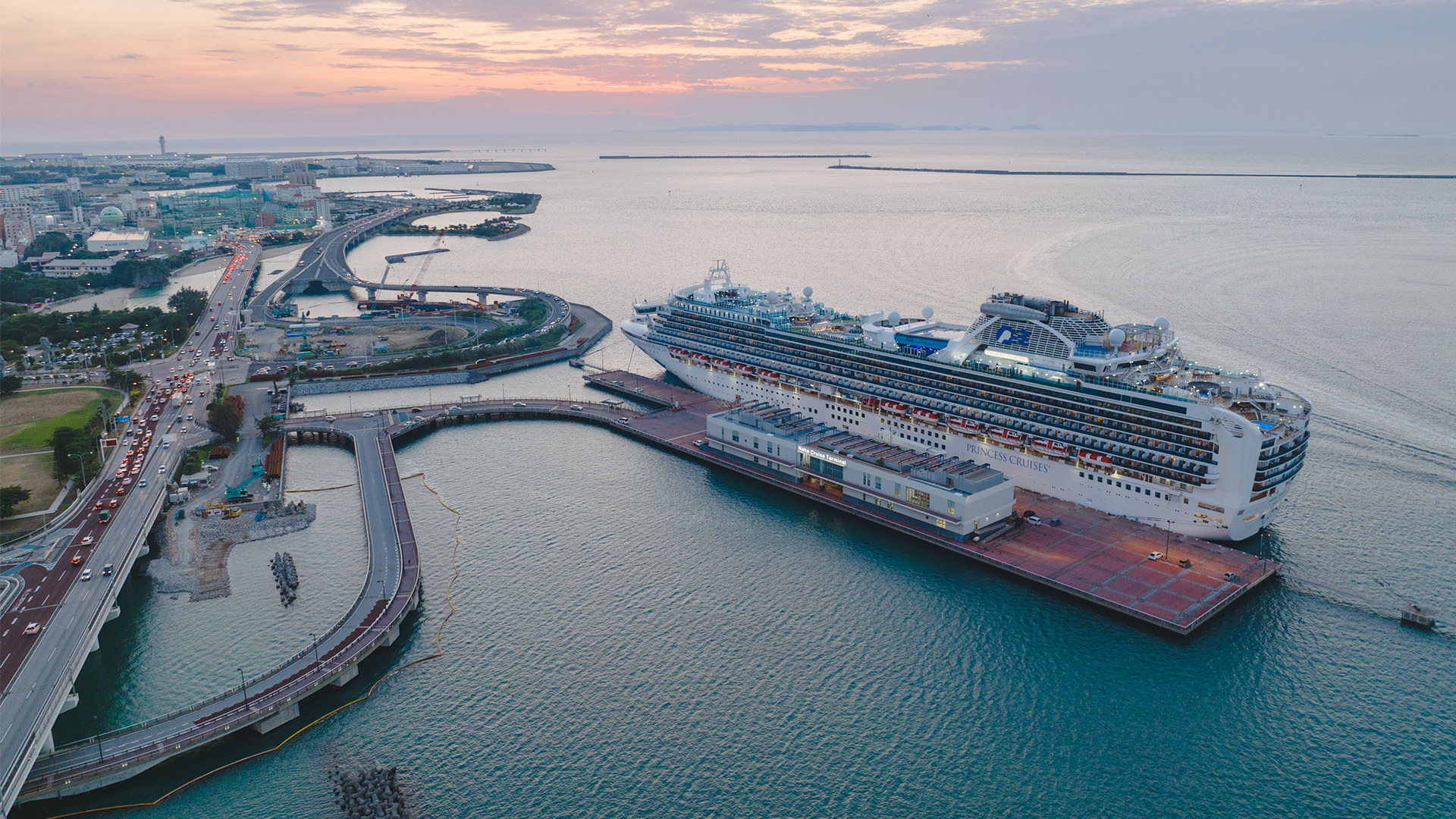
The number of cruise passengers from Asia surged in the latter half of the 2000s. However, at that time, Naha Port did not have a dedicated berth for cruise ships, and cargo berths were used for both. Fearing that this would inevitably damage the image of Okinawa's gateway, the government launched a project to develop a passenger ship terminal at Naha Port. PACIFIC CONSULTANTS was responsible for designing the new passenger ship berths, terminal facility site, and connecting road bridge, playing a major role in the realization of Naha Port's first passenger ship terminal (Naha Cruise Terminal). We spoke with Nobuo SUZUKI of the Ports and Harbors Dept., Land Infrastructure Div. PACIFIC CONSULTANTS who was in charge of the design.
INDEX
- The urgent need for passenger ship terminal development
- It also serves as a pier for transporting emergency supplies during disasters.
- To shorten the construction period and reduce costs, a jacket system was adopted.
- The pavement features Okinawan-style reddish-brown and motifs from Shuri weaving.
The urgent need for passenger ship terminal development
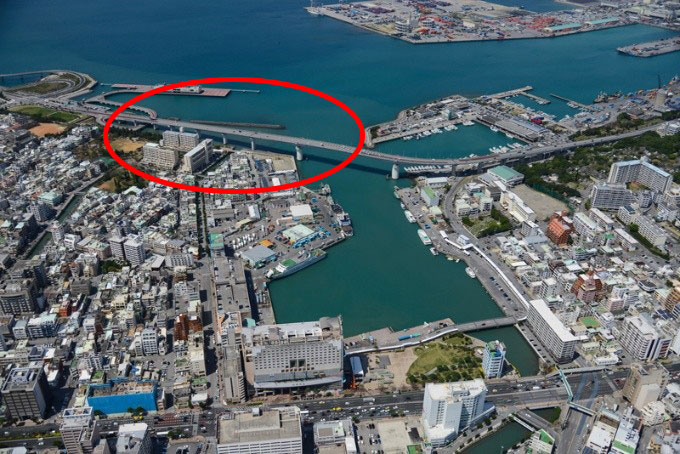
Photo: From the Naha Port Authority website
Among domestic tourist destinations, Okinawa Prefecture was considered one of the most important domestic bases, blessed with a warm climate, beautiful seas, a rich Ryukyuan culture, and abundant marine leisure activities. However, it must be said that it was insufficient to meet the growing demand for cruises, which were gaining popularity as a new mode of tourism at the time.
At the time, Naha Port did not have a dedicated berth for receiving large cruise ships, and was using the cargo berth. However, for international cruise ships, this is the first step for foreign passengers to disembark in Japan. Using a cargo berth would not create a good impression on passengers. This issue was also addressed in the "Naha Port Urban Development Master Plan" decided by the Naha Port Authority in August 2009, and the "Okinawa 21st Century Vision Basic Plan" formulated by Okinawa Prefecture afterward clearly stated the policy of "developing an international passenger terminal that can accommodate large cruise ships at Naha Port and promoting activities to attract cruise ships."
It also serves as a pier for transporting emergency supplies during disasters.
ports and harbors authority for Naha Port is the Naha Port Management Association, which was established in 2002 by three municipalities: Okinawa Prefecture, Naha City, and Urasoe City. However, the passenger ship terminal development project was to be carried out as a direct national project. The Tomari Wharf area was chosen as the construction site. This area was originally called Tomari Port and was known in ancient times as the place where Commodore Perry arrived, making it the most historic area within Naha Port. Even today, it serves as a base for cargo and passenger ships and tourist ships connecting to the surrounding islands, is close to the airport, and National Route 58 runs right next to it. Because it is close to the center of Naha City, it is the most familiar wharf to the people of Okinawa Prefecture and was an ideal location to welcome large cruise ships. PACIFIC CONSULTANTS was commissioned to design the new passenger ship berths, terminal facility site, and connecting road bridge. Early commencement of operations was required, and there was no leeway in the design period. In addition, there were other difficult problems. Suzuki recalls.
"There were two problems in the design process. One was the ground. Okinawa has a wide distribution of Ryukyu limestone layers, but Ryukyu limestone has a large variation in strength and also contains cavities, making it unsuitable for supporting piles. Therefore, it was necessary to use the Shimajiri mudstone layer below it as the supporting layer. This meant that the piles had to be driven down to support the structure, resulting in very long piles. The other problem was that the Naha Port Authority planned to construct a terminal facility site behind the passenger ship berth using an artificial ground (pier structure), where a terminal building would be built to provide various passenger services such as immigration and customs inspections, plant and animal quarantine, and customs checks. However, the design of the terminal building had not yet been completed when the pier was designed. In other words, the design had to be carried out without knowing what kind of building would be loaded onto it. Moreover, this passenger ship berth was designated as an earthquake-resistant facility, and it was required that in the event of a major earthquake, ships could be used immediately, passengers could board and disembark, and emergency supplies could be loaded and unloaded. Therefore, extremely high seismic resistance had to be ensured."
Given these design conditions, Suzuki confirmed the scale and intended use of the planned terminal building with the Naha Port Authority. Based on this, he requested a preliminary design from the company's architectural engineers, setting the terminal load to be placed on the pier as a condition for designing the pier. Furthermore, the seismic motion assumed in the design was what is called "Level 2 seismic motion," which is the largest earthquake expected to occur at this location, in order to ensure that the pier would have the performance to be usable even in the event of a large-scale disaster. Therefore, in addition to the usual static framework analysis, a two-dimensional seismic response analysis (FLIP) using Level 2 seismic motion was performed. The design work took more than twice as long as usual, but the design was successfully completed. Suzuki then passed the baton to the Naha Port Authority, the operator of the subsequent terminal building, showing them the area and height of the building that could be constructed on this pier, and the load that could be placed per square meter of pier as design conditions.
To shorten the construction period and reduce costs, a jacket system was adopted.
The pier designed by Suzuki had a significant feature that was not visible from the sea. It employed a construction method called the jacket type, which was still rarely used in Japan at the time. As mentioned earlier, the new pier to be built at Tomari Pier required very long piles because the supporting layer was deep. Moreover, since it would be used by large passenger ships, large external forces would be applied when ships docked. In addition, large towing forces would be applied to moor ships during high waves and storms. Again, the larger the ship, the greater the force generated. Furthermore, it was required that the facility be safe against large earthquakes. Achieving this would have required driving many piles that were about 70 meters long and spaced closely together at intervals of about 5 meters, but this would have made the construction time-consuming, the construction period longer, and the construction costs higher. Therefore, Suzuki adopted the construction method called the jacket type.
"Unlike conventional methods, such as straight-pile piers where the tops of steel pipe piles are integrated with reinforced concrete, this construction method involves covering the steel pipe piles with a three-dimensional truss made of steel pipes and structural steel that has been pre-fabricated in a factory, resulting in a structure with extremely high horizontal rigidity. This allows for a reduction in the number of steel pipe piles, shortening the construction period and reducing costs. Incidentally, the name 'jacket type' seems to come from the fact that the three-dimensional truss is placed over the piles, resembling a jacket."
The pavement features Okinawan-style reddish-brown and motifs from Shuri weaving.
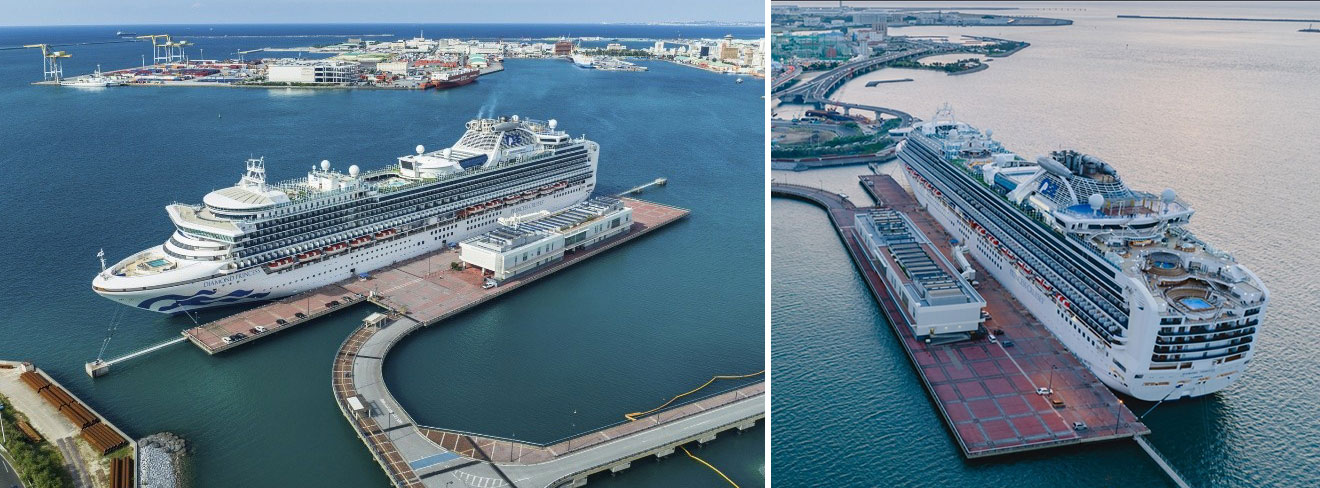
In parallel with the pier design, PACIFIC CONSULTANTS also designed the beautifully curving connecting road bridge from the land and the overall landscape design. The paving color of the designed pier uses bengara, a color unique to Ryukyu and also used in Shuri Castle, as the base color, and the paving pattern is a cross shape inspired by Shuri weaving, resulting in a finish befitting the gateway to Okinawa.
The pier designed by Suzuki was completed in 2012, and the passenger terminal building was completed two years later. The number of cruise ships accepted at Naha Port as a whole, which had been around 50 per year, doubled to 115 in 2015. In 2015 and 2017, the quay was expanded to the south, making it possible to accept larger cruise ships, and the number of accepted ships reached 260 in 2019, before the COVID-19 pandemic, making it the number one port in Japan.
Following the development of the passenger ship terminal at Tomari Pier, requests for cruise ship calls increased. As a result, Naha Port proceeded with the development of a second cruise berth in the Shinminato Pier area, capable of accommodating the world's largest cruise ships of up to 230,000 tons, and began operations in 2023. The development of the passenger ship terminal at Tomari Pier made Naha Port one of the top cruise ship ports in Japan, playing a crucial role in promoting tourism in Okinawa. More than 10 years have passed since the design work, but Suzuki says he once again felt a great sense of significance and fulfillment in his work on the passenger ship terminal, which has attracted large cruise ships to Okinawa.
"I have been involved in ports and harbors design for about 30 years. Approximately 99.5% of Japan's trade volume is transported by ship, passing through ports, so ports and harbors play an extremely important role in supporting Japan's logistics. I find ports and harbors work very rewarding because I can see firsthand the vibrancy and regional development after development, and I can feel that I am contributing to Japan's logistics. In recent years, with the rise of new demands such as cruise tourism, the role required of ports and harbors has expanded significantly. I would like to continue to contribute to society through ports and harbors development, utilizing the experience I have gained in this project."
Cruise tourism, which temporarily stalled globally due to the COVID-19 pandemic, is steadily recovering. In particular, Naha Port in Okinawa is seeing a surge in port calls, with 205 calls projected for 2025, approaching its peak, partly due to the opening of its second cruise berth. At the heart of this recovery, the Naha Cruise Terminal continues to welcome large cruise ships.