
Addressing plastic waste that persists in the environment for extended periods is a major global challenge. In particular, there are concerns about the impact of microplastics on marine life and human health, but the sources, movement, and diffusion of these plastics are not fully understood, making effective countermeasures difficult. PACIFIC CONSULTANTS is developing technologies to elucidate the dynamics of plastic waste from its generation in terrestrial areas (watersheds) to its transport. This time, we talked to Hiroshi UEHARA and Taro SHOJI from the Water Management Sec., Watershed Planning Dept., Land Infrastructure Div. who are in charge of this initiative.
INDEX
- What is a problem of microplastics?
- Sources of microplastics
- Regulations on microplastics accelerating globally: EU precedents and international trends
- Current status and challenges of plastic pollution countermeasures in Japan
- What is the "SIPHER" model that analyzes the process from the generation of microplastics to their release and transport?
- Lake and marsh watersheds' water and material cycle model received the "Technology Award"
- Regarding the future problem of microplastics
What is a problem of microplastics?
Environmental pollution caused by the massive amount of plastic waste generated worldwide every day is becoming increasingly serious. According to the Ministry of the Environment, more than 8.3 billion tons of plastic have been produced since 1950, of which 6.3 billion tons have been discarded as waste. If the current pace continues, it is estimated that 25 billion tons of plastic waste will be generated by 2050, with more than 12 billion tons of plastic going to landfills or being dumped into the wild *.
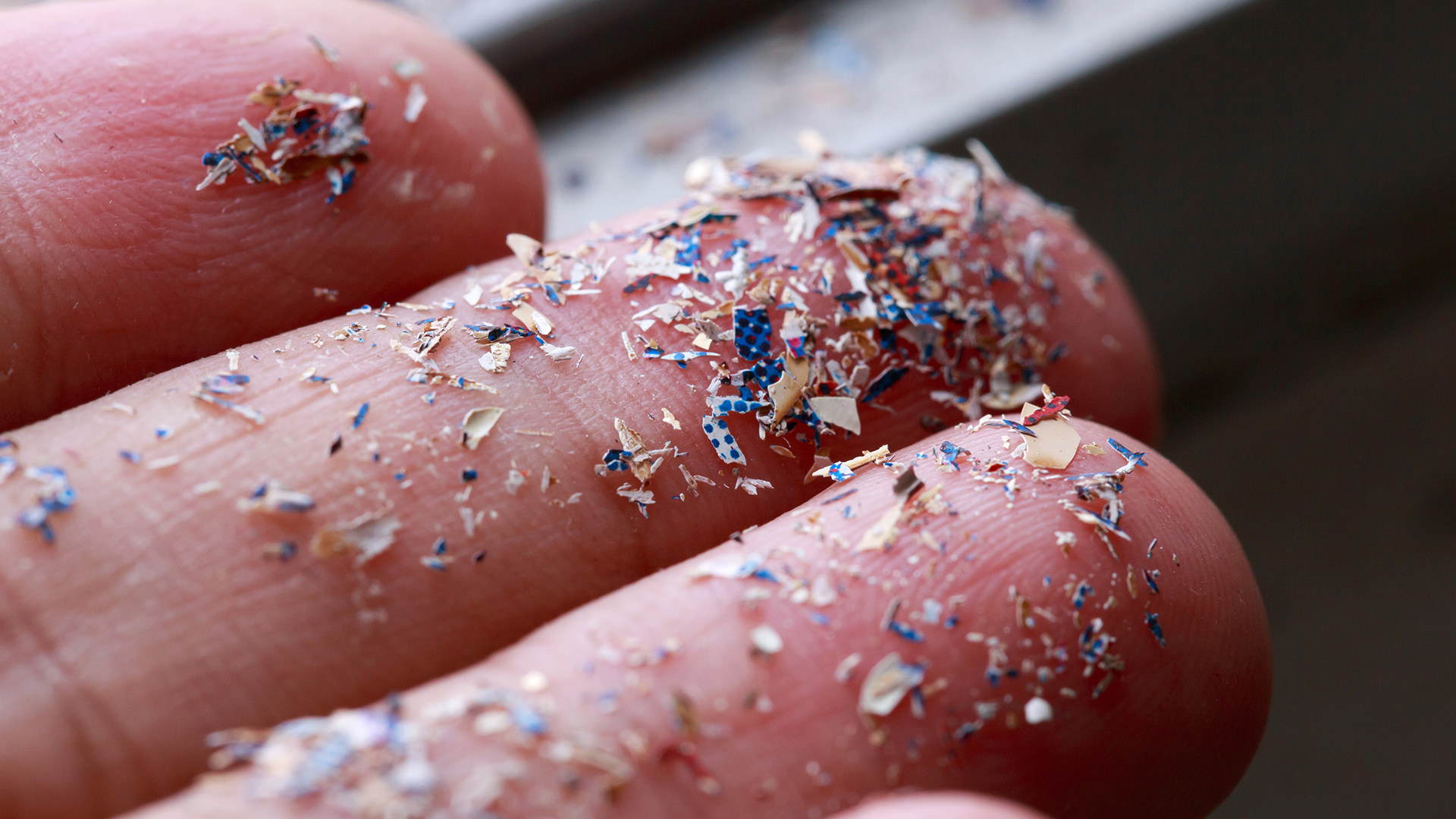
Among plastic waste, microplastics are a particular concern. Traditionally, the problems with plastic waste have been that PET bottles, shopping bags, and single-use plastic products flow into the ocean as waste, degrading the marine environment, including ecosystems, and that they wash ashore, hindering fishing, tourism, and ship navigation.
However, it has become clear that plastic waste is broken down by ultraviolet light and other factors into microplastics, which are extremely small (generally less than 5 mm in size), and then further broken down into nano-level particles invisible to the human eye, spreading widely not only in the ocean but also in the atmosphere. Until now, plastic waste has been primarily a concern as a marine pollution problem, mainly due to health damage through seafood. However, in recent years, the widespread presence of microplastics and their tendency to adsorb harmful chemical substances have become clear, raising even greater concerns about their impact on ecosystems and human health.
In fact, there have been reports of microplastics being detected in the brains, livers, and kidneys of deceased adults, and studies have emerged suggesting a possible link between microplastics ingested into the human bloodstream and strokes and heart attacks. While a causal relationship has not yet been clearly established and research is ongoing, concerns about the impact on human health are growing day by day.
Sources of microplastics
There are two types of microplastics: "Primary Microplastics," which are made to be extremely small in order to be used as products, and "Secondary Microplastics," which are plastic products such as PET bottles that are left as waste and are broken down into tiny fragments by external forces such as ultraviolet rays, wind and rain, and waves.
Primary microplastics are intentionally used in products in tiny sizes, with microbeads found in facial cleansers, toothpaste, cosmetics, and industrial abrasives being typical examples. These are extremely small and may not be adequately collected during wastewater treatment, potentially flowing directly into rivers. Microplastics are also used in the coatings of agricultural fertilizers, and even after the fertilizer components have leached out, the coatings remain on farmland, raising concerns about their potential release into the environment during rainfall.
On the other hand, secondary microplastics are generated not only from the crushing and degradation of plastic products such as PET bottles and shopping bags, but also from various sources in daily life, including chemical fibers from clothing, fragments of artificial turf, paint, and wear dust from automobile tires.
As described above, microplastics originate from a wide range of sources, including not only the ocean but also soil and the atmosphere, yet their overall picture is still not fully understood. Furthermore, once released into the environment, recovery is extremely difficult with current technology. Reducing plastic bag use and recycling alone are insufficient, highlighting the difficulty of addressing microplastic pollution.
Regulations on microplastics accelerating globally: EU precedents and international trends
Faced with the challenges of microplastics dispersion and persistence, efforts to combat plastic pollution are accelerating worldwide. At the G20 Osaka Summit held in June 2019, Japan proposed the "Osaka Blue Ocean Vision," aiming to reduce additional marine plastic pollution to zero by 2050. At the resumed session of the 5th UN Environment General Meeting held in Kenya in February 2022, it was decided to establish an Intergovernmental Negotiating Committee (INC) to discuss a legally binding international instrument on measures to combat plastic pollution. Discussions within the committee have continued since then, but a treaty has yet to be formulated.
Among these countries, the EU is leading the way in addressing plastic pollution. It aims to reduce microplastic emissions by 30% by 2030 and has already begun restricting the use of microbeads, mandating the installation of microfiber filters in washing machines (France has already implemented this), and regulating wear dust from automobile tires.
Current status and challenges of plastic pollution countermeasures in Japan
In Japan, the "Act on Promotion of Recycling of Plastic Resources" came into effect in April 2022, requiring businesses to reduce the use of 12 specific plastic products. Furthermore, the "Revised Act on Promotion of Effective Utilization of Resources" came into effect in April 2026, obligating certain businesses to formulate and periodically report plans for the use of recycled plastics.
On the other hand, as companies are required to conduct business activities with ESG in mind, how companies perceive and address "Water Risks" such as securing water resources (water volume), maintaining water quality, and responding to environmental impacts and regulations associated with wastewater discharge, and what measures they are taking, has become an important indicator in investor evaluations of companies.
For example, CDP, an international environmental non-profit organization establishment in 2000, encourages companies and local governments to disclose information on their environmental impacts. From 2023, a new item concerning plastic pollution was added, requiring companies to conduct impact assessments and risk mitigation measures across the entire plastics value chain.
However, efforts to reduce plastic waste and microplastics in Japan are not necessarily sufficient. One reason for this is that research on the effects on the human body is still in its early stages, and clear evidence has not yet been obtained. Research findings that estimated the amount of plastic a person takes in per week to be about 5 grams (equivalent to one credit card) have attracted attention, but even if this is true, the impact on health has not been fully understood.
Another challenge is that the extent of microplastic generation is not fully understood. The overall picture—where and how much is generated, and how it spreads into the ocean and atmosphere—is not clear. Furthermore, because it does not decompose in nature, there are concerns that its accumulation in the environment will further increase its impact on health. However, because the situation is not fully understood, it is difficult to implement effective countermeasures, and currently, countermeasures mainly consist of calling for the 3Rs (Reduce, Reuse, Recycle) of plastic products.
What is the "SIPHER" model that analyzes the process from the generation of microplastics to their release and transport?
To implement effective measures against microplastics, it is crucial to understand the actual processes of microplastic generation, runoff, and transport within watersheds. However, the sources are diverse, making identification difficult. Microplastics can occur over large areas, such as in agricultural land, and their runoff patterns differ between normal and rainy periods, making quantitative assessment through surveys extremely challenging. Therefore, the use of numerical calculations has been explored to understand the actual runoff patterns. The "Distributed Watersheds' Water and Materials Cycle Model (SIPHER: Simulation of the Phenomena through the Medium Water)" is one such model.
SIPHER is a model developed by the Water Management Sec. of the Watershed Planning Dept. at PACIFIC CONSULTANTS, which analyzes how water and materials such as nitrogen and phosphorus move within watershed such as rivers and lakes.
Specifically, the water-basin is divided into meshes, and various information such as river networks, land use patterns, topography, and geology is input. Then, the movement of substances in each mesh is analyzed integrally using five elemental models: The 'Evapotranspiration Model', 'Groundwater Model', 'Surface Flow Model', 'River Channel Flow Model', and 'Point Source Load Calculation Model', according to meteorological conditions (rain, solar radiation, etc.). The analysis considers how water and materials flow from rain through rivers to lakes and the sea via processes such as runoff, subsurface infiltration, springs, and evapotranspiration, taking into account the temporal changes in rainfall. A major feature of this model is that it allows us to understand the water and materials balance, showing where and to what extent water and materials are generated and through what pathways they flow to lakes and the sea.
This model was developed starting around 2002, primarily to investigate factors such as eutrophication in lakes and marshes. It is used to analyze water quality problems caused by eutrophication in lakes such as Inbanuma Lake, Teganuma Lake, Biwa Lake, Hachiro Lake, and Kasumigaura Lake, as well as to analyze nitrogen, phosphorus, COD (Chemical Oxygen Demand), TOC (Total Organic Carbon), and other related factors.
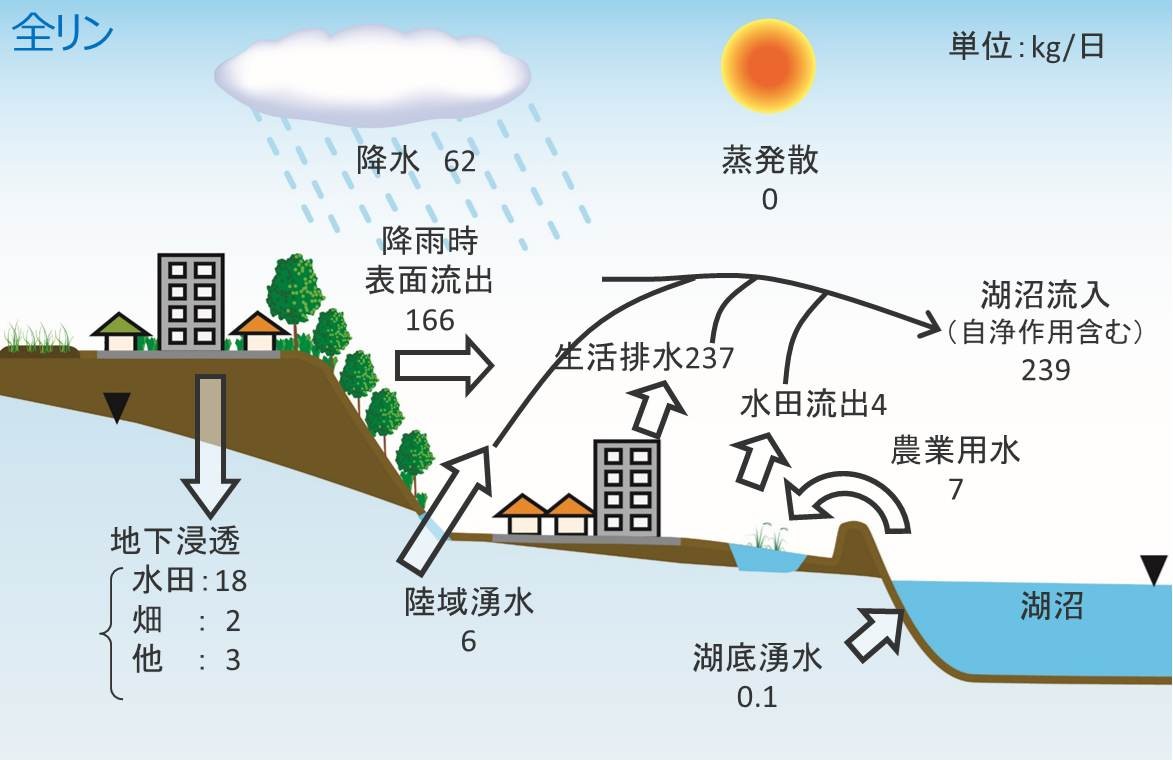
By adding microplastics to the analysis parameters of this model, it becomes possible to quantitatively evaluate where and to what extent microplastics are originating within a water basin. Using the completed model, it will be possible to understand where and how much microplastic is flowing out of any lake or river watershed nationwide, leading to the selection of more effective measures.
Lake and marsh watersheds' water and materials cycle model received the "Technology Award"
The SIPHER model has been used in various applications, including water quality prediction in the formulation of Biwa Lake's water quality conservation plan by Shiga Prefecture, identification of the origin of persistent organic matter, and prediction of the impacts of climate change, and has been utilized in the decision-making of various policies. The Japan Society on Water Environment selected "Construction of a Biwa Lake Watershed's Water and Materials Cycle Model and its Application to Policy" for its FY2024 Technology Award, and UEHARA from PACIFIC CONSULTANTS was one of the co-researchers who received the award.
This technology award highly recognizes that the project went beyond mere model development and was utilized in concrete policy applications and planning. Our company is working on implementing microplastics in the SIPHER model and further improving it, with the aim of contributing to the consideration of microplastic countermeasures in local governments.
Regarding the future problem of microplastics
Microplastics, once released into the environment, are virtually impossible to recover and do not decompose naturally. The microplastics being generated at this very moment continue to accumulate on Earth, posing a significant risk of future problems.
PACIFIC CONSULTANTS's vision is to "Producing the Future." We believe that addressing the microplastics problem is crucial in order to pass on a rich and beautiful planet to future generations. We are currently conducting analysis using the SIPHER model, and based on the results, we will develop more specific and effective countermeasures, and further improve our policies through effectiveness verification after implementation.