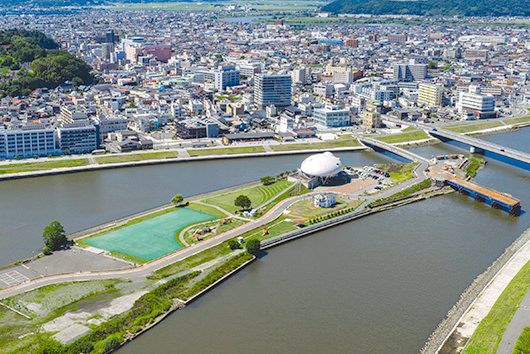

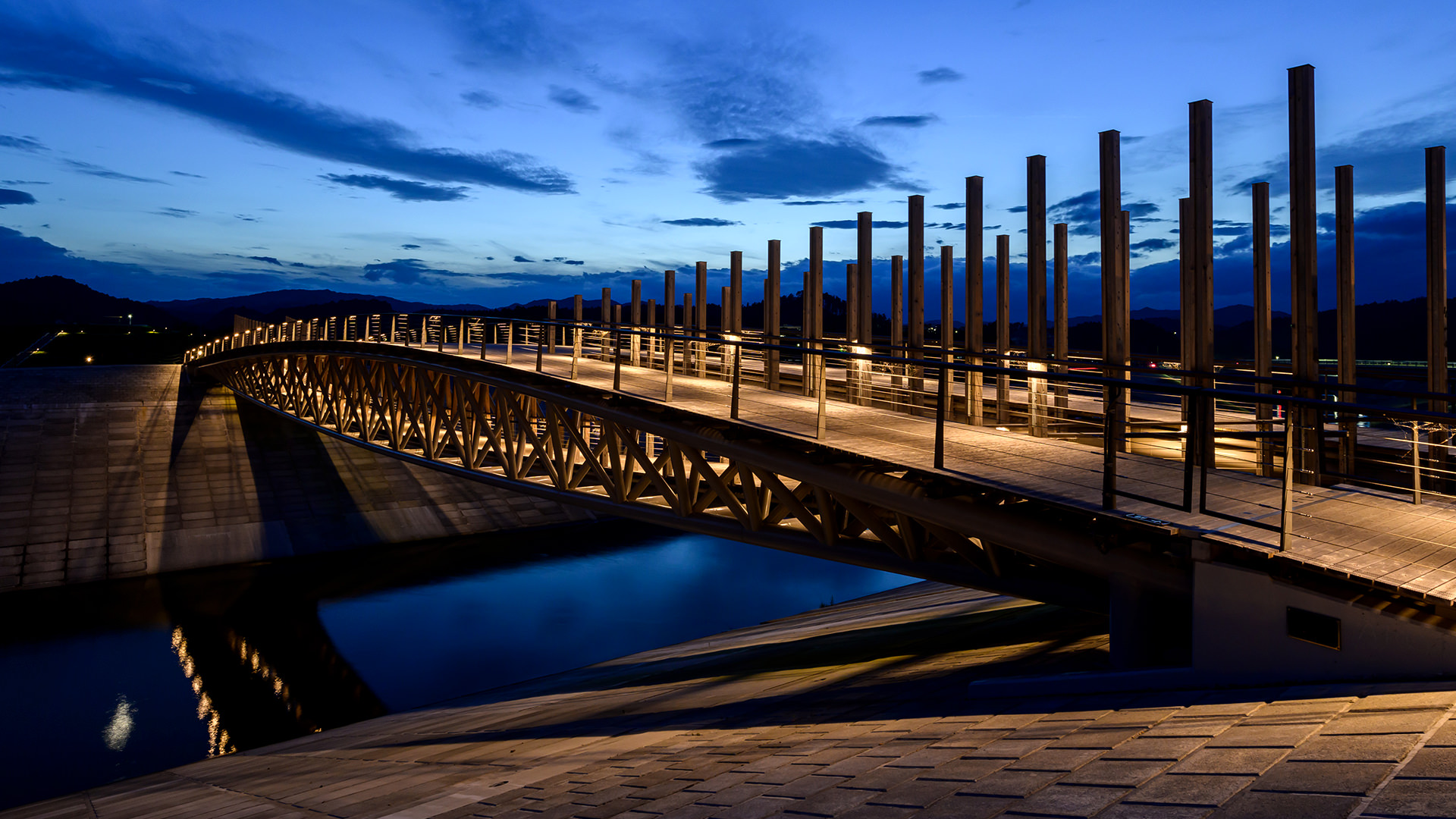
The roadside station "Sansan Minamisanriku," which was developed in the new urban area, with the earthquake reconstruction memorial park built on the opposite riverbank. The bridge was designed by a joint venture between PACIFIC CONSULTANTS and Kengo Kuma & Associates. Based on Kuma company's image perspective, PACIFIC CONSULTANTS was responsible for the design and construction of a bridge that would be a fitting symbol of the town's reconstruction, balancing delicate design with a high level of structural safety. Completed in 2020, Nakahashi Bridge won Tanaka Prize from Japan Society of Civil Engineers in the same year. We talked to Norio SAITO from Structural Dept., Transportation Infrastructure Div. who was responsible for the design work as the managing engineer.
INDEX
- Nakahashi Bridge was planned as one of the symbols of reconstruction
- Aim to achieve both beautiful design and safety as a bridge
- Replace the components with steel pipes and finish them simply with welding
- A fitting approach to the earthquake reconstruction memorial park
- Build a "landscape with a bridge" rather than just a "bridge"
Nakahashi Bridge was planned as one of the symbols of reconstruction
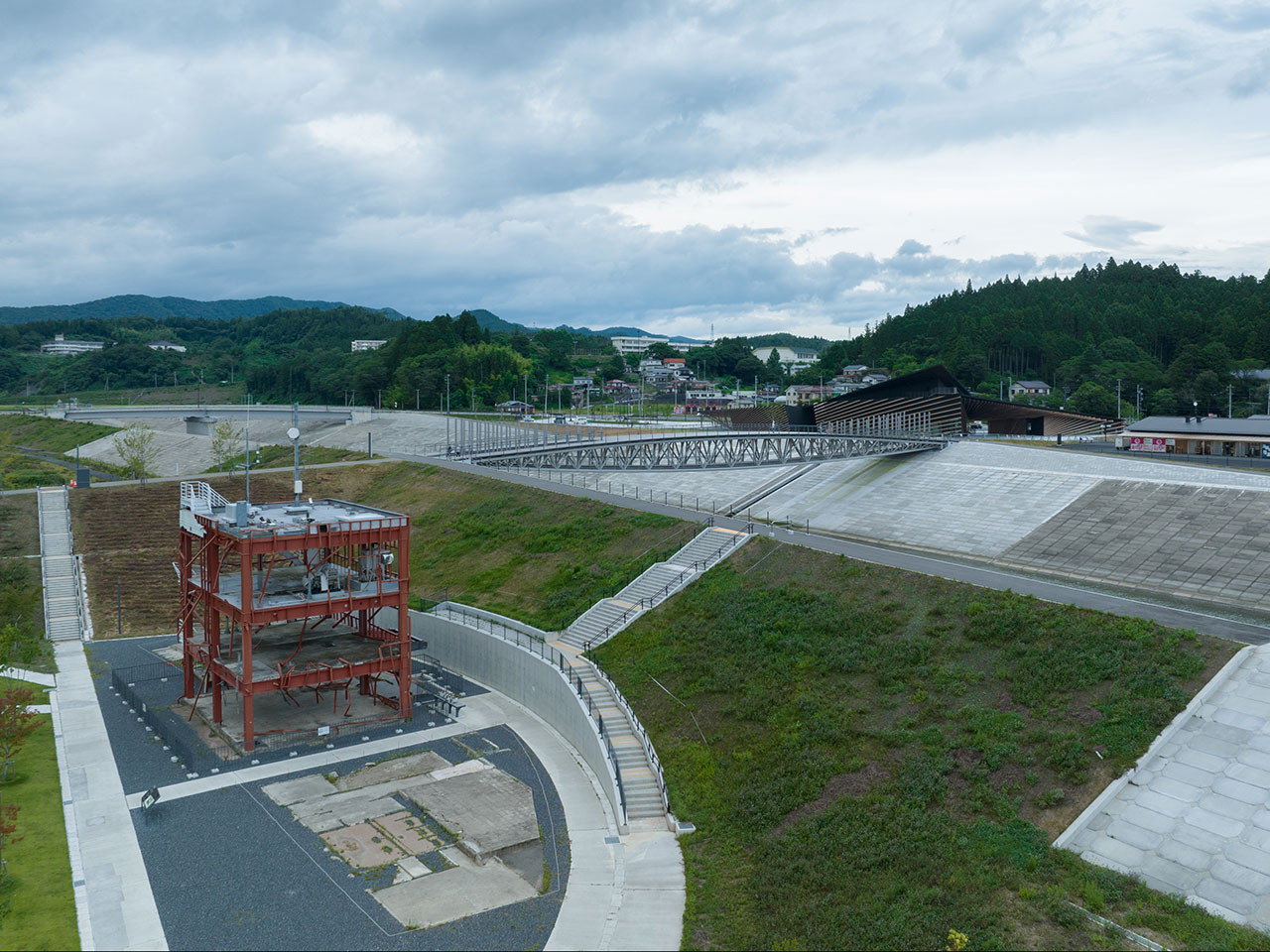
The preserved former disaster prevention building and Nakahashi Bridge
The town, located in northeastern of Miyagi Prefecture, Minamisanriku Town is known for the beautiful scenery unique to the ria coast surrounding Shizugawa Bay, suffered an unprecedented damage from the massive tsunami caused by Great East Japan Earthquake, with 620 people died (including those died in the earthquake-related issues), 211 missing, and 3,143 homes completely destroyed *. The town hall, disaster prevention center, police station, fire station, and hospital were also affected. The tsunami reached the disaster prevention center's rooftop floor by 2 meters, killing 43 staff members and townspeople in this building alone, including those who had evacuated. Many people remember the young staff member who remained in the broadcasting room until the very end, warning people by radio of the approaching tsunami and warning them to evacuate, and was killed.
Recovering and reconstructing the town that was devastated by the tsunami was extremely difficult, but on newly raised land, the "Minamisanriku San San Shopping Street", the "Minamisanriku 311 Memorial", a facility to preserve the disaster, the "Minamisanriku Portal Center", a tourist exchange facility, and the "San San Minamisanriku" roadside station, a complex that combines JR Shizugawa Station, were completed in 2017. Subsequently, on the opposite riverbank of the Yawata River, a disaster reconstruction memorial park was developed, including the former disaster prevention office building, whose steel frame has been preserved as a relic of the disaster.
*Source: Damage situation in Great East Japan Earthquake as of September 30, 2022 (Miyagi Prefecture's Reconstruction and Crisis Management Department, Reconstruction and Crisis Management General Affairs Division)
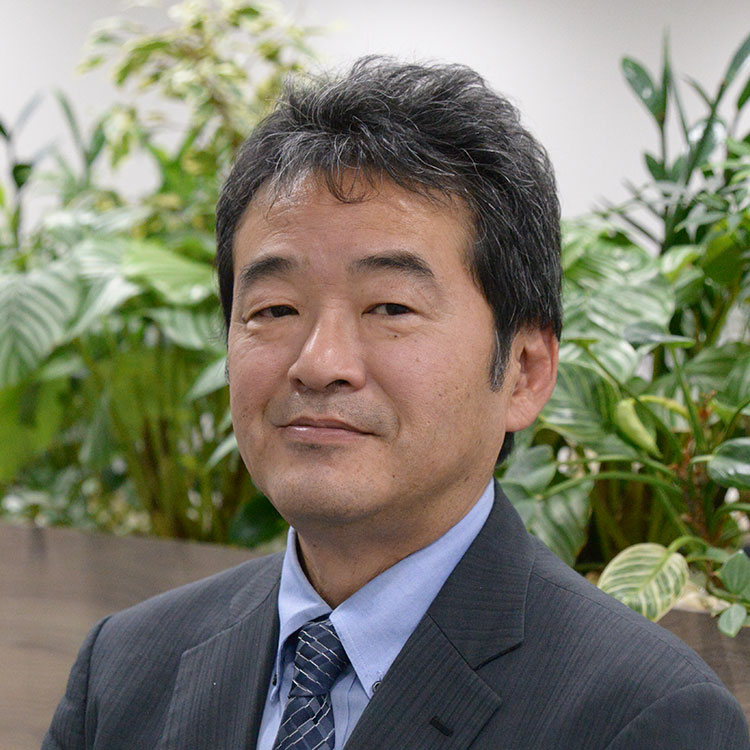
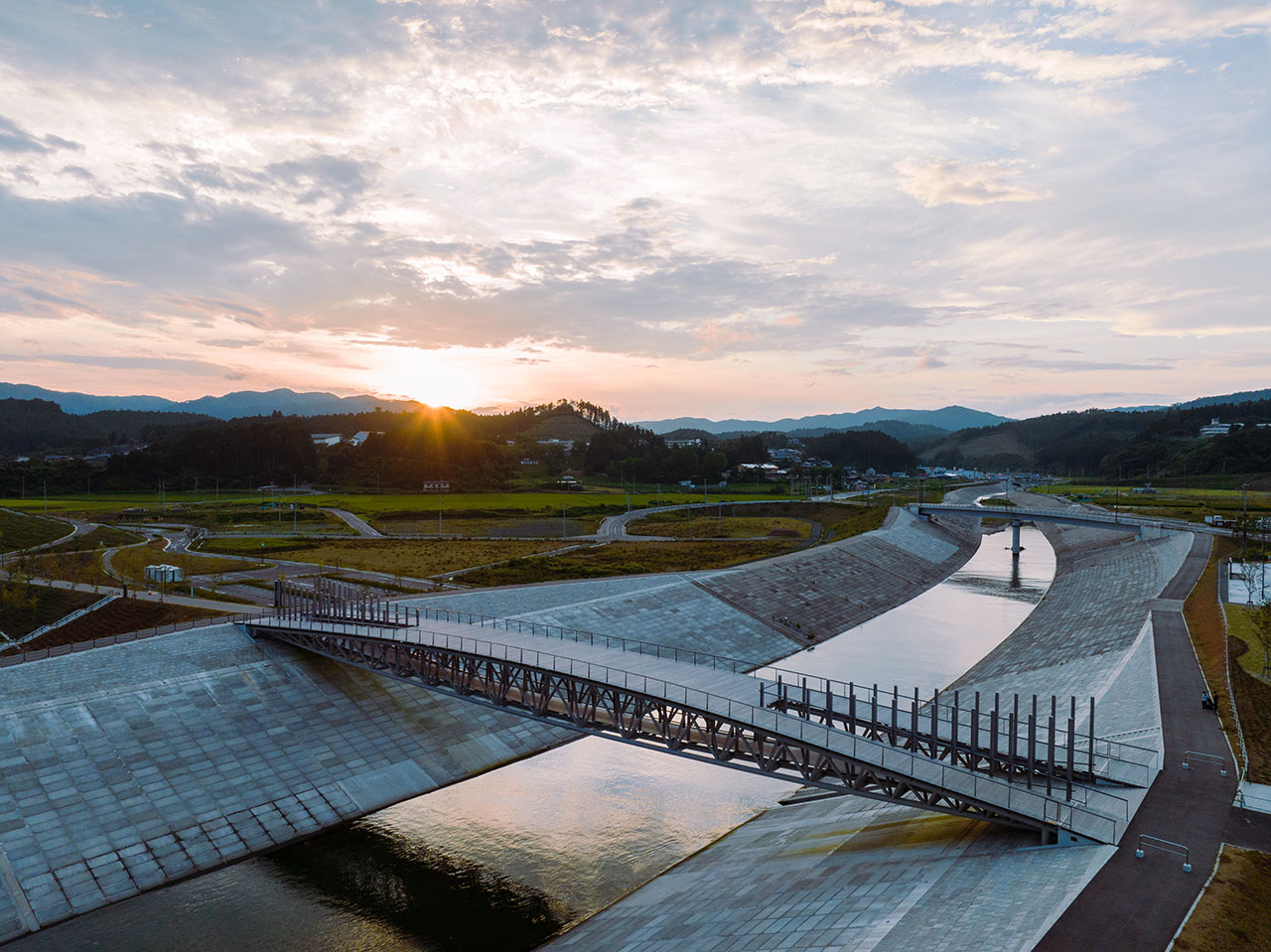
Nakahashi Bridge connects the two riverbanks and serves as the approach to the Memorial Park, a place of repose for the souls of the deceased. The previous bridge was washed away in the tsunami, and its reconstruction was positioned as one of the symbols of Minamisanriku town's recovery. PACIFIC CONSULTANTS formed a design joint venture with Kengo Kuma & Associates, which is the company planning the Minamisanriku San San Shopping Street and the Minamisanriku 311 Memorial, and based on the master plan drawn up by Kuma company, they transformed the bridge into one that is delicate yet powerful and exudes a sense of security. Serving as the design joint venture's managing engineer and also primarily responsible for the actual design and construction was SAITO, who has built a career focused almost exclusively on bridge design for over 30 years since joining PACIFIC CONSULTANTS in 1990.
Aim to achieve both beautiful design and safety as a bridge
While SAITO was attracted to the beauty and intricacy of Kuma company's design sketches, which made generous use of local cedar wood, he intuitively felt that the bridge structure would not be viable in its current state. "The design sketches were extremely delicate, with a single thin cable stretched across both riverbanks, supported by thin timber, to create a low-rise arched bridge surface. While the design was beautiful, I felt that it would be extremely difficult to turn it into a bridge that people could cross safely and securely. What's more, we only have seven months to design it." While reconsidering the design, SAITO conceived several design proposals, verifying their structural feasibility. He ultimately narrowed it down to two proposals and proposed them to the town, which was the client. The "pipe truss proposal" was the one that was adopted.
Replace the components with steel pipes and finish them simply with welding
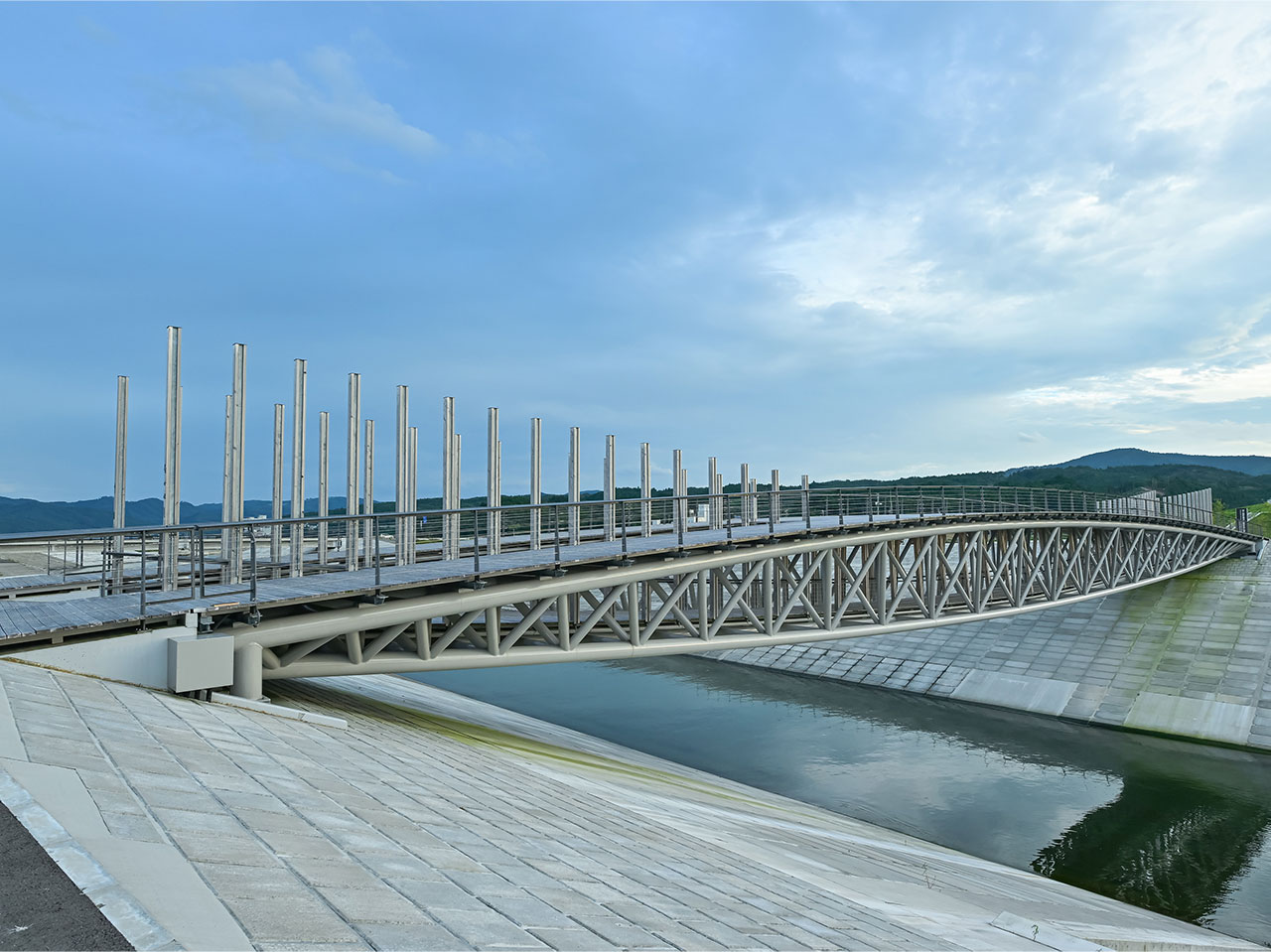
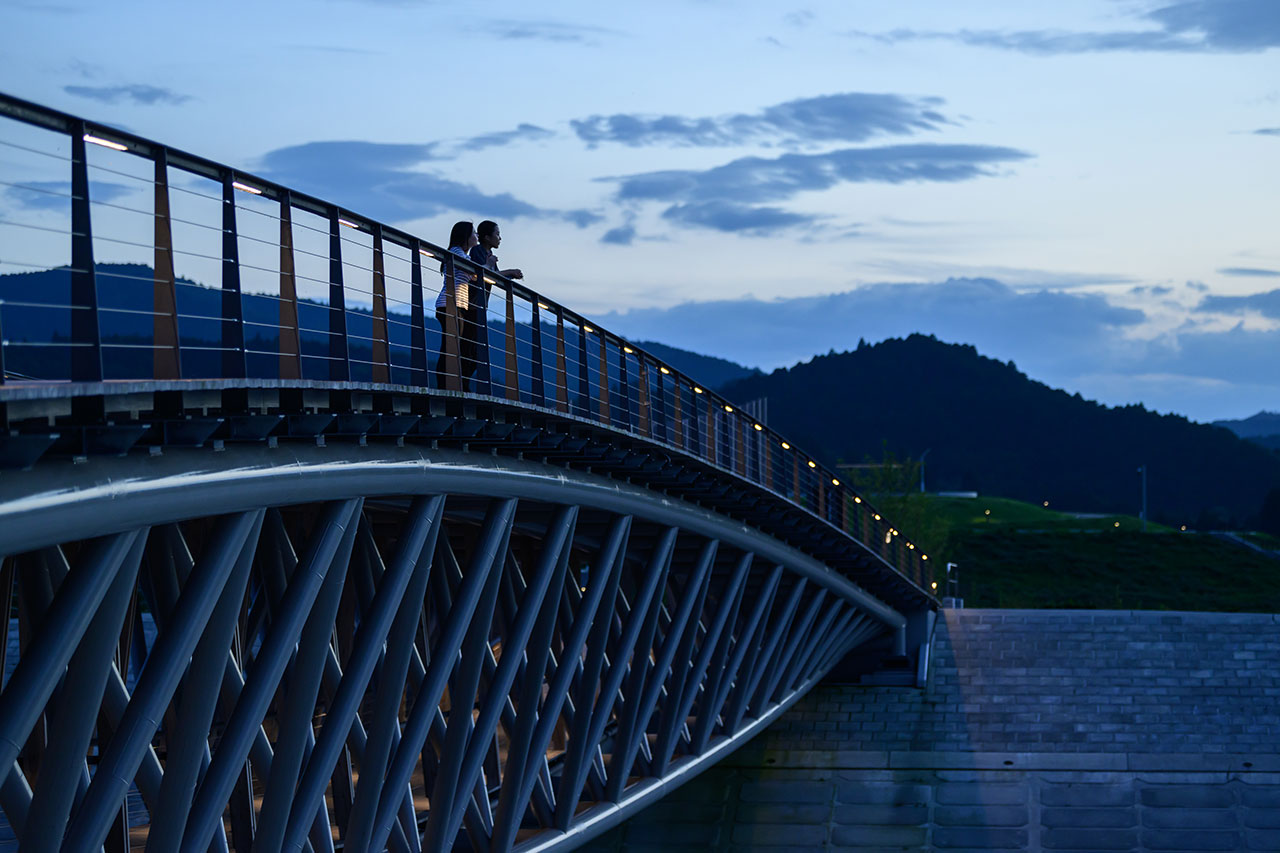
While this design proposal followed the original image of a "Wooden drum bridge with thin timbers arranged in an inverted triangle to support the deck," the decision was made to replace the bridge body with a truss structure made of steel pipes. "We ensured the safety and stability of the structure, which are the first requirements for a bridge. However, we had to avoid giving the bridge a rough impression. We repeatedly performed three-dimensional analysis using 3D models and reduced the size of each component to its bare minimum. We also buried the abutments into the embankment up to the bridge seating surface so as not to interfere with the light, horizontal lines of the bridge, creating a bridge that looks as if it had fallen from the sky and been gently placed on the ground."
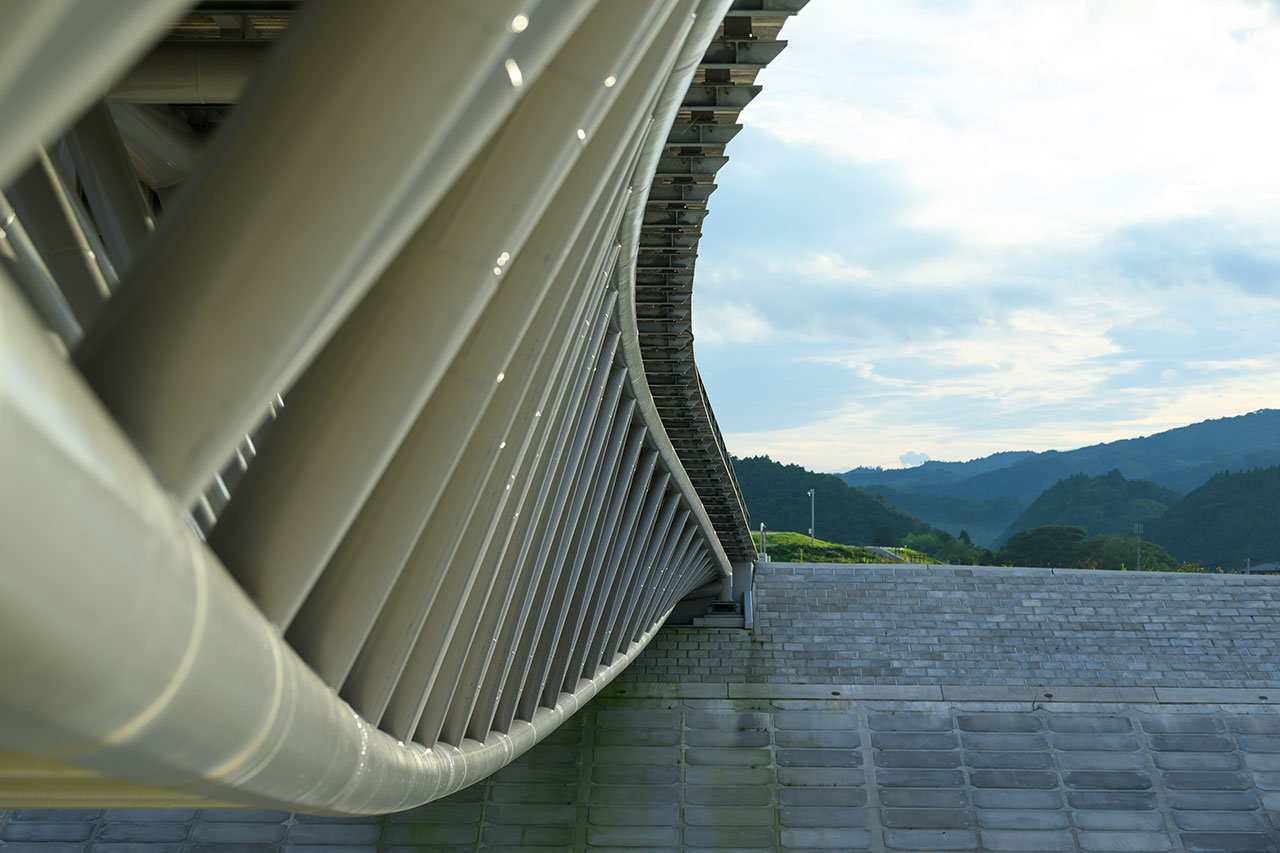
Truss joint angles meticulously calculated through 3D analysis
Furthermore, SAITO decided to use welding as a general rule to join the components together, so as to give the overall bridge a clean look. Even in some areas where bolt connections were required, rib materials placed inside the steel pipes were joined with bolts and then covered with cover plates, thoroughly shaping the exterior. Furthermore, at the joints of the steel pipes that form a truss shape, the axes of the six steel pipes were gathered at a single point to avoid creating an unnatural appearance. As a result, the angles at which each component intersects at every intersection change three-dimensionally, and the cut shapes at the ends of the pipes become extremely complex in three dimensions. Saito boldly took on this challenge, and created a design that was both simple and delicate.
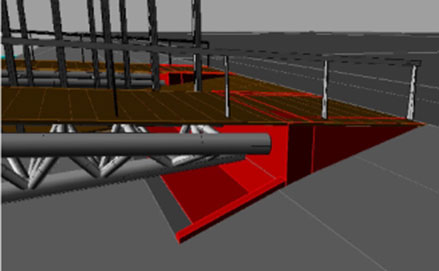
(Provided by Yada Kogyo Co., Ltd.)
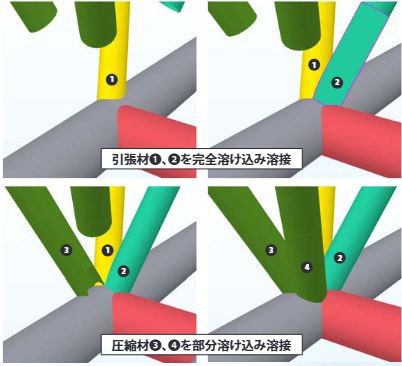
(Provided by Yada Kogyo Co., Ltd.)
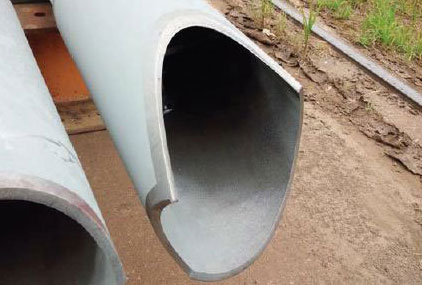
(Provided by Yada Kogyo Co., Ltd.)
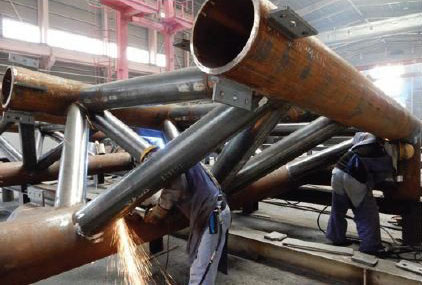
(Provided by Yada Kogyo Co., Ltd.)
A fitting approach to the earthquake reconstruction memorial park
SAISO also came up with one unique innovation: A route in the middle of the bridge that approaches the water's surface in an inverted arch, giving it a double-deck structure. "Initially, we hadn't thought of that, but as we progressed with the design, we found that the bridge's center needed to be a maximum structural height of 3m, which created a certain amount of space. We used this space to create a second deck that approaches the water's surface, so that you can cross to the other side by going either way. You can enjoy two different views even when crossing one bridge."
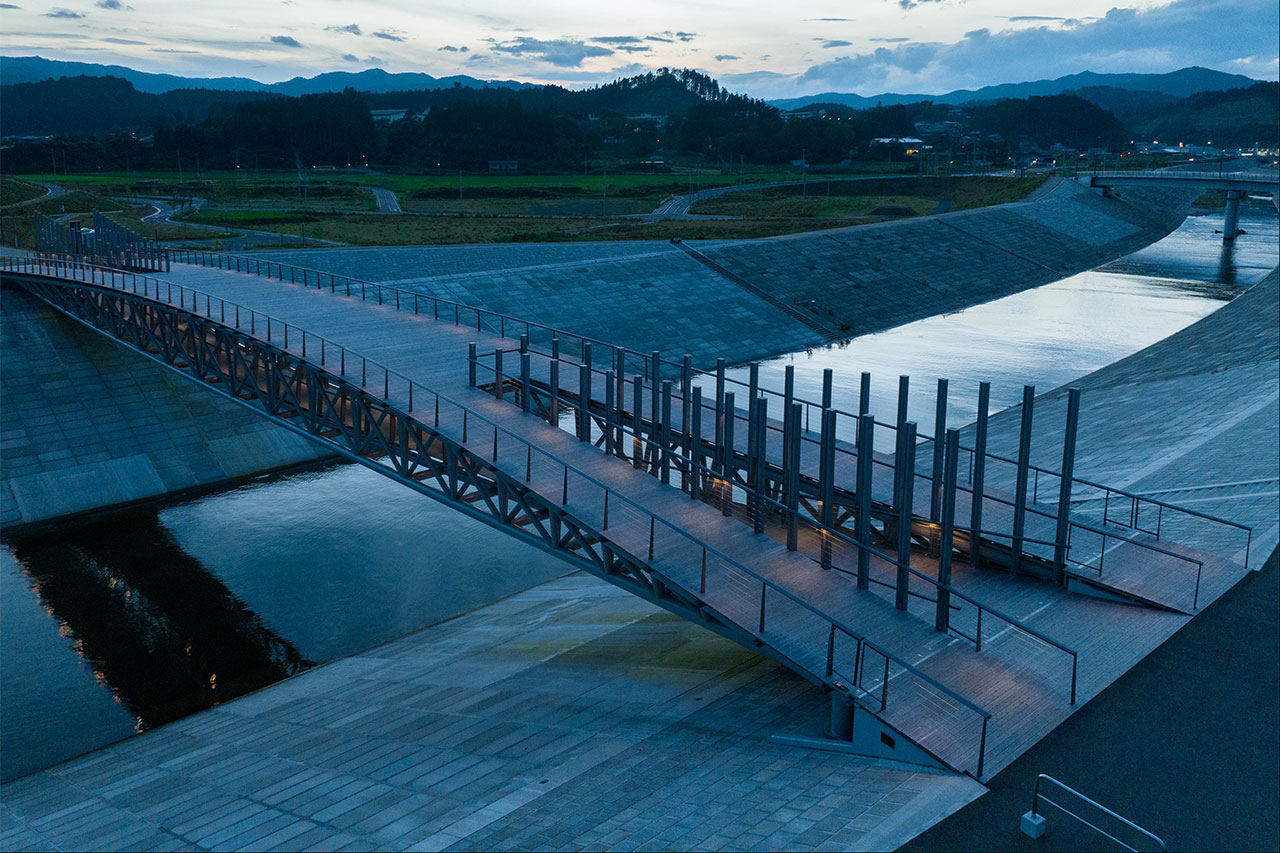
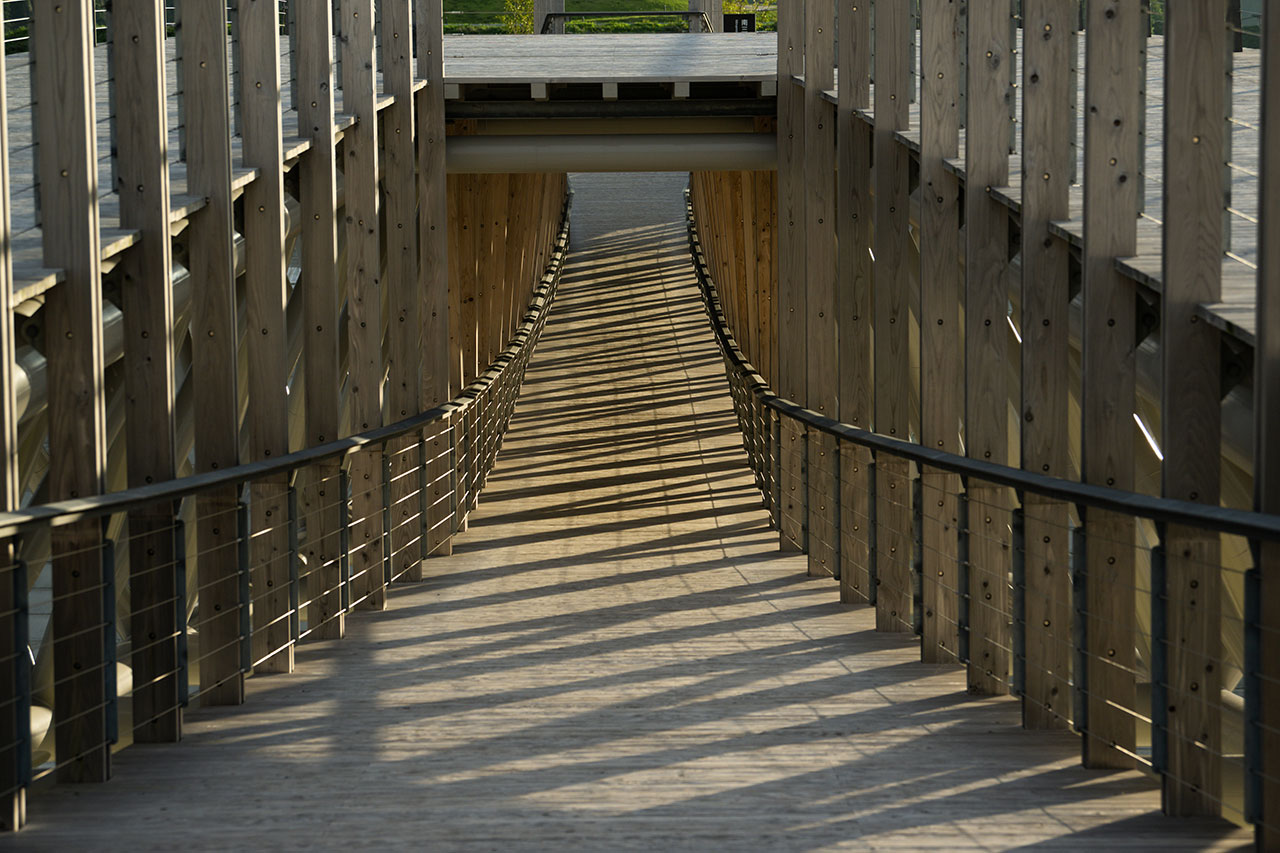
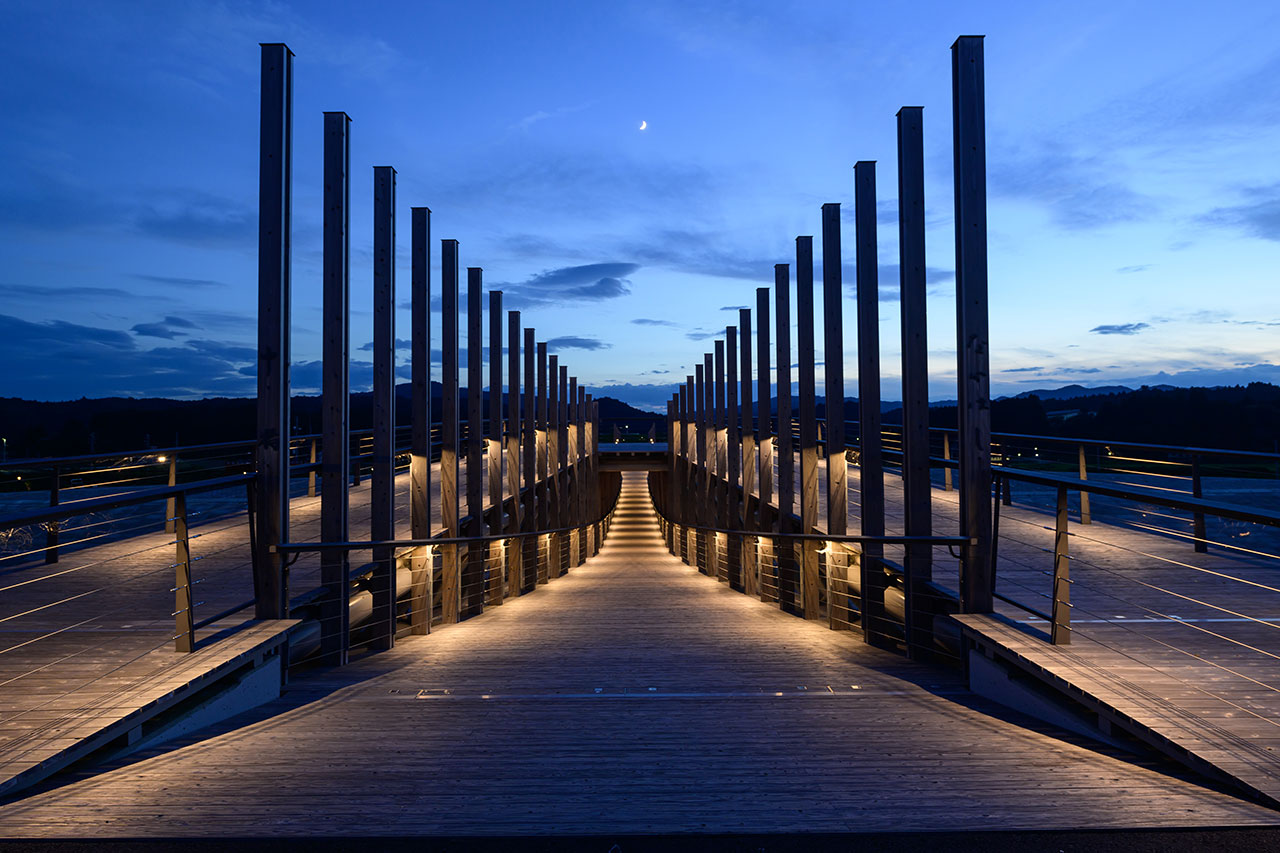
The tall wooden gate also utilized Kuma company's idea, with the balustrade supports needed for the deck extended upwards. As a result, it resembles the torii gate of a shrine, creating an impressive appearance befitting the approach to the earthquake reconstruction memorial park. The wooden gate and deck are made with an abundance of locally grown cedar that was cut down when the building was relocated to higher ground.
Furthermore, the balustrades are horizontal, so that the view when crossing the bridge is not obstructed. Lighting is also built into the balustrade's capping to illuminate the ground, creating an impressive nighttime view.
Build a "landscape with a bridge" rather than just a "bridge"
Although there was little time for design, Saito poured all of the knowledge and know-how he had acquired throughout his career into this 80m pedestrian bridge. Conversely, without 30 years of learning and accumulated experience, it would have been impossible for him to complete the design of this bridge in just seven months. Of course, he would not have received Tanaka Prize, the highest honor a bridge engineer can receive. "There was no particularly new design method that I invented in designing this bridge. I poured everything I had learned from my seniors and everything I had acquired through trial and error into it. In that sense, you could say that I was able to put to good use what I normally value in my designs here as well."
SAITO continues by talking about his desire to convey this to the younger generation who will be involved in bridge design in the future.
"The first is the concept of 'Bridges View,' a phrase used by a senior colleague whom I respect. My interpretation of it is that what we design is not a standalone bridge, but the landscape itself. A bridge that never stands out on its own, but blends in with the landscape, becoming one with it, is what is needed in each location. The second is 'structural beauty.' Structural beauty is born where there is a necessity. By grasping the 'flow of force,' going against it as much as possible, eliminating engineering waste, and using technical expertise to refine the shape and assembly of the components that make up the bridge, a simple yet beautiful structural beauty will naturally emerge. The third is the balance between a sense of security and presence. A bridge belongs to the people who cross it, and it is meaningless if people cannot use it with confidence. Rather than being obsessed with appearances such as design or aesthetics, I believe it is important to ensure a good balance with the sense of security of those who cross the bridge. And that is something that only an engineer with extensive structural knowledge can achieve," says Saito. These three ideas guided the design of Nakahashi Bridge.
SAITO visited Nakahashi Bridge many times after its completion. Whenever he visited, he could see people taking photos with the bridge in the background, talking about the bridge as they crossed it, or just lingering there for a while. He felt that all his hard work had paid off when he learned that the bridge was loved by so many people.
Additionally, at the annual "High School Student Bridge Model Presentation" held by the Tohoku Regional Development Bureau, Ministry of Land, Infrastructure, Transport and Tourism, several high school student groups created models based on Nakahashi Bridge, and all of them won prizes. "I was happy to win Tanaka Prize, but I was just as happy that the high school students chose it as material for their models," SAITO recalls.
The name of SAITO, the managing engineer, was engraved on the bridge's plaque. SAITO said that as a designer, he felt happy to be able to leave behind proof that it was his own work. Nakahashi Bridge has become a bridge that holds special meaning for both SAITO and PACIFIC CONSULTANTS.