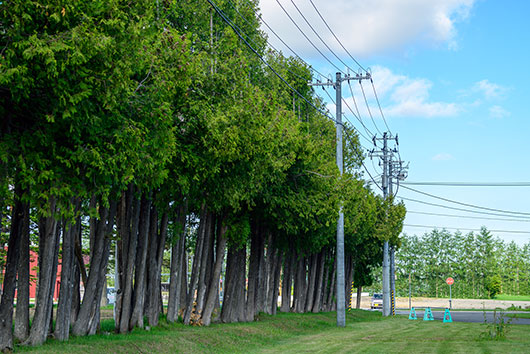

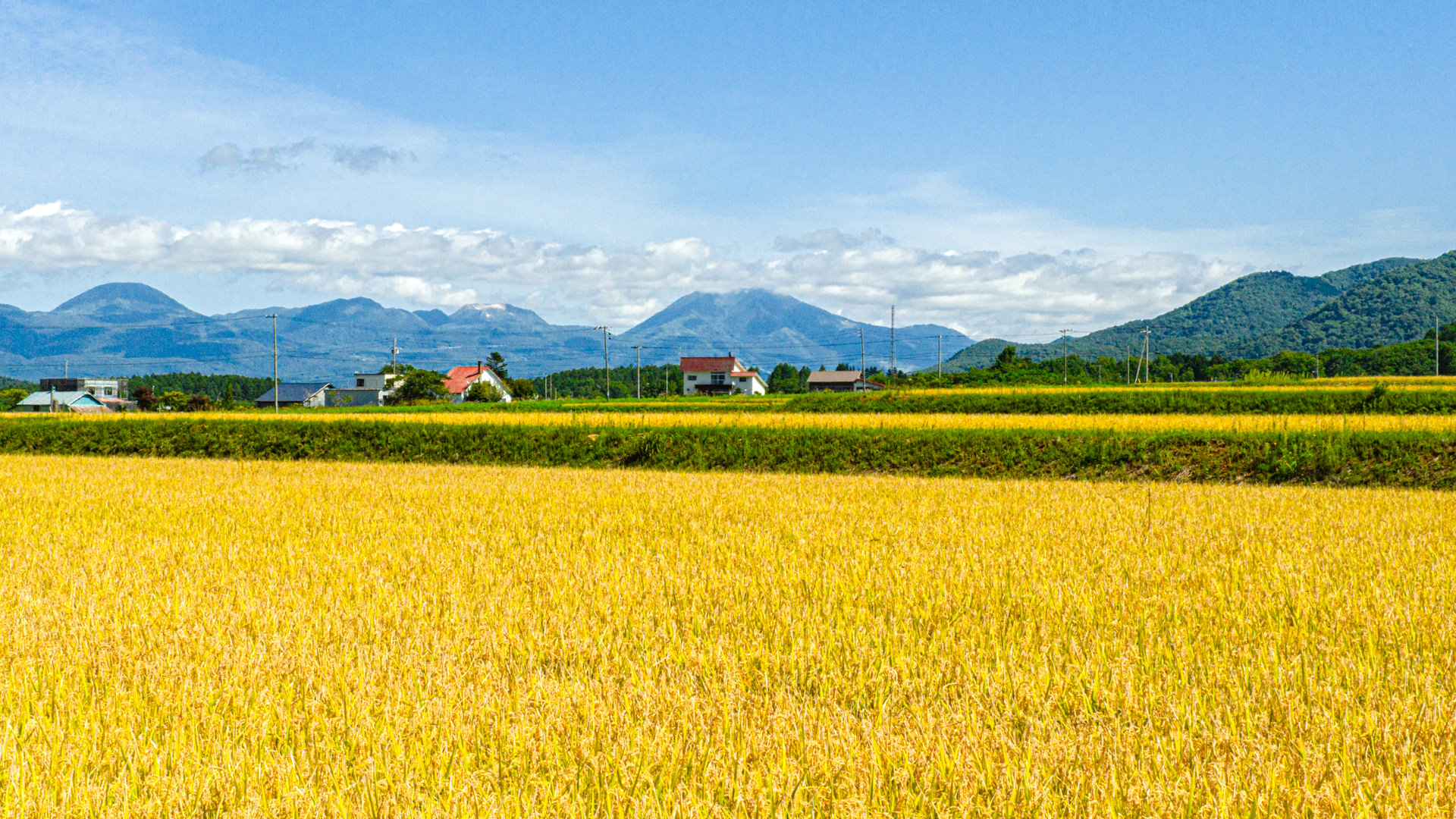
Rankoshi Town in Hokkaido is known nationwide as one of the best producers of delicious rice. It is a beautiful town blessed with abundant nature. However, like many local municipalities, it faces many challenges due to a declining population and an aging population with a low birthrate, and it also needed to take immediate action to achieve carbon neutrality by 2050. PACIFIC CONSULTANTS noticed that Rankoshi Town was considering utilizing "Energy Structure Advancement and Conversion Understanding Promotion Project" of Ministry of Economy, Trade and Industry (METI) and supported its efforts, such as developing solid fuel using rice husks and utilizing wastewater heat from hot springs, which have produced many results. Katsunori AMEJIMA of the Regional Energy Sec., Hokkaido Social Innovation Department, looks back on the project.
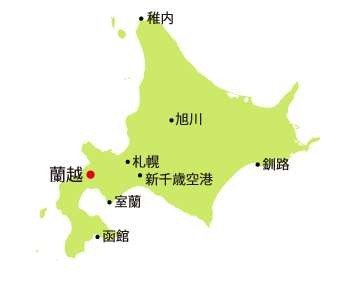
Rankoshi Town, Hokkaido
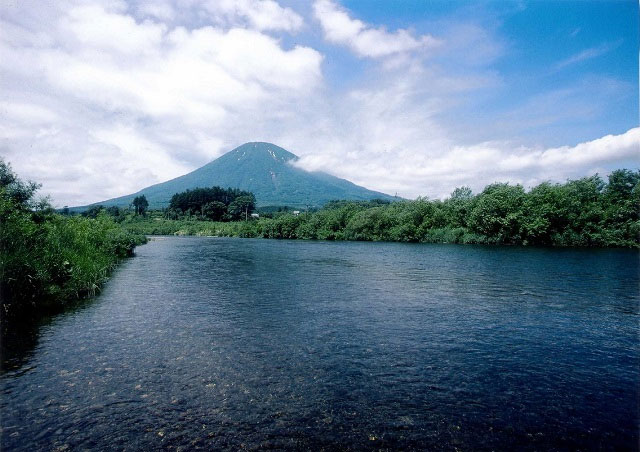
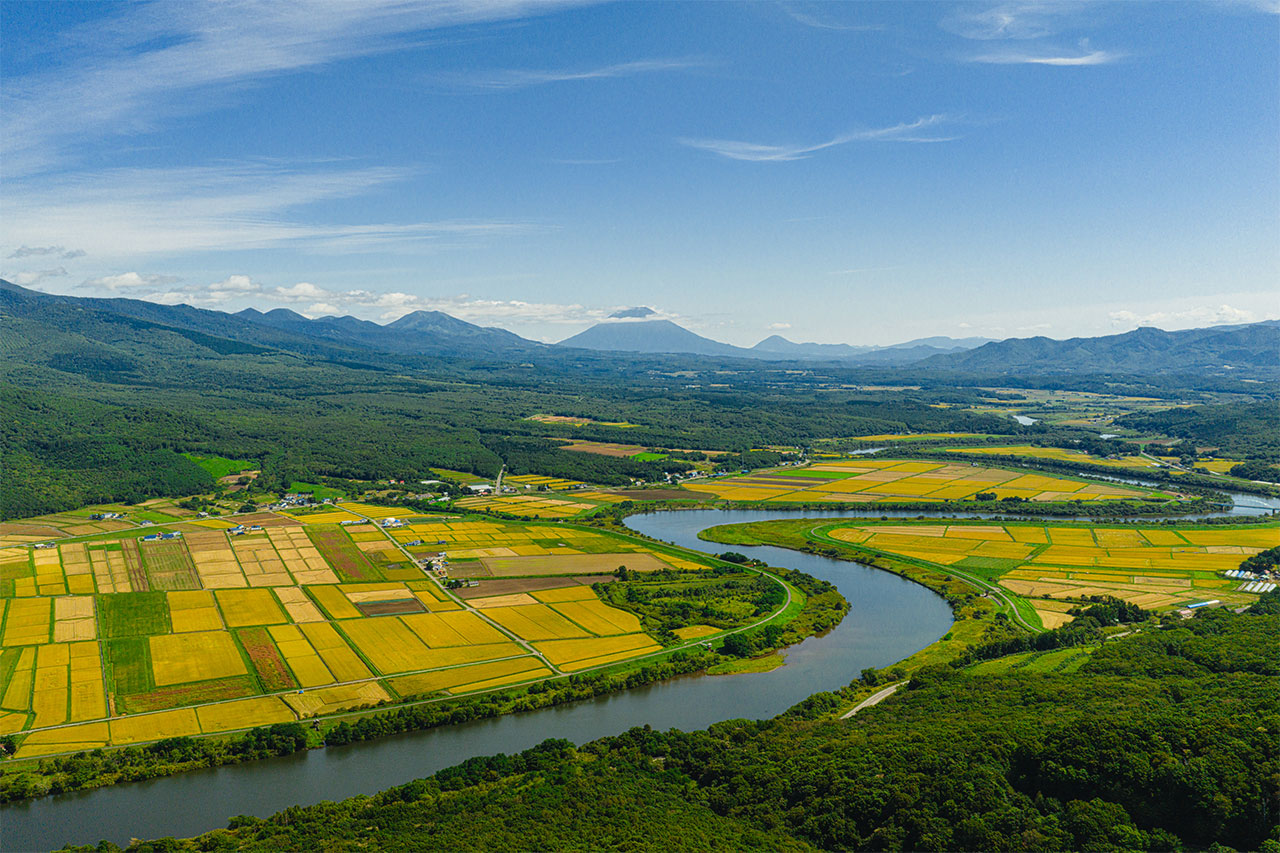
Rankoshi Town, located in southwest Hokkaido, lies in a basin surrounded by mountains such as the Niseko mountain range. The name Rankoshi is a corrupted version of the Ainu word "ranko-ushi," meaning a place with many katsura trees. The Shiribetsu River, repeatedly recognized as Japan's cleanest river, flows through the town's center, stretching approximately 30 km east to west, before emptying into the Sea of Japan. The flat land surrounding the river basin is fertile, and the Rankoshi rice produced here, Yumepirika, has consistently earned the highest rating of "Special A" ofthe taste rankings in the "Japan Grain Inspection Association" and won Grand Award at the 2024 Rice-1 Grand Prix, earning it nationwide recognition. The town has a total area of 449.78 km2 (slightly larger than Shinagawa Ward, Tokyo), and a total population of 4,299 (Estimated total population in 2050: 2,640). The town's total expenditures in 2023 were approximately 7.6 billion yen.
INDEX
- Towards local production and consumption of energy
- "The Energy Structure Project Can Be Used!" - Using experience from previous post
- Planning to use rice husks as fuel and wastewater heat from hot springs
- Utilizing rice husk fuel in agricultural production
- Taking on the challenge of utilizing wastewater heat and solar power generation
- Connecting public facilities around the town hall with a microgrid
Towards local production and consumption of energy
On May 31, 2025, Rankoshi Town declared that it would aim to become a "zero-carbon city" by 2050, achieving net-zero Greenhouse Gas Emissions. This was a strong declaration of the town's resolve, but it was by no means early, as the Hokkaido Prefectural Government had already made the declaration in 2020, and most of the prefecture's 179 cities, towns, and villages had also done so. The town had a mountain of priorities to address, including improving medical and nursing care, supporting child-rearing, nurturing industry and securing employment, maintaining public transportation, and repairing public facilities, and so efforts toward carbon neutrality tended to be delayed.
Of course, the town hopes that the introduction of renewable energy will stimulate the economy and create jobs through the development of related industries. Also, as approximately 600 million yen is flowing out of the region due to the purchase of electricity and fossil fuels, the town hopes to reduce this amount even a little by promoting local energy production and consumption.
The problem was creating a detailed plan for the renewable energy project. Rankoshi Town was considering using Ministry of Economy, Trade and Industry (METI)'s subsidized project, the "Energy Structure's Advancement and Conversion Understanding Promotion Project" (abbreviated as the "Energy Structure Project"), but there were many issues to consider, such as what resources within the town would be used specifically, who would organize and promote it, and how to secure the necessary funds and draw up a concrete roadmap. Therefore, the town held a proposal to widely gather private sector knowledge. This was in 2018. As a result, PACIFIC CONSULTANTS' proposal was well received, and they were tasked with considering and implementing the measures. This was the beginning of Rankoshi Town's full-scale efforts.
"The Energy Structure Project Can Be Used!" - Using experience from previous post
In 2018, AMEJIMA had just assigned to Hokkaido. A graduate of the Faculty of Agriculture, he originally studied plants. He also holds a Level 1 certification in the Biological Taxonomy Skills Examination, a notoriously difficult test. After joining the company, he worked in the environment and energy field for 18 years in Tokyo and 7 years in Osaka before assigning to Hokkaido. Soon after assigning, AMEJIMA heard that Rankoshi Town was considering using the Energy Structure Project, and thought he might be able to support them.
"This program provides financial assistance for town development that utilizes renewable energy in areas where nuclear power establishment, and up to 200 million yen in the 'surrounding area' (municipalities within a 30-km radius of the nuclear power plant) for the formulation of a vision for promoting renewable energy, support for the introduction of power generation facilities, and efforts to revitalize the region using renewable energy. Rankoshi Town, which is located in the area surrounding the Tomari Nuclear Power Plant, is eligible for this program. However, actually using the program is not easy, as it involves a complex process that includes not only formulating specific plans, but also preparing many application documents and completing various procedures. I happened to have experience supporting the use of this program when I was working at Osaka Headquarters, so I thought I might be able to be of help."
Planning to use rice husks as fuel and wastewater heat from hot springs
Rankoshi Town saw two potential sources of renewable energy. One was rice husks, which are produced in large quantities as a result of being a rice-growing region, and the other was the heat from the abundant hot springs in the area. Neither was being utilized. As for rice husks, 2,000 tons were generated annually by rice farmers in the town, but farmers had to dispose of them as waste at a cost. However, rice husks can be burned to extract thermal energy. In fact, some rice farmers across the country have been making effective use of them as fuel, killing two birds with one stone by reducing disposal costs and fuel costs. Rankoshi Town has begun concrete studies to turn rice husks into fuel, taking advantage of the "Energy Structure Project" that has been approved for application. However, it soon became clear that it would not be possible to do it in the same way.
"I visited places where they were already turning rice into fuel, and I found that there were differences in the rice milling systems. The leading places had large rice mills in the area, and the large amounts of rice husks produced there were being used as fuel in dedicated boilers set up on site. However, in Rankoshi Town, each farmer mills their own rice, so the rice husks are generated in a scattered manner. In order to use them, they have to be transported and collected in one place. Rice husks are light, but they are extremely large, so transporting them is inefficient. What's more, they can get dirty or wet in the process. What's more, rice husks are produced in large quantities at one time, so warehouses are needed to store them. I realized that there were very high hurdles to overcome before directly turning them into fuel. That's why I decided that it would be best to first turn them into solid fuel."
The plan to turn rice husks into solid fuel was taking shape. The technology to turn rice husks into solid fuel already existed, and the equipment had been developed. We decided to introduce this and proceed with demonstration experiment.
"After preparations, we began actual demonstration experiment on converting the husks into solid fuel. After about two years of trial and error, we figured out that the rice husks had to be clean and dry before being put into the machine, and what precautions we needed to take to achieve this, we finally succeeded in making it practical. We were able to sell it for almost the same price as firewood, and although there were costs involved in converting it into solid fuel, something that previously required processing costs to dispose of has now been commercialized and can generate income, so the value is enormous."
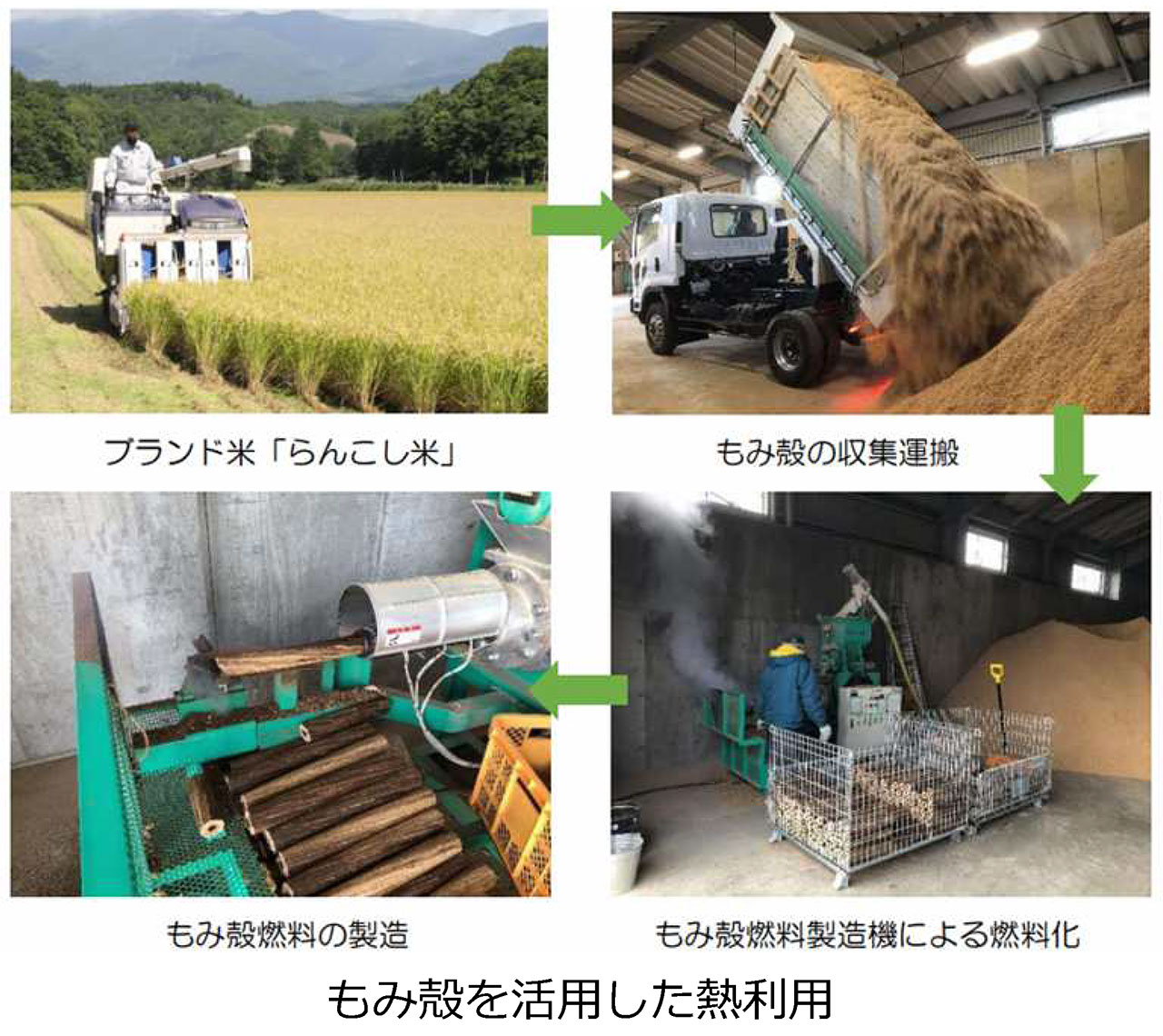
Moreover, rice husk fuel has the same calorific value as firewood, but burns for more than twice as long. Compared to firewood, a larger amount remains as ash, which can be used as a snow-melting agent or soil conditioner. The production and sale of rice husk fuel became a new business for the town, and as a result of active efforts to expand sales channels, it was able to secure buyers not only within the town, but also throughout Hokkaido and even Tokyo. Although the amount of rice husks initially turned into fuel was 32 tons, only about 2% of the total amount generated, it became clear that there was ample potential for commercialization, and the next step of expanding production and sales channels became clearly visible.
Utilizing rice husk fuel in agricultural production
Aiming to expand the use of rice husk fuel, the town also considered using it for agricultural production. This is a demonstration project that utilizes an existing town-owned greenhouse, heats the greenhouse with a rice husk fuel-specific boiler, and produces and provides locally grown agricultural products in the winter.
"Tomatoes grown and heated using rice husk fuel were provided at roadside station and supermarkets both in and around town, as well as for school lunches in the town. We also provided them to hotels and restaurants in the Niseko resort area in the neighboring town, where they were well received. If rice husk fuel could be used for agricultural production, it would be an ideal energy cycle of local production for local consumption. However, we were unable to resolve cost issues during the initial two-year demonstration project, and we were unable to put it into practical use right away. We need to work on this further, but I believe that the creation of energy derived from rice husks has led to further increasing the brand value of Rankoshi rice."
Taking on the challenge of utilizing wastewater heat and solar power generation
Along with promoting renewable energy using rice husks, Rankoshi Town has also attempted to utilize wastewater from hot springs for heat. This was done using the "Energy Structure Project" and a subsidized project from the Ministry of the Environment. "Yusenkaku", a town-run hot spring facility, is popular with many visitors from both inside and outside the town, but the facility consumes an extremely large amount of heavy oil for hot water and heating, at approximately 360,000 liters per year, and accounts for approximately 28% of CO2 emissions from all public facilities in the town, making it the town's largest source of emissions (according to the Rankoshi Town's Regional New Energy Plan, March 2019). AMEJIMA believed that wastewater heat could be utilized, so he first conducted a feasibility study, then drew up a basic plan and basic design, paving the way for realization.
"Yusenkaku is a facility that draws hot spring water at about 52 degrees Celsius from a location about 300 meters away, and the hot spring water is free-flowing from the source. There is an abundance of waste hot water, but most of it was being discarded. At the time, there was a subsidy program from the Ministry of the Environment to promote the use of renewable energy, so we used this to first conduct a detailed feasibility study. We planned to collect the waste hot water, extract its heat, and further heat it using a heat pump to use it for heating the building, heating the showers, and melting snow in the parking lot. Construction work on the equipment was completed in October 2021, and the new system was up and running, reducing heavy oil use by 95%. Although electricity consumption has increased to run the heat pump, CO2 emissions have been reduced by 28%. I think we have achieved a very significant result." (Figures from the August 2024 issue of "Rankoshi Public Relations")
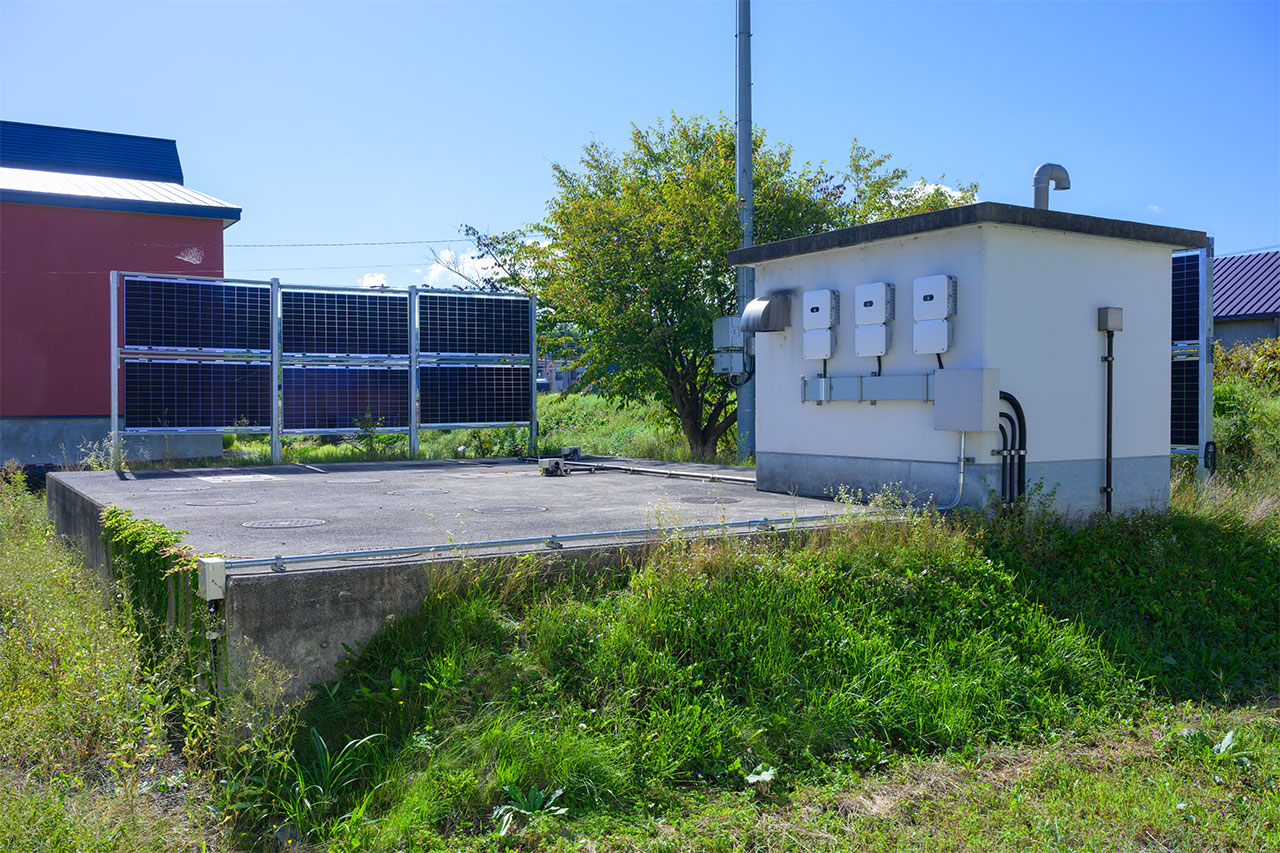
Furthermore, as a measure to deal with the increased electricity consumption, the company has begun to consider solar power generation, which it had not previously attempted. It is currently conducting experiments to collect data by installing panels in the parking lot to see how much power can be generated with a vertical installation that is less affected by snow accumulation and can also utilize the light reflected by snow on the ground.
Connecting public facilities around the town hall with a microgrid
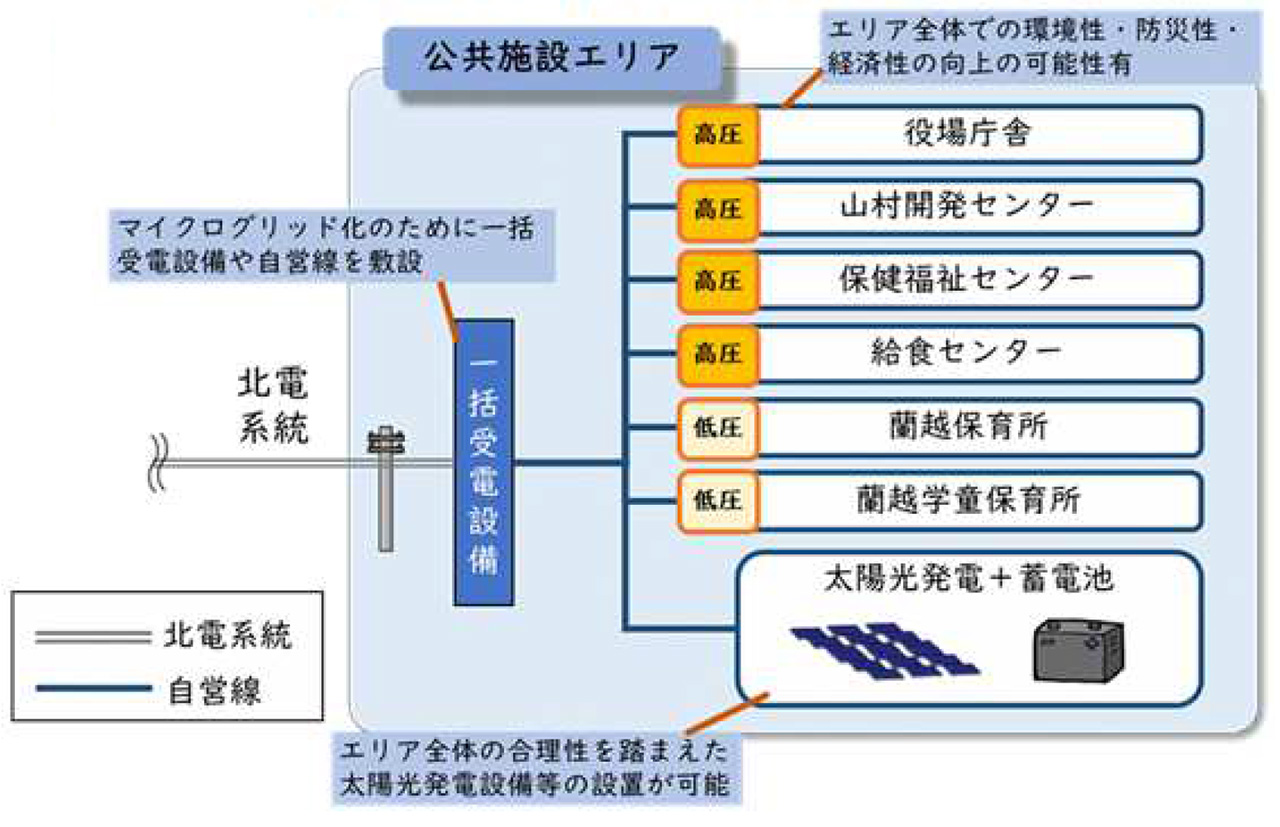
Rankoshi Town is also considering building a microgrid that will supply electricity to public facilities using private lines from multiple power generation facilities, including renewable energy sources and power companies, as well as storage facilities. Under normal circumstances, power will be supplied from local renewable energy sources and power companies, but in emergencies, power can be supplied independently from renewable energy sources. Rankoshi Town is considering securing solar power generation as the main renewable energy source, centered around the town hall, and covering the surrounding public facilities with a microgrid. Under normal circumstances, power will be received from the power company in one place and distributed to individual facilities, and in the event of a power outage, power will be distributed to each facility using the same private transmission line network from solar power generation and storage batteries. A basic plan is currently being formulated.
Since taking up his post, AMEJIMA has been involved in a variety of projects in the renewable energy field in collaboration with Rankoshi Town, including converting rice husks into solid fuel and its utilization and sale, formulating a master plan for utilizing wastewater heat from Yusenkaku, and formulating a plan for building a microgrid around the town hall, which is currently underway. He hopes to continue making proposals towards achieving carbon neutrality by 2050.
"PACIFIC CONSULTANTS has a wealth of elemental technologies related to the use of renewable energy, and we have also participated in the creation of national guidelines and have accumulated knowledge. Various government support measures, including subsidies, are put forward by each ministry and agency, but some of them are difficult to use because the application conditions are complex and the content changes every year. We have a wealth of experience, and we also have a network of research institutions, experts, and related private companies. We would like to continue to support municipalities in planning and implementing policies," says AMEJIMA.
We will continue to contribute to achieving carbon neutrality in the naturally rich land of Hokkaido.
| 2018 | Revising the Rankoshi Town's Regional New Energy Vision / Supporting the study of local production and consumption projects (running the study committee, running the town council, conducting inspection surveys) |
| 2019 | Introduction of rice husk fuel production machine (examination of collection and transportation methods, committee for examining methods for cultivating winter agricultural products and securing sales channels) Consideration of utilizing wastewater from Yusenkaku Onsen (Ministry of the Environment's project) |
| 2020 | Subsidy for Rice Husk Fuel Production/Winter Agricultural Product Cultivation Demonstration and Sales Channel Securing Review Committee Yuusenkaku heat pump installation basic plan |
| 2021 | Subsidy for rice husk fuel production/subsidy for town resident information sessions Yuusenkaku heat pump installation master plan (continued) |
| 2023 | Rankoshi Town's Regional New Energy Vision - revised/Feasibility Study on Rice Husk Utilization Public Facility Solar Power FS / Government Building Microgrid FS / Woody Biomass FS Review Committee |
| 2024 | Government building microgrid master plan/Yusenkaku solar power generation FS demonstration implementation |