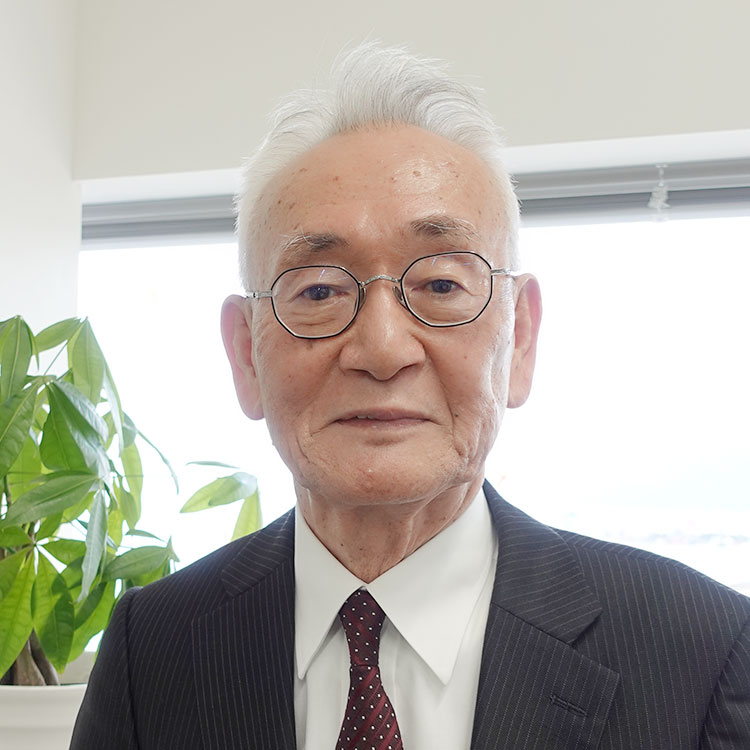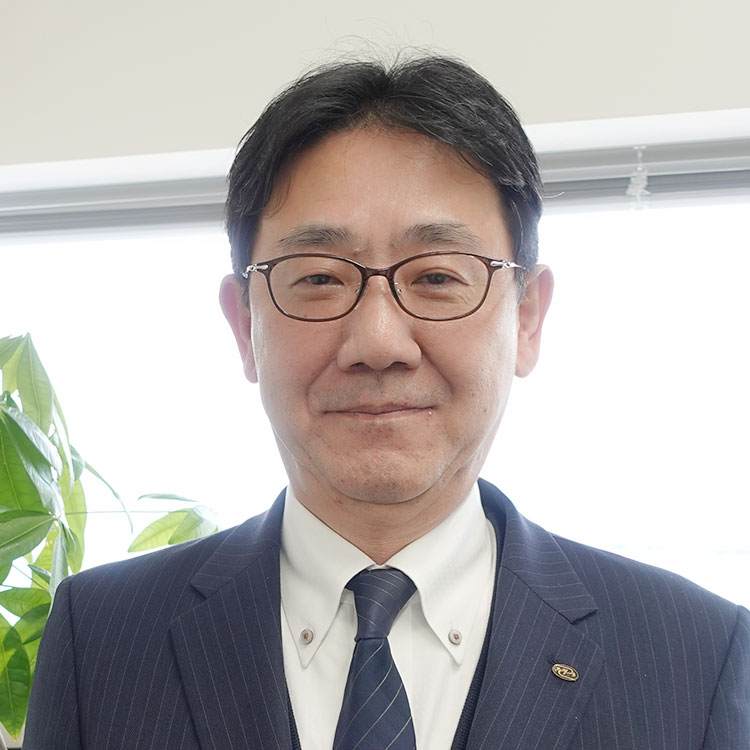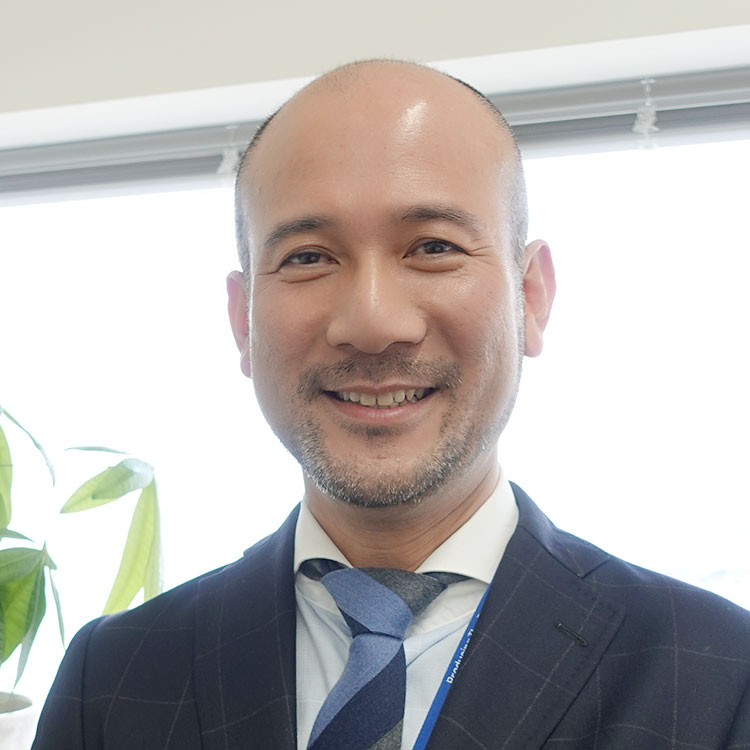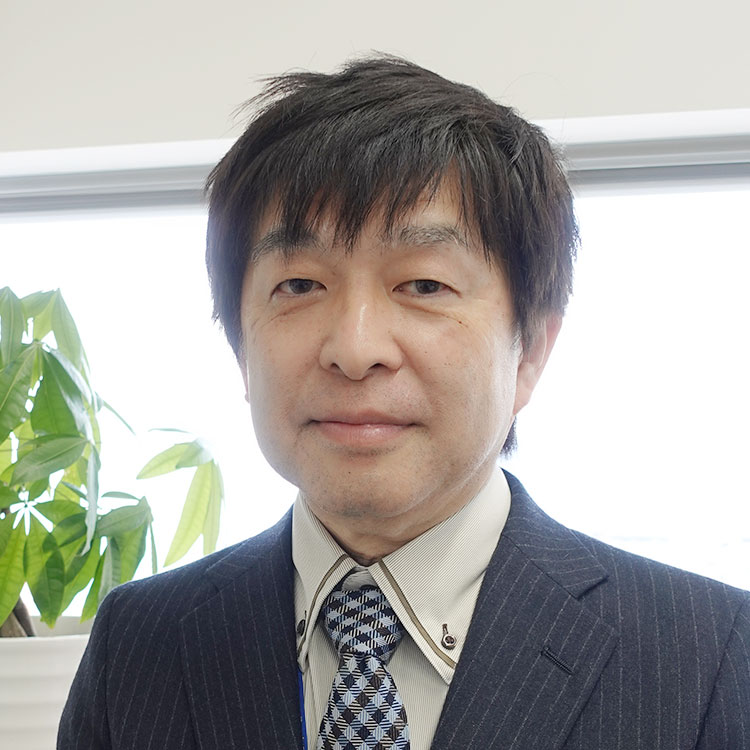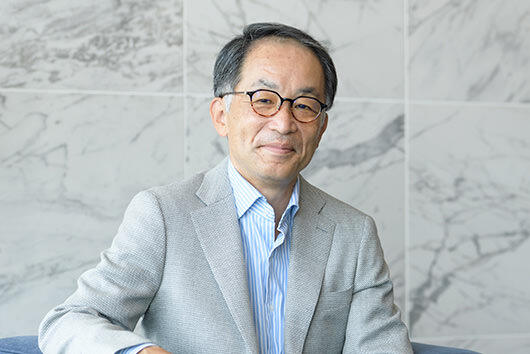

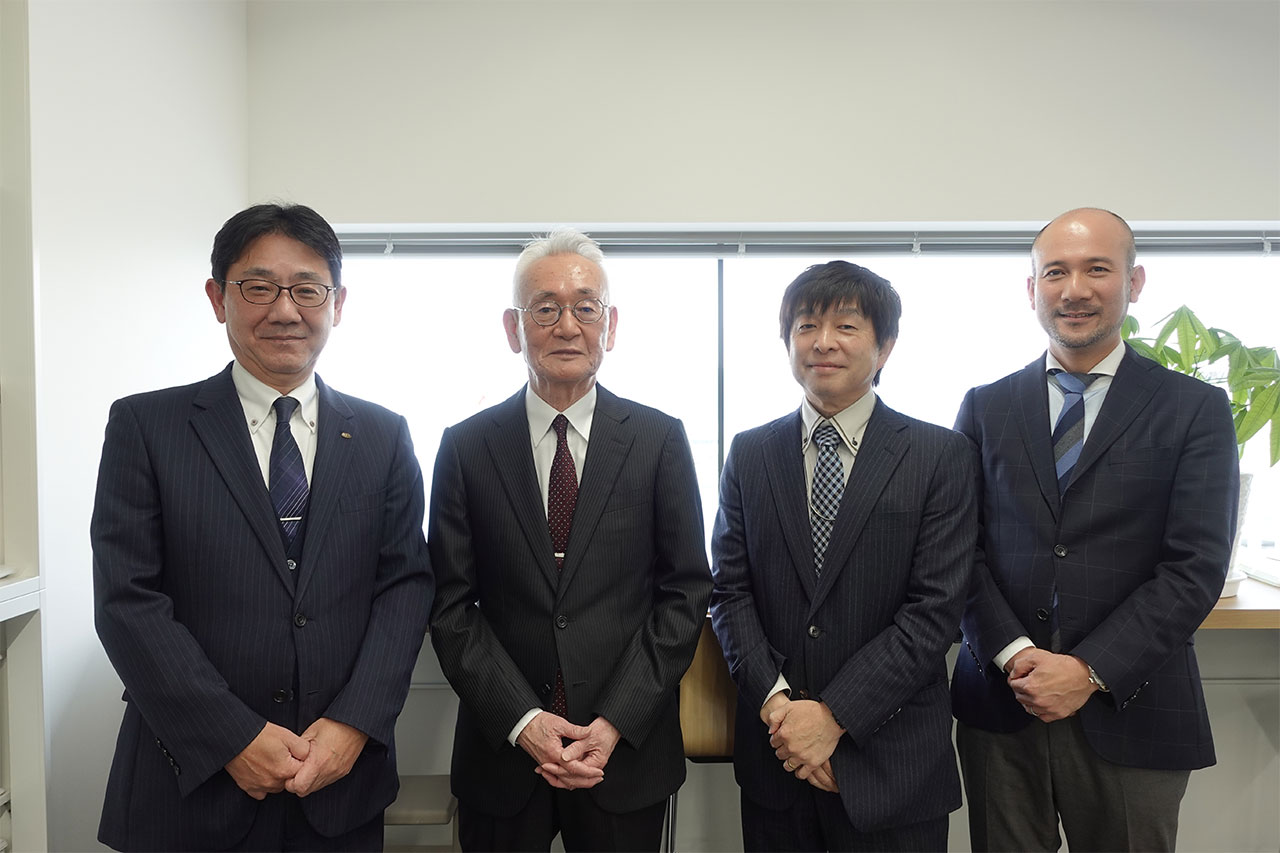
There is a high probability of a major Nankai Trough earthquake occurring. The Shikoku region, which would be hit particularly hard by widespread, powerful tremors and tsunamis, is expected to experience up to 260,000 casualties, damage to approximately 620,000 buildings, and the evacuation of approximately 1.27 million people. Shikoku Branch Office, which is on the front lines of this disaster, is taking various measures, including establishing a Shikoku Technical Office in 2024 and hosting study sessions with Professor Wataru Shiraki of Kagawa University, who chairs the Shikoku Nankai Trough Earthquake Countermeasures Strategy Council. Professor Wataru Shiraki, Hiroshi Morisaki, Technical Executive Manager Osaka Headquarters, Yosuke Tanaka of the Shikoku Technical Office at Shikoku Branch Office, and Kazuto Matsuda, also in the same office, discussed what efforts will be needed in the future to prepare for a major Nankai Trough earthquake.
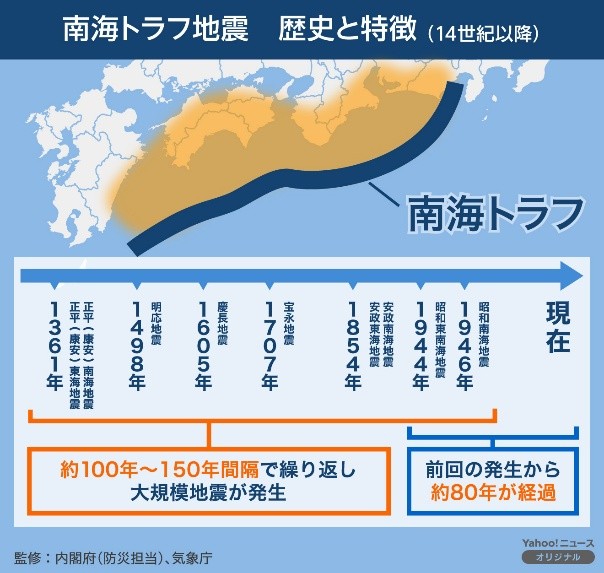
<Nankai Trough earthquake approaching>
The year 2026 marks approximately 80 years since the devastating Nankai Trough earthquakes (the Showa Tonankai earthquake (1944) and the Showa Nankai earthquake (1946)), and the urgency of the next Nankai Trough earthquake is increasing. The probability of a massive earthquake of magnitude 8-9 occurring within the next 30 years, revised in September 2025, is now 60% to 90% or higher; a calculation method using only the recurrence interval puts the probability within the same 30-year range at 20% to 50%. Estimated damage nationwide is expected to be 298,000 deaths, 2.35 million buildings completely destroyed or burned down, 12.3 million evacuees, and economic damage of 270.3 trillion yen—all enormous figures.
Estimated damage figures are from the Cabinet Office Central Disaster Prevention Council document.
INDEX
- Start by reorganizing what you need to do.
- A chain of threats and a phase transition occur
- What is needed is disaster prevention in advance and well-being.
- Future initiatives of Shikoku Branch Office
Start by reorganizing what you need to do.
--The Shikoku Branch Office 's disaster prevention efforts have been further strengthened since you took up your post in Osaka in 2024. What kind of things have you been thinking about?
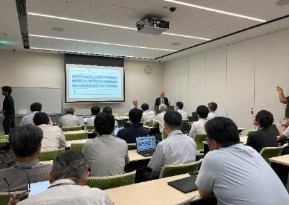
Morisaki: Shikoku is, so to speak, at the forefront of countermeasures against a major earthquake in the Nankai Trough. The timing was right when we were going to station technical members at Shikoku Branch Office in October 2024 and accelerate business development, so I was thinking about how I could contribute. What I felt was that we needed to strengthen the soft aspects, such as our own attitude and basic knowledge in facing a major earthquake. I thought it was important for each of us to be aware of this as something that concerns us personally. So I consulted with Professor Wataru Shiraki, Professor Emeritus at Kagawa University, who was my supervisor when I obtained my doctorate in 2008. Professor Shiraki also serves as chair of the Shikoku Nankai Trough Earthquake Countermeasures Strategy Council, which was established by the Shikoku Regional Development Bureau and is promoting public-private discussions, so I thought he might be able to teach me a lot.
Shiraki: I also believe that in order to prepare for a major Nankai Trough earthquake, conventional disaster prevention thinking is no match for the current situation, and that it is essential to develop leaders who can handle crisis management with a new awareness. I was happy to cooperate with the invitation.
--What is the most important thing you want to convey?
Shiraki: A major Nankai Trough earthquake would be a massive one, with 764 cities, towns, and villages across 31 prefectures, primarily in western Japan, experiencing a magnitude of 6 or higher. The affected area would account for approximately 30% of the country's land area and 50% of the nation's population. Tsunamis are estimated to reach up to 34 meters high, with approximately 300,000 deaths. While these figures are so large, it may be difficult to grasp their true nature, but we must imagine what the situation might actually be like. Furthermore, past earthquake disasters clearly demonstrate that various unexpected events can occur. For example, in the 1995 Great Hanshin-Awaji Earthquake, highway bridge piers, which were thought to be earthquake-resistant, collapsed. Furthermore, as a lesson learned from the Great Kanto Earthquake, we have been taught to fear fires during earthquakes and to "put out the fires!" However, most deaths were caused by crushing deaths due to collapsing buildings or fires. The 2011 Great East Japan Earthquake was hit by an "unforeseen" tsunami, resulting in over 20,000 casualties. The 2016 Kumamoto earthquake, with two consecutive earthquakes measuring 7 on the Japanese seismic scale, also resulted in many "unforeseen" events, resulting in numerous casualties. I have been researching probabilistic design methods in the field of reliability design for bridges and other structures, but as I have repeatedly encountered events beyond our expectations, I have come to realize the limitations of probability theory. Even if we narrow down the probability to a 99.99% probability, there is still a 0.01% chance of something happening. Since unexpected events are unavoidable, we have no choice but to design things assuming they will fail, rather than designing them with a low probability of failure. However, when they do fail, we must consider ways of failure that avoid the worst-case scenario of loss of life or allow for rapid recovery. This is what resilience is all about, and I have come to understand the need for resilience design, or what we might call "disaster reduction design" or "crisis management design."
In fact, the concept of resilience was already known overseas. A book about it was published in 2006, and a Japanese translation *1 of that book was published in November 2012, after the Great East Japan Earthquake. The book defined resilience as "the ability of organizations and social/technical systems that continue to operate in society before, during, and after environmental changes or disturbances occur, to adjust their functions and maintain the necessary actions and behaviors in both expected and unexpected situations *1." I felt that this was a fundamental concept that is essential for disaster prevention in Japan, a country that has been hit by unexpected events so many times.
*1 Erik Hollnagel, David D. Woods, Nancy Leveson (eds.), Masaharu Kitamura (supervising translator): Resilience Engineering - Concepts and Guidelines, Japan Science and Technology Agency, November 2012
A chain of threats and a phase transition occur
--You've said that we need to predict what will happen if a major Nankai Trough earthquake occurs, and that we need to calmly deal with any unforeseen events that may occur.
Shiraki: Resilience engineering begins with carefully considering what kind of situation we will face. A major Nankai Trough earthquake would affect a vast area, so it's unlikely that support teams or supplies would arrive from neighboring prefectures. Support might come from Tohoku or Hokkaido, but it's unclear whether it would reach Shikoku. The three airports in Tokushima, Kochi, and Matsuyama are all located on the coast, so tsunami damage is expected. Power and water outages and road blockages could also occur. Some communities could be isolated. Those involved in the recovery efforts are also victims. The disruption of lifelines could be prolonged. Government offices and medical institutions would also be affected, and they could cease functioning due to the influx of injured people and requests for assistance. Disasters aren't just about the extent to which buildings and structures are destroyed; they're a social phenomenon, with various threats linking together and compounding.
Morisaki: In fact, in Noto Peninsula Earthquake, disaster-related deaths were more than twice as frequent as direct deaths due to factors such as the isolation of villages due to prolonged water outages and road closures, prolonged life in evacuation shelters, and the loss of access to previous nursing care services. This is also an example of a chain or compounding of threats.
Shiraki: The key word that expresses this is "phase transition." Originally a thermodynamic term, it refers to the change in phase between solid, liquid, and gas, such as from ice to water to steam, depending on the temperature. Professor Yoshiaki Kawata of Kyoto University pointed out that when this phase transition occurs during a disaster, it results in a "phase transition of social phenomena." *2 He said that preventing this is the key to disaster prevention measures. I think this is a very important point. The threats to our daily lives are not limited to natural causes such as earthquakes and typhoons. Bird strikes and the spread of infectious diseases are natural threats, and there are many other threats as well. When a major disaster occurs, we must keep all of these threats in mind, anticipate their chain reaction, compounding, and simultaneous occurrence, and consider how to prevent them.
*2 Disaster Prevention Agency Establishment Advisory Council, 5th Meeting, Document 2-5, submitted by Kawada, member
Threats are not only natural, but crisis management is about preventing the chain and compounding of all threats.
Threat 1: Natural threats (natural disasters, bird strikes, viral infections)
Threat 2: Societal threats (terrorism, cyber attacks, war)
Threat 3: Technological threats (equipment failure, deterioration of facilities and equipment, aging)
Threat 4: Threats from service targets (railways and medical facilities will be overwhelmed with people, causing a decline in service levels)
Threat 5: Human threats (human error, violation of rules, riots, looting)
What is needed is disaster prevention in advance and well-being.
Morisaki: It means predicting and preventing possible chains of threats, or prioritizing responses and minimizing damage.
Shiraki: It's said that business continuity for government and medical institutions is crucial during disasters, but people will flock to them. There may also be injuries among service providers. Specific considerations of how to maintain necessary services under such circumstances have only just begun. But this is the most important point of resilience engineering. Resilience means capability. Specifically, it refers to four capabilities: "response capability," "monitoring capability," "learning capability," and "prediction capability." Disaster situations change constantly, and it's not just about individual elemental technologies like earthquake resistance. For individuals and organizations to respond to disasters resilient under these circumstances, it's important to appropriately combine these four capabilities, accurately grasp the overall situation, and implement appropriate crisis management to prevent phase transitions in social phenomena. This is what we need: engineers who can do that.
Tanaka: So while each engineer has their own area of expertise, they all need to be disaster prevention generalists who combine the arts and sciences and have a crisis management mindset. Our Shikoku Technical Office is currently made up of engineers from many different fields, and we've begun to think about what role we can play.
Shiraki: In the case of a sudden earthquake like the Nankai Trough megathrust earthquake, which causes large-scale, widespread damage, we must switch from normal to disaster mode. This is especially true in the case of an earthquake, where an instantaneous switch is necessary. If we stick to the normal division of labor, we will not be able to respond to a crisis. If there is a shortage of personnel, we will need to consider not only BCPs within individual town halls and medical institutions, but also the idea of a District Continuity Plan (DCP), which considers continuity for the entire region (district).
Another important aspect of disaster recovery is well-being. Few people think of this in relation to disaster prevention. However, crisis management is impossible unless people are in a state of well-being, where they are physically and mentally fulfilled on a daily basis and feel a sense of fulfillment in their work and purpose in life. It is only when people are in a state of well-being that they can imagine what would happen if a disaster were to occur and think about how to prevent that from happening, and even if a disaster does occur, they can rise again, face the same direction, and have a positive attitude of helping each other to create a better workplace and town. This way of thinking is called "mental resilience," and it is necessary to work on building well-being in organizations and towns on a daily basis, which forms the basis of pre-disaster prevention and crisis management.
Future initiatives of Shikoku Branch Office
-What kind of initiatives will Shikoku Branch Office be taking from now on?
Morisaki: I've only been at Osaka Headquarters for about a year, but listening to Professor Shiraki's talk made me realize a lot of things. If each and every one of us takes the Nankai Trough megathrust earthquake seriously and thinks about it as an engineer and as an employee striving for well-being, I think we'll be able to come up with new realizations and proposals in our daily work. I hope to see many such resilience engineers being born. I'm excited that we now have a feeling that such people will be born in Shikoku Branch Office and Osaka Headquarters, but first I want to continue to hold Professor Shiraki's lectures and study sessions with him.
Matsuda: I've been in the Shikoku Technical Office since October 2024, and my perspective has changed significantly since coming here. Until now, I had only thought about the design aspects of my field of responsibility, but I feel that we need to think specifically about how we should prepare for a major Nankai Trough earthquake. We thought we should start by ourselves, so members of the Shikoku Technical Office obtained disaster prevention qualifications. In the future, we would like to take the Shikoku Disaster Prevention and Crisis Management Program, which is jointly run by Kagawa University and Tokushima University, and work as disaster prevention and crisis response managers.
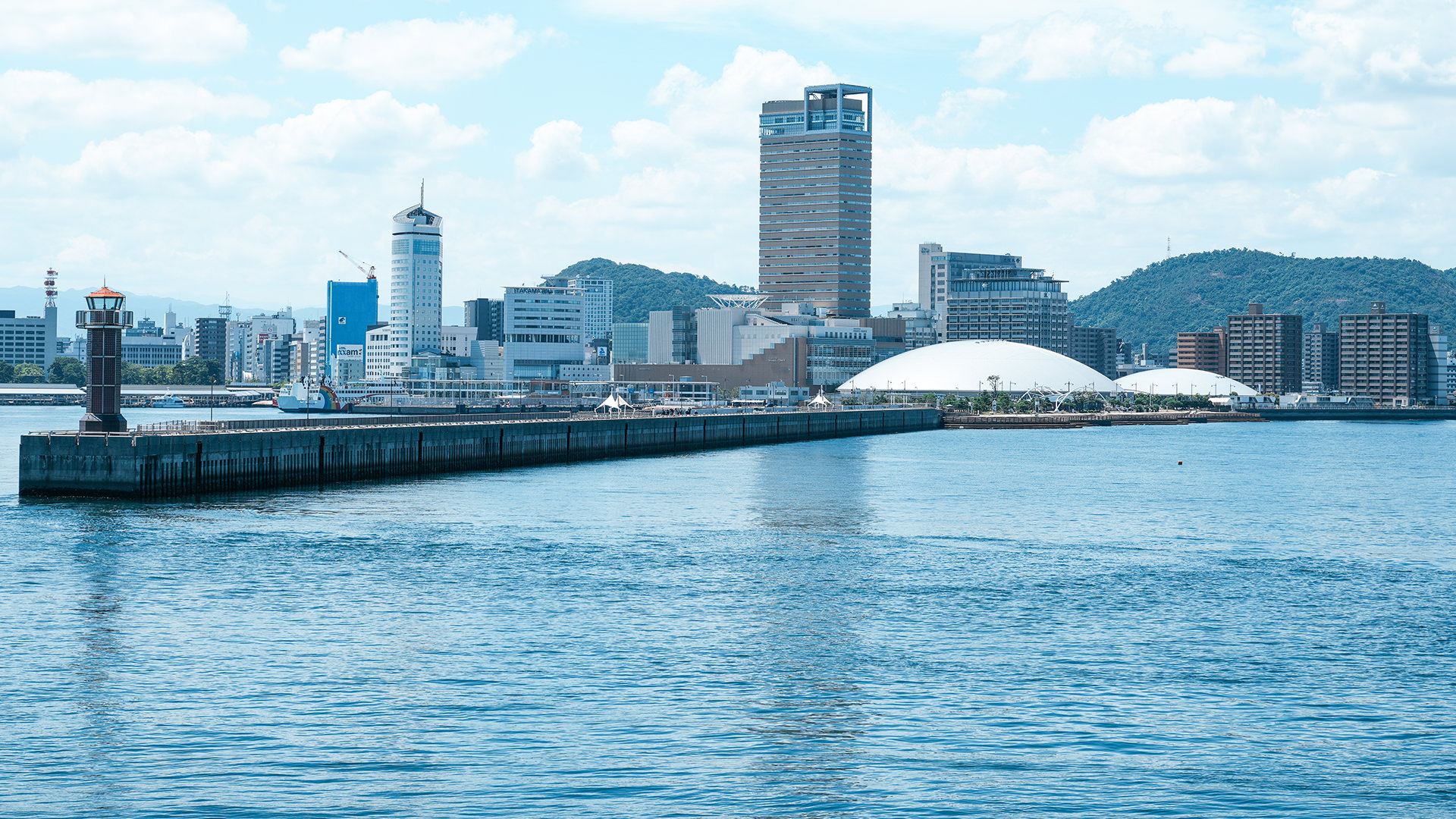
Tanaka: Takamatsu City, Kagawa Prefecture, where Shikoku Branch Office is located, is the economic center of Shikoku, and is home to many Shikoku branches of Tokyo-based companies. Kagawa Prefecture faces the Seto Inland Sea, and in the event of a major Nankai Trough earthquake, it will play a major role as a disaster response and reconstruction base, so I think Kagawa and Takamatsu will play a major role. Our company is also involved in the operation of Takamatsu Airport, the only airport in Shikoku located inland. Therefore, as someone permanently based at the branch office, I would like to work in cooperation with various stakeholders, both public and private, including local companies and local organizations, to imagine the challenges that may arise after a disaster and ensure rapid recovery and reconstruction.
--You are also conducting demonstration experiment to utilize movable containers in collaboration with Kagawa and Kochi prefectures.
Tanaka: Yes, in anticipation of a large-scale disaster such as a major Nankai Trough earthquake, Kagawa and Kochi prefectures are collaborating across a wide area to strengthen and revitalize their roadside station, and this initiative aims to contribute to the creation of tourism and excitement by utilizing high-value-added (mobile) containers in normal times. This time, we borrowed a mobile kitchen container owned by the Wakayama Prefectural Government. We realized a lot through the experiment, and realized the importance of using it in normal times as well as in times of disaster. We hope that this will serve as an opportunity for people to think about what they need to do on a daily basis.

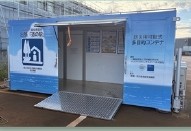
<Reference> demonstration experiment using containers in Shikoku has been successfully completed
Shiraki: Construction consultants are in a position to look at both the government and the public, and they have a lot of experience in supporting recovery and reconstruction efforts following past disasters. I would like you to play an active role as leaders in crisis management based on resilience engineering.
Morisaki: Our role is significant. We will take a new step in disaster prevention from the Shikoku Technical Office to the entire company and the whole country.
*This article was written in November 2025. Therefore, it does not mention the magnitude 7.5 earthquake that occurred off the east coast of Aomori Prefecture in the early hours of December 8th, or the "Hokkaido/Sanriku Offshore Earthquake Warning" that was subsequently issued. We would like to express our heartfelt sympathies to all those affected by this earthquake. We pray for a speedy recovery and the safety of everyone.